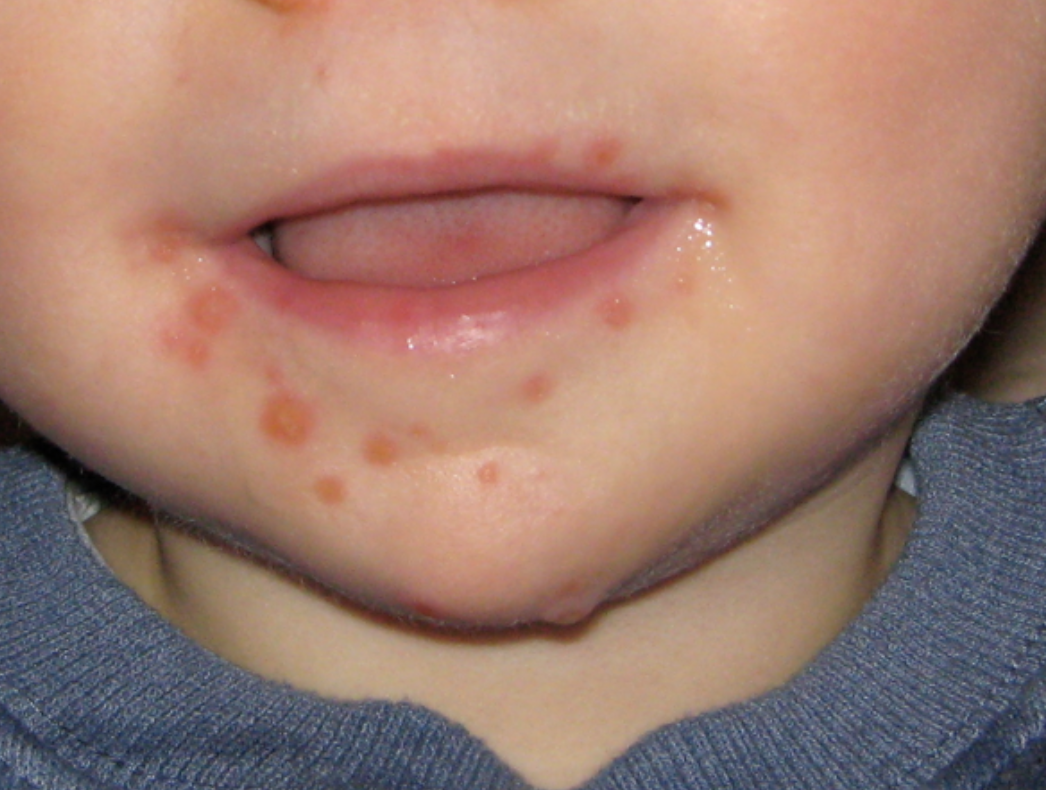
 Correct Selenium Deficiency to Overcome Hand, Foot, and Mouth Disease / Coxsackievirus Infection
NOTE: Be sure to learn more about white willow bark as an herbal remedy for hand, foot, and mouth disease that can help you prevent your child from developing diabetes.
Selenium, particularly as selenomethionine, is a vital trace mineral that’s necessary for children’s health. It’s a cofactor in enzyme regulation, and it helps maintain tissue and muscle as well as heart and blood vessel health in children. It is a powerful antioxidant that sometimes plays a similar role in the body to vitamin E. Selenium is also a powerful anticancer nutrient.
Correct Selenium Deficiency to Overcome Hand, Foot, and Mouth Disease / Coxsackievirus Infection
NOTE: Be sure to learn more about white willow bark as an herbal remedy for hand, foot, and mouth disease that can help you prevent your child from developing diabetes.
Selenium, particularly as selenomethionine, is a vital trace mineral that’s necessary for children’s health. It’s a cofactor in enzyme regulation, and it helps maintain tissue and muscle as well as heart and blood vessel health in children. It is a powerful antioxidant that sometimes plays a similar role in the body to vitamin E. Selenium is also a powerful anticancer nutrient.
Selenium enhances immune system function in children. It can buffer a child against mercury toxicity because of its ability to chelate mercury from tissues. It is also powerful in protecting heart health which can be compromised as a result of viral infection. In adults it slows the aging process.

Click here to schedule a health coaching call with us.
Coxsackieviruses have been blamed for the development of heart problems such as Keshan disease. But Keshan disease is responsive to selenium therapy. So scientists have connected the dots and they’ve found that in animal models of Coxsackievirus infection, heart problems don’t occur. Selenium deficiency, on the other hand, can lead to more severe outcomes in children who become infected with Coxsackievirus.In other words, selenium is another nutrient that deserves some attention in terms of preventing and also treating infectious diseases in children. Studies have shown that Coxsackievirus can cause lesions on the heart that are more severe and that develop more quickly when a child’s body is deficient in selenium. Lymphocyte proliferation response to viral infection was decreased during selenium deficiency, contributing to a less effective immune response.
In adults, selenium in the form of selenomethionine should be administered at a dose of 400 mcg per day. Some sources that are funded by Big Pharma recommend only 200 mcg per day for adults because of selenium’s ability to prevent prostate and other reproductive organ cancers. Many experts recommend 400 mcg per day, but still be aware that you need to keep selenium within reasonable limits to prevent selenium-toxicity until there are more studies showing that it is safe at well-above 400 mcg per day.
Click here to buy the Renegade Parent's Guide to Children's Health and Healing.
Below are dosing recommendations for children. The doses recommended below is close to, but does not correspond to Big Pharma-funded recommendations. Selenium is safe within a narrow range, but while Big Pharma-funded entities recommend lower doses, we are recommending slightly higher doses based on our personal experience with selenium supplementation. As a mercury-chelating nutrient, selenium can be a powerful agent against the development of autism when administered at a high-enough dose:- Infants 0 to 6 months - 15 to 20 mcg per day
- Infants 7-12 months - 20 to 30 mcg per day
- Toddler 1-3 years - 30 to 40 mcg per day
- 4-8 years - 40 to 50 mcg per day
- 9-13 years - 50 to 100 mcg per day
- 14-18 years - 100 to 200 mcg per day

Click here to buy Selenium drops for kids.
Resources:
• Beck, M. A. et al. (1994). Benign human entervirus becomes virulent in selenium-deficient mice. Retrieved January 11, 2026 https://pubmed.ncbi.nlm.nih.gov/8083665/
• Beck, M. A. et al. (1994). Increased virulence of a human enterovirus (coxsackievirus B3) in selenium-deficient mice. Retrieved January 11, 2025 from https://pubmed.ncbi.nlm.nih.gov/8035022/
• Stanford Medicine Children’s Health (2026). Selenium. Retrieved January 11, 2025 from https://www.stanfordchildrens.org/en/topic/default?id=selenium-19-Selenium