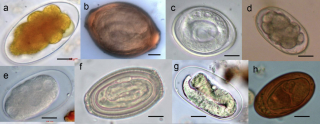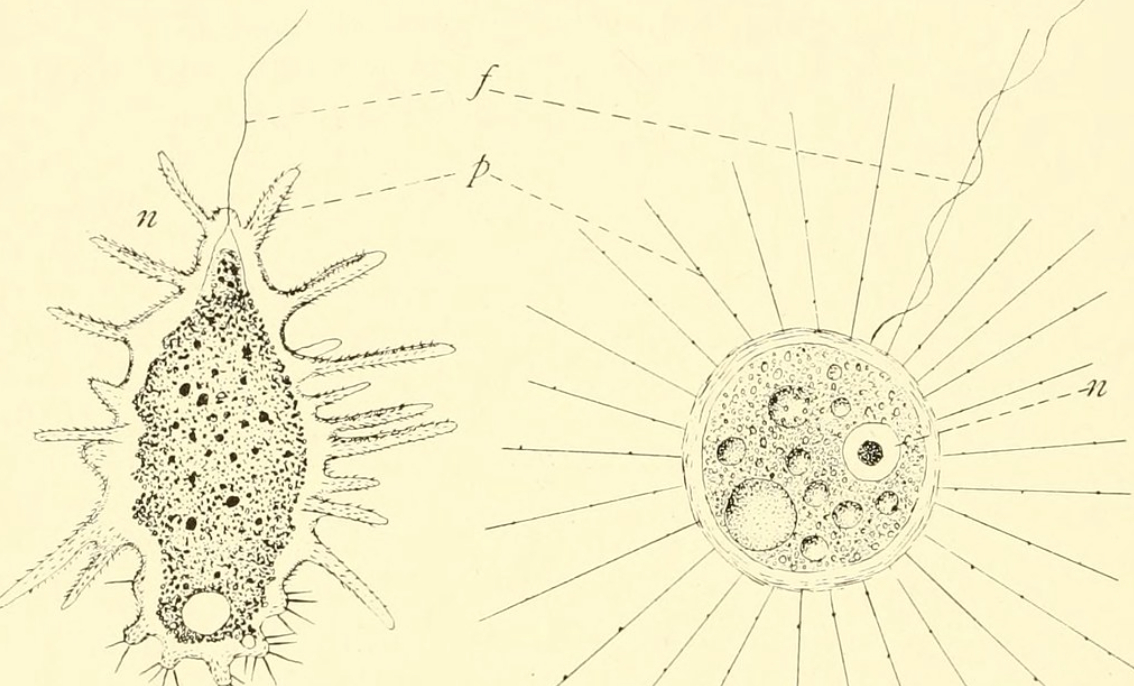
Protozoal Gastroenteritis
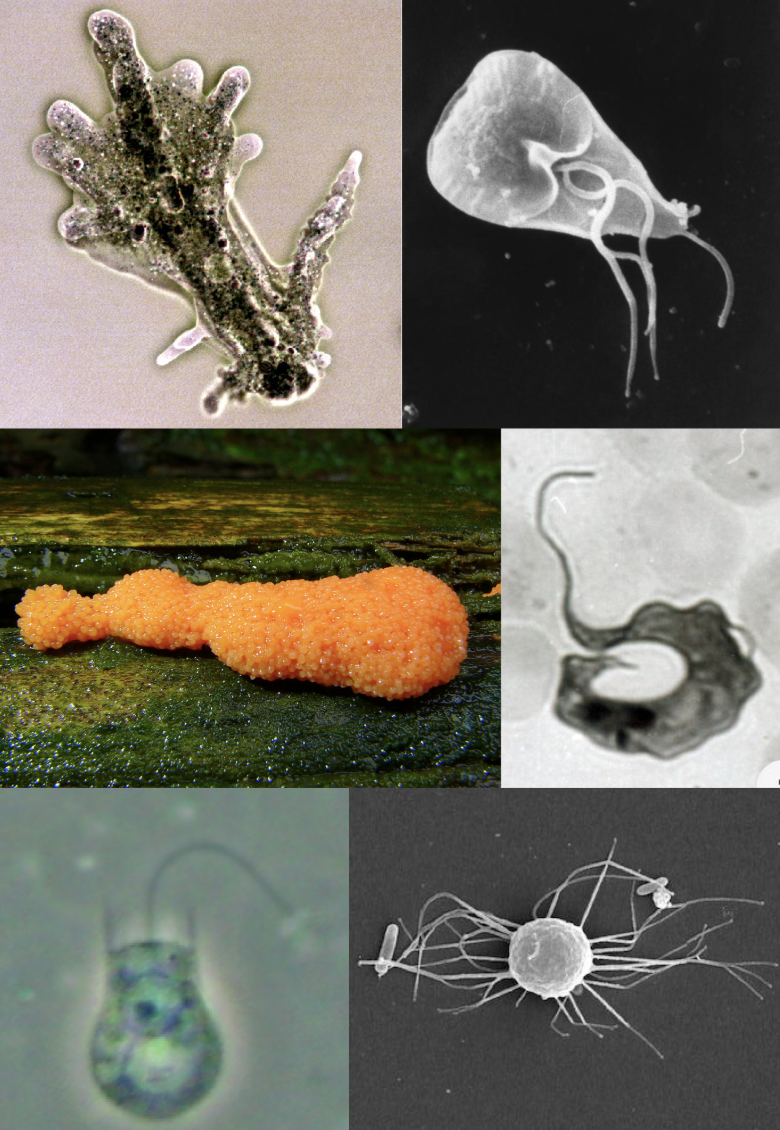 Four groups of protozoa are responsible for the majority of protozoal gastroenteritis: Giardia, Cryptosporidia, Cystoisospora, and Entamoeba. Outbreaks are almost always associated with poor sanitary conditions, and infection typically follows the ingestion of contaminated water. A fifth protozoan, Toxoplasma gondii, uses the cat's gastrointestinal tract as its primary host for sexual reproduction. While humans can serve as intermediary hosts, intestinal symptoms in humans from Toxoplasma are rare.
Below we discuss protozoal gastroenteritis in greater detail.
Giardia
Giardia intestinalis, also known as G. lamblia or G. duodenalis, is a microscopic protozoan. Its adult trophozoites measure 10 to 20 micrometers in length. The usual source of infection is contaminated water from lakes, ponds, rivers. Although the trophozoites themselves inhabit the gut, they are shed from the body in cyst-form via stool. These cysts are notable in that they allow the parasite to survive outside the host and, importantly, they are resistant to chlorine-based disinfection (but not reactive oxygen species medicines like CDS / MMS). This means that even swimming pools and public water supplies, if contaminated with human feces or agricultural runoff, can trigger Giardia outbreaks.
Click here to schedule a health coaching call with us.
The infection is usually self-limiting and it responds to antibiotics, but Giardia infection can colonize the body after antibiotic treatment and thus leave a lasting imprint on the gastrointestinal tract in the form of persistent gas, bloating, and diarrhea. These lingering symptoms are often regarded as lactose or fructose intolerance. Rarely are these dietary intolerances blamed on the Giardia infection that caused them. The intolerance is driven by a deficiency of disaccharidases on the intestinal brush border. Giardia infection is also a recognized cause of non-ulcer forms of dyspepsia / sour stomach.Lydian had Giardia several years ago after drinking non-potable water while living in Myanmar. She used Chlorine Dioxide Solution / CDS / Miracle Mineral Supplement / MMS to treat the infection successfully. Initially she took metronidazole, but it didn’t seem to do anything. Immediately following this effort with metronidazole, she did about 30 days of daily treatment with CDS / MMS (Protocol 1000) to finally overcome it. She also took Cinchona officinalis (0.25 grams per kilogram body weight administered throughout the day in tonic water) and Artemisia annua at a dose of 20 grams per day as part of a separate protocol that we describe in detail later.
Methylene blue is another treatment option for those with Giardia. It can be combined with Cinchona officinalis once a month for up to 3 days. On methylene blue days, do not administer Artemisia annua with the Cinchona officinalis.
Click here to buy Methylene Blue.
Below are dosing guidelines for methylene blue:
- Body Weight: 50 kg/110 lbs: 1 mg/kg dose = 50 mg/day or 100 drops/day
- Body Weight: 55 kg/121 lbs: 1 mg/kg dose = 55 mg/day or 110 drops/day
- Body Weight: 60 kg/132 lbs: 1 mg/kg dose = 60 mg/day or 120 drops/day
- Body Weight: 65 kg/143 lbs: 1 mg/kg dose = 65 mg/day or 130 drops/day
- Body Weight: 70 kg/154 lbs: 1 mg/kg dose = 70 mg/day or 140 drops/day
- Body Weight: 75 kg/165 lbs: 1 mg/kg dose = 75 mg/day or 150 drops/day
- Body Weight: 80 kg/176 lbs: 1 mg/kg dose = 80 mg/day or 160 drops
- Body Weight: 85 kg/187 lbs: 1 mg/kg dose = 85 mg/day or 170 drops/day
- Body Weight: 90 kg/198 lbs: 1 mg/kg dose = 90 mg/day or 180 drops/day
- Body Weight: 95 kg/209 lbs: 1 mg/kg dose = 95 mg/day or 190 drops
- Body Weight: 100 kg/220 lbs: 1 mg/kg dose = 100 mg/day or 200 drops/day

Click here to subscribe to the Living Database!
Metronidazole for Giardia
Treatment with metronidazole is effective in some cases, but drug resistance has been reported with increasing frequency. Some people might benefit from doing a course of treatment with metronidazole followed by protocols with the other treatments that we talk about here for weeks or months afterwards to ensure that the pathogen is totally eradicated.Herbal Cures for Giardia
A variety of other alternative treatments have been studied in terms of their ability to eradicate Giardia including:-
- Lippia graveolens, (also known as Mexican oregano) essential oil is more powerful than tinidazole as a drug used to treat Giardia intestinalis / Giardia duodenalis / Giardia lamblia. Oregano essential oil causes Giardia trophozoites to lose their size and shape and show damage to the nucleus structure possibly breaking a pattern of nucleoskeleton proteins in order to overcome the infection.
- Thymbra capitata essential oil is very active against Giardia in scientific studies.
- Origanum virens (wild oregano) is just slightly less active against Giardia than Thymbra capitata.
- Thymus zygis spp. Sylvestris chemotype thymol is next in line in terms of its power against Giardia.
- Lippia graveolens oil is less active against Giardia than Thymbra capitata, Origanum virens, or Thymus zygis but it is active enough to warrant its use if the other herbs are not available.
Intestinal Cryptosporidiosis
Cryptosporidium parvum causes a self-limiting gastroenteritis in immunocompetent individuals, characterized by profuse diarrhea. It is highly transmissible. Ingestion of as few as a few hundred organisms is enough to cause the disease. In recent years, Cryptosporidia have become the leading cause of waterborne outbreaks from pools and recreational water parks. In immunosuppressed individuals, those with AIDS or organ transplant recipients, the infection can be severe and prolonged.Diagnosis is complicated by the fact that Cryptosporidia are not easy to detect in stool so once again, patients are faced with the problem of misdiagnosis or no diagnosis for severe disease. Patients with suspected cryptosporidiosis are typically asked to submit multiple stool samples for identification. Rarely, careful examination of intestinal biopsies can reveal the characteristic small, basophilic, spherical structures, 3 to 8 micrometers in size, clustered along the epithelium.
In immunocompetent patients, treatment is largely only supportive. Doctors encourage patients to ensure adequate hydration particularly in young children. In patients being treated for HIV-AIDS, immune reconstitution significantly reduces colonization (HIV-AIDs patients should read more about Dr. Metharam Haresh and his curative treatments for this disease). In transplant recipients, reducing immunosuppression should be considered when prolific diarrhea is driven by Cryptosporidium parvum. Immunocompetent patients with symptomatic cryptosporidiosis can be treated with nitazoxanide, though the benefit of this approach in immunosuppressed patients remains questionable.
One CDC report on the treatment of Cryptosporidiosis in HIV-AIDs patients provides some important insights into treatment of this parasite in non-HIV-AIDs patients as well. In 1982, the CDC reported that 21 patients with AIDS had developed severe, protracted diarrhea caused by cryptosporidiosis. The CDC said, at that time, that no effective treatment was known. Since that report, 91 additional AIDS patients with chronic cryptosporidiosis were reported to CDC. The picture that emerged from those cases was consistent: no therapy had proven reliably effective. However, there were preliminary reports from a small number of cases that spiramycin (Rovamycine, Rhone-Poulenc Pharma) or the combination of quinine and clindamycin might offer some benefit to some patients.
This suggests that patients who do not have HIV-AIDs could also benefit from working with quinine specifically, but what we suggest here is that patients seek out the whole herb, Cinchona officinalis as a quinine source instead of seeking out pharmaceutical quinine.
Since December 1982, physicians at the University of Miami treated seven AIDS patients with chronic cryptosporidiosis using spiramycin. Six additional AIDS patients across five other institutions received the drug as well;and one non-AIDS patient, a bone marrow transplant recipient with chronic cryptosporidiosis, was also treated. Thirteen of the fourteen patients were adults who received 1 g of spiramycin orally three or four times daily. The fourteenth, a two-year-old child, received 500 mg orally twice daily. No adverse effects were attributed to the drug in any of these cases.
Note that spiramycin is a drug used to treat toxoplasmosis during pregnancy.
The outcomes fell into three broad patterns that we’ll discuss below.
Spiramycin
Three of the thirteen AIDS patients appeared to be cured after three to four weeks of spiramycin therapy. All three improved symptomatically, and both intestinal biopsies and three successive post-treatment stool examinations came back negative. The follow-up six to seven months after discontinuing spiramycin confirmed that all three remained asymptomatic, so this is good news. Two subsequently died, one from Kaposi's sarcoma, the other from Pneumocystis carinii pneumonia, from causes attributable to their underlying immunodeficiency rather than to cryptosporidiosis.An additional three AIDS patients experienced rapid symptomatic improvement on spiramycin. In two cases, within 48 hours of starting the drug, these patients improved but continued to shed Cryptosporidium in their stools. When spiramycin was discontinued, diarrhea promptly recurred in each case. On restarting the drug, two of the three again improved. The third continued to deteriorate and has since died. One of the two surviving patients showed persistent Cryptosporidium in weekly stool examinations for the first three and a half months of therapy before eventually achieving three consecutive negative stools. Spiramycin was stopped, and he remained asymptomatic at the two-week follow-up point.
The remaining seven AIDS patients showed no symptomatic or parasitological response to spiramycin. Three of these seven died within two to seven days of starting the drug.
The non-AIDS bone marrow transplant patient also responded to spiramycin. After six weeks of severe watery diarrhea and abdominal cramping, she began the drug and experienced resolution of her cramps within 24 hours. Her diarrhea improved within the same window, and two weeks into treatment she had reduced to one bowel movement per day. A stool examination at three weeks was negative for Cryptosporidium.
Quinine and Clindamycin
CDC also received reports on seven patients — six with AIDS and one bone marrow transplant recipient, treated with oral quinine and clindamycin in combination. Quinine, of course, is present in Cinchona officinalis along with other medicinal substances. Individuals who are self-treating for Cryptosporidium infection at home should consider working with Cinchona at a dose of 0.25 grams per kilogram body weight. Administer this dose by preparing it in a decoction and then adding it to 9 ounces of tonic water (which should also contain some quinine). Drink this dose slowly throughout the day.Two patients showed no response after seven to fourteen days of therapy. Three others had the drugs discontinued due to adverse effects. One developed a severe rash, another severe vomiting, and a third thrombocytopenia. Two of these three had shown some symptomatic improvement in the first few days before treatment was stopped.
The sixth patient, an AIDS patient with acute cholecystitis and diarrhea associated with Cryptosporidium of both the cystic duct and intestines, received 300 mg of clindamycin and 250 mg of quinine orally four times daily. Within two days, his diarrhea resolved, though stool examinations after therapy continued to show occasional Cryptosporidium.
The seventh patient, a bone marrow transplant recipient with chronic cryptosporidiosis, received the same oral combination and showed no clinical improvement despite two weeks of therapy.

Click here to do a free trial of EMDR to Release Trauma.
What These Cases Suggest
Taken together, these early reports paint a picture that would remain frustratingly familiar in subsequent years. Cryptosporidiosis in immunocompromised patients is difficult to treat, inconsistently responsive to available agents, and prone to relapse when treatment is withdrawn. Spiramycin produced genuine cures in a small subset of AIDS patients and symptomatic relief without parasitological clearance, in others. The quinine-clindamycin combination carried a meaningful adverse effect burden and produced inconsistent results. The non-AIDS immunosuppressed patients fared somewhat better in the cases reported here, a pattern consistent with the broader observation that the depth of immune compromise is a dominant variable in determining clinical trajectory with this infection.Chlorine Dioxide Solution / Miracle Mineral Solution for Cryptosporidiosis
Chlorine dioxide solution / CDS, also known as Miracle Mineral Solution / MMS, is a potential treatment for crytosporidiosis. Studies have found that chlorine dioxide as a drinking water disinfectant is able to inactivate Cryptosporidium. This suggests that CDS / MMS would be a potentially effective treatment for cryptosporidiosis. It should be noted that contact time of 128 minutes is required in drinking water at a dose of 5 mg/L in order to inactivate Cryptosporidium in drinking water.
Click here to learn more about the DreamLight.app, a guided meditation and brain-entrainment tool for natural trauma-release.
Cystoisospora Gastroenteritis
Cystoisospora belli is a unicellular protozoan that inhabits the human intestine. It causes gastroenteritis associated with nonbloody diarrhea. Like cryptosporidiosis, the infection is seen most often in patients with HIV-AIDS. Unlike cryptosporidiosis, Cystoisospora gastroenteritis is uncommon even in immunosuppressed patients, though it can occur.Diagnosis is established by identifying oocysts in the stool, and repeat sampling is often necessary because once again, diagnostic tests often fail to detect the offending agent that’s causing patient symptoms. Occasionally, duodenal aspirates or intestinal biopsies are visible to make the diagnosis. Trimethoprim/sulfamethoxazole is the treatment of choice in conventional medicine. As with other protozoal infections like malaria or Giardia, methylene blue is a very old drug that can be used to kill this type of infection, especially when it is combined with Cinchona officinalis. In immunocompromised patients, the use of quinine can sometimes help patients overcome the disorder. In those who are not immunocompromised, the administration of methylene blue with Cinchona officinalis as a combination treatment may be able to overcome cystoisospora.
Cystoisospora does interact with methylene blue. Methylene blue is used in histology to stain this parasite. To really get the most out of methylene blue as a treatment for cystoisospora, infrared sauna can be administered twice daily about 2 hours after taking a dose of methylene blue to do “photodynamic therapy” wherein the red light is captured by the methylene blue to produce powerful reactive oxygen species medicines to kill the pathogen.
As noted above, the dose for both children and adults (via IV) is 1-2 mg per kg body weight or 1-2 mg per 2.2 pounds of the patient’s body weight. Again, this is the intravenous dose. Most patients won’t be able to tolerate this high of a dose by mouth.
Also, it’s best for laypeople to not to give the maximum dose of methylene blue if they’re doing self-treatment at home because overdose with methylene blue can cause severe, life-threatening side effects. Instead, we recommend that people administer about 1/4th to 1/6th of the recommended IV dose and then do 30 minute at-home infra-red sauna sessions about 2 hours after the methylene blue has been administered. Sit in the infrared sauna twice daily to powerfully activate the methylene blue as an anti-protozoal medicine. Afterward, do a “cold shock” bath or shower to activate brown adipose tissue that releases nutrients that are being stored in the body.
Below is a dosing chart for methylene blue 1% given as drops from a standard dropper. If you have a higher concentration of methylene blue note that at 0.1%, 1 mL of methylene blue equals 1 mg. Administer 1 mg per kilogram (or per 2.2 pounds) of the patient’s body weight :
- Body Weight: 50 kg/110 lbs: 1 mg/kg dose = 50 mg/day or 100 drops/day
- Body Weight: 55 kg/121 lbs: 1 mg/kg dose = 55 mg/day or 110 drops/day
- Body Weight: 60 kg/132 lbs: 1 mg/kg dose = 60 mg/day or 120 drops/day
- Body Weight: 65 kg/143 lbs: 1 mg/kg dose = 65 mg/day or 130 drops/day
- Body Weight: 70 kg/154 lbs: 1 mg/kg dose = 70 mg/day or 140 drops/day
- Body Weight: 75 kg/165 lbs: 1 mg/kg dose = 75 mg/day or 150 drops/day
- Body Weight: 80 kg/176 lbs: 1 mg/kg dose = 80 mg/day or 160 drops
- Body Weight: 85 kg/187 lbs: 1 mg/kg dose = 85 mg/day or 170 drops/day
- Body Weight: 90 kg/198 lbs: 1 mg/kg dose = 90 mg/day or 180 drops/day
- Body Weight: 95 kg/209 lbs: 1 mg/kg dose = 95 mg/day or 190 drops
- Body Weight: 100 kg/220 lbs: 1 mg/kg dose = 100 mg/day or 200 drops/day
Chlorine Dioxide Solution / Miracle Mineral Supplement for Cystoisospora
Chlorine Dioxide Solution (CDS) / Miracle Mineral Supplement (MMS) is another reactive oxygen species that can be useful in treating cystoisospora. Most people have to work with more than just one type of reactive oxygen species medicine, but CDS / MMS is a simple medicine to administer that can help people make headway quickly in treating this disease.
Click here to subscribe to the Chlorine Dioxide Protocols Database.
Parasites: Self-Treatment and Prevention - BUY THE eBOOK HERE!!!