DMSO as a Cure for Tinnitus
 The Alive-N-Healthy DMSO Guidebook - Buy Here!
 Tinnitus, a ringing in the ears, can be extremely distressing to say the least. In this discussion, we’re going to talk about DMSO for tinnitus, how it has been administered by researchers, and how it can administered to treat tinnitus at home.
At Home Treatment for Tinnitus: DMSO
In one study, 15 patients with tinnitus were given a topical application of DMSO in the external ear canal. This spray contained DMSO along with an anti-inflammatory and blood-vessel-dilating substance. Patients applied the DMSO in the ear canal every four days for one month. At the same time, patients also administered a daily intramuscular injection of DMSO to further improve blood vessel dilation and blood flow to the structures in the middle and inner ear. Of the 15 patients who were treated, tinnitus symptoms disappeared completely in 9 of them. These 9 patients were observed for 1 year after the treatment and their tinnitus symptoms didn’t return during that time.In 2 of the patients in this study, tinnitus symptoms diminished. In the 4 remaining patients, permanent tinnitus became occasional and it was triggered primarily by environmental cold. Five patients in this group experienced vertigo / dizziness along with tinnitus and these patients noted improvement in their vertigo symptoms. Hyperacusis diminished in 3 out of 6 patients were affected with this disorder and insomnia disappeared in 8 patients and diminished in the 7 remaining patients.
At the beginning of this study, patients had an average eardrum temperature of 36.8 degrees Celsius when the study began. At the end of treatment, the temperature of the tympanic membrane went up to 37.9 degrees Celsius, further demonstrating an increase in blood flow to the inner ear.

Click here to schedule a health coaching session with us.
DMSO and Magnesium for Tinnitus
Some patients have noted that magnesium helps reduce tinnitus and the combination of DMSO with magnesium has a more powerful effect even still. There are DMSO-Magnesium products that have magnesium pre-dissolved in DMSO for easy use. Note that it may take consistent application of DMSO and magnesium over the course of a year or longer for tinnitus to go away completely.Dilute the DMSO-Magnesium down to at least a concentration of 2 parts DMSO and 1 part filtered and purified water to avoid extreme over-drying of the skin.
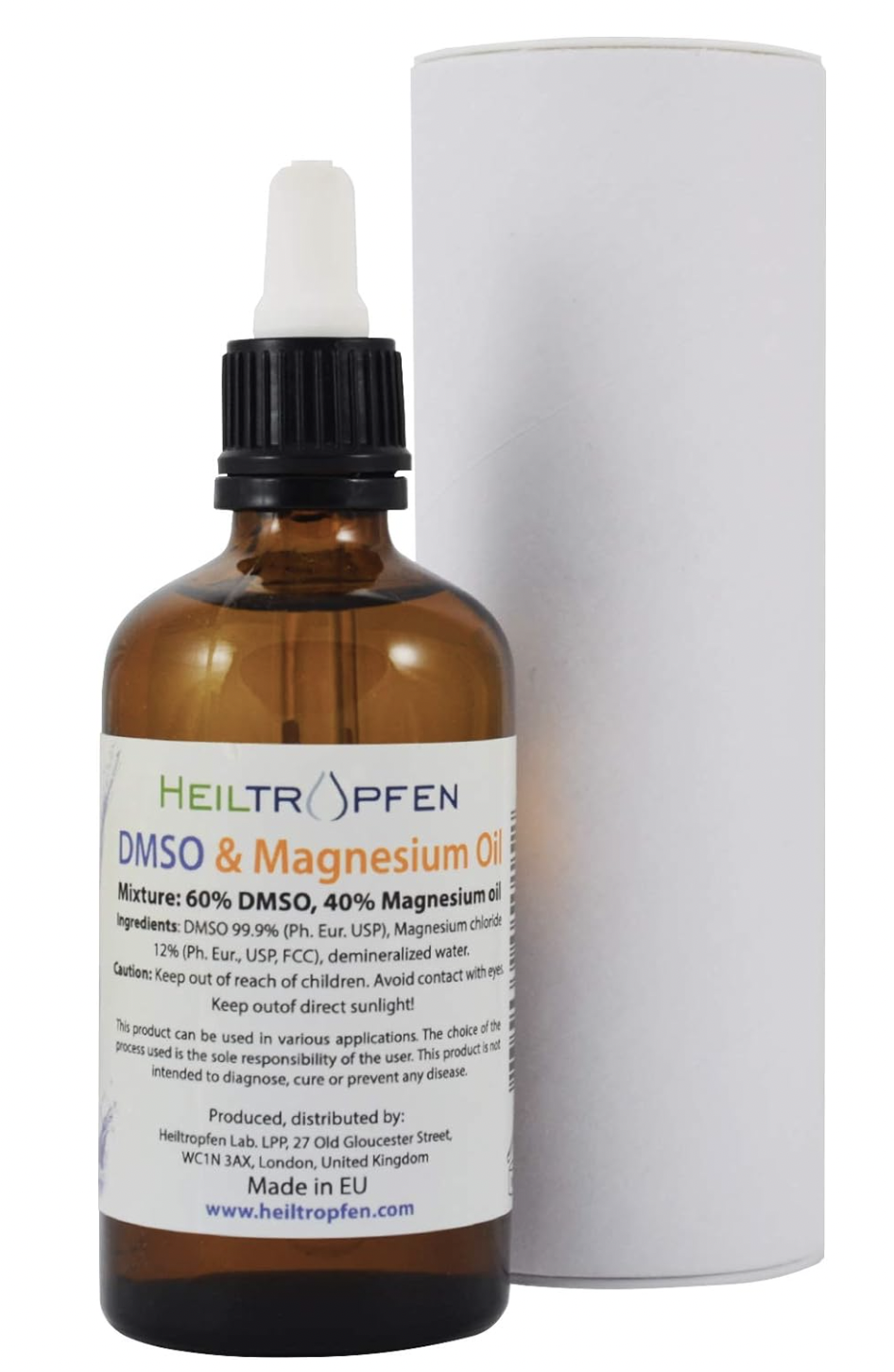
Click here to buy a DMSO-Magnesium combination product.
If you don’t have a DMSO-Magnesium product, you can combine DMSO with pure magnesium chloride flakes (make sure the ingredients list only Magnesium Chloride and no other ingredients). You can combine the magnesium with equal parts (approximately) of DMSO or create a combination with a greater or lesser amount of magnesium depending on your needs. These two ingredients can safely be combined in any concentration and then applied to the skin (albeit with water to reduce the drying effects of the DMSO).
DMSO with magnesium can cause the skin to feel “prickly”. This feeling can be quite intense and in fact, if you are magnesium-deficient, the skin may develop a rash as the blood vessels near the skin open up to try to soak up more magnesium.
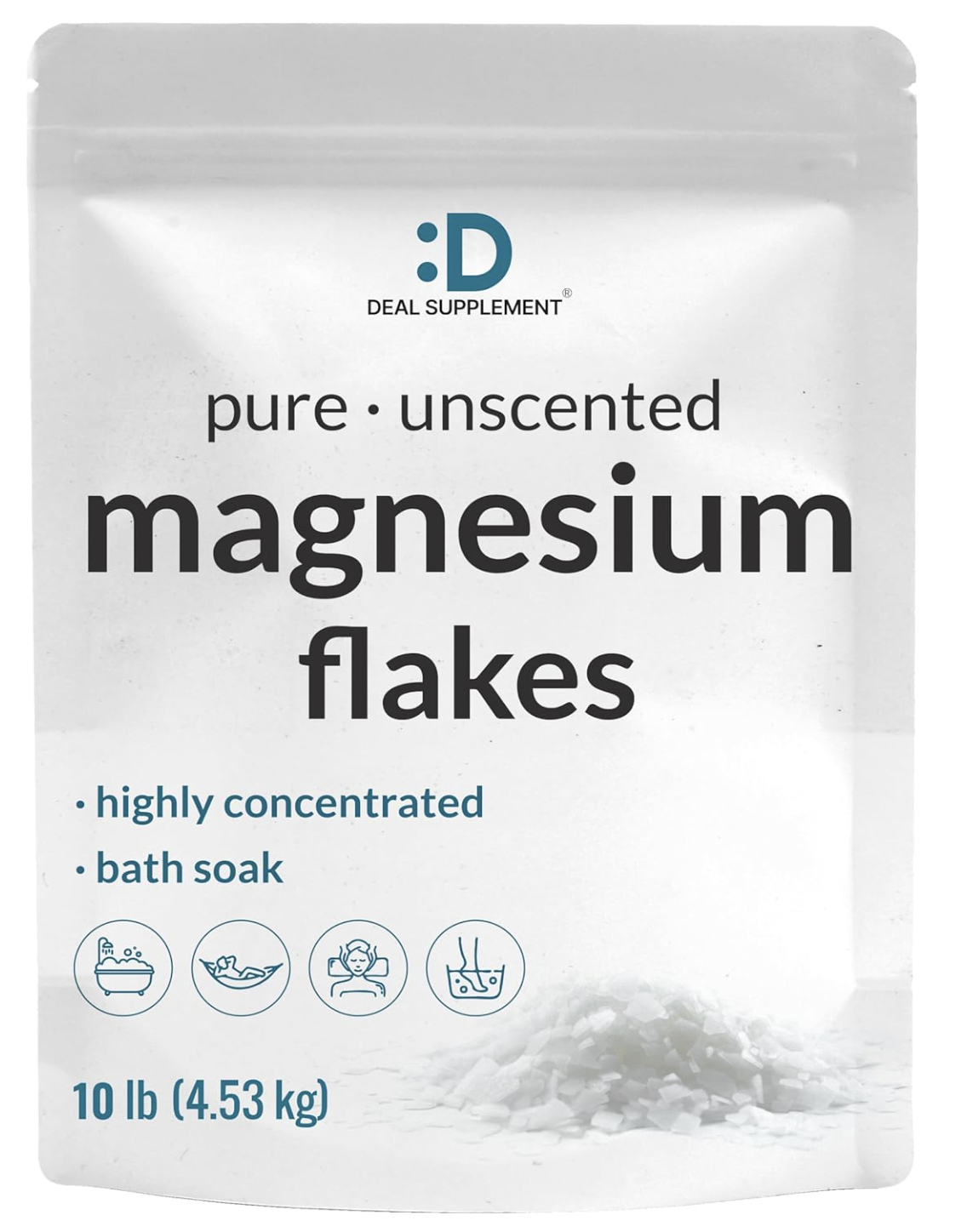
Click here to buy Magnesium Chloride.
Post-Traumatic Stress Disorder / PTSD Ear Ringing / Tinnitus and Trauma
Tinnitus is the experience of hearing a ringing in the ears that is not audible by other people. Tinnitus itself is a problem that can sometimes be treated using DMSO, but one of the interesting things about the ears is how they connect holistically into mental health, cognitive function, emotional health, and more. The ears orient us in space. They play a huge role in our posture. The structures in the ears allow us to overcome gravity and stand upright. But the ears do more than that. Some of what the ears do for us – the function of the ears – is not a part of what we recognize or acknowledge in the modern industrial world even though scientific studies have demonstrated that the ears have certain “abilities” that go beyond the usual sense of hearing and balance.
Melanocytes, the cells that give color to the skin, eyes, hair, and certain areas of the brain, are present in certain parts of the inner ear such as the stria vascularis inside the cochlea and the dark areas of the vestibular organs. In the vestibule, melanocytes play a role in endolymph homeostasis. But melanocytes are, in a general way, like tiny organs that are able to receive and transmit communication in the form of radiation. Melanin that is produced by melanocytes acts as a type of “radio antenna” that can pick up and cancel out certain types of radiation on our behalf. Human melanin, in fact, is designed to pick up radiation that is outside of and also within the spectrum that we can see and hear. At the same time, melanin can protect the body from harmful forms of radiation that might harm us. Melanin plays this role in a variety of creatures. Fungi, for example, that live inside nuclear plants, develop a specialized form of melanin to block out nuclear forms of radiation.
Children with autism, by and large, are pale-skinned for their ethnicity and often, these children are also hard-of-hearing. Autism is a disease that, among other things, has been correlated very strongly with trauma in various forms. Trauma can be defined as any “incomplete action” or as a biological experience that causes cells to go into a state of dormancy. Most children with autism, technically have PTSD and they also have lower-than-usual levels of melanin. Melanin acts to protect and censor as well as transmit information to other humans. The low levels of melanin in children with autism is also a contributing factor in ASD sensory intolerance, particularly in terms of their experience of sound. Kids with autism often have a heightened sense of sound that’s uncomfortable, if not downright distressing to them. Melanin, as it turns out, seems to play a role in modulating our 5 senses, particularly our sense of sound. Click here to read more about melanin, mercury, and sensory intolerance in ASD.
Autism in children is a form of PTSD that can develop as a result of some kind of biological trauma (heavy metal exposure, for example) or psychological trauma (birth trauma is a common cause). Click here to learn more about autism and trauma. Note that a number of children have benefited from EDTA chelation therapy to remove heavy metals. Many people who suffer from tinnitus may also benefit from EDTA chelation therapy to not only remove heavy metals but also to restore proper blood flow to the structures of the inner ear.
Click here to read more about the use of EDTA chelation therapy as a cure for autism.
Essentially, there is a link between trauma and autism and there is also a link between autism and a lack of melanin in the brain, in the ears, and in the skin. A person who has developed PTSD may benefit from treatments like DMSO to increase the amount of melanin in the skin which, in turn, calms the inflammatory response in the brain and body. DMSO has the ability to increase the density of melanin in the body, giving us an enhanced ability to filter information from the environment and also give off information to other people about ourselves. The net effect being a greater sense of connection which is important in the treatment of PTSD. Trauma is isolating and part of our sense of connection is physiological and it happens through the melanin in the skin, in the brain, and in the eyes and ears.Though we were not able to find any studies linking DMSO specifically to melanin restoration in the ear, it is likely that it has this effect when it is administered externally to the blood supply leading to the ear. DMSO, after all, contains sulfur and sulfur is the primary nutrient in melanin that gives melanin its structure and color.
Indeed, in a model of medicine known as Endobiogeny, serotonin and histamine are a part of a cycle that the body goes through to process and digest daily experiences. When our ability to process information is hijacked, we may experience any number of events as traumatizing. Serotonin sets off the cycle which causes thoughts, sensations, and emotions to cycle from the right brain to the left brain and back. In this model, Thyrotropin-Releasing Hormone (TRH) is the right-brain hormone while dopamine is the left-brain hormone. The cycle of going back and forth between the right brain and the left brain to process information and successfully “integrate” traumatic or stressful experiences is halted by histamine, a hormone that normally acts as a braking system for this cycle. But histamine can also go off the rails and take on a life of its own if a person experiences prolonged stress or a severe, short-burst of trauma that overwhelms the normal processing activities of the body.
PTSD treatment can, in some cases, be aimed at corralling histamine effects to get histamine back into its normal role as a braking system for the right-brain to left-brain processing system. Piracetam is an over-the-counter drug that can be taken to reduce the off-the-rails action of histamine to reduce symptoms of PTSD. Click here to read more about piracetam.
For some people, tinnitus may be one isolated symptom that they experience that is connected to a trauma that may have come from the very distant past. Trauma is relatively easy to release using trauma-informed therapies. Trauma-informed therapies are not generally focused on any kind of talk or dialogue but rather on the opening areas of the body that are constricted, specifically the areas around where the cranial nerves exist from the skull.
Click here to read more about cures for PTSD.

Click here to learn more and subscribe to the Living Database now.
Resources:
• Caro, A. Z. (1975). Dimethyl sulfoxide therapy in subjective tinnitus of unknown origin
https://pubmed.ncbi.nlm.nih.gov/1055561/
• Tinnitus Talk (n.d.). DMSO and Magnesium Oil for Tonic Tensor Tympani Syndrome (TTTS). Retrieved July 13, 2024 from https://www.tinnitustalk.com/threads/dmso-magnesium-oil-for-tonic-tensor-tympani-syndrome-ttts.34425/