How to Get Rid of Threadworm / Strongyloides stercoralis
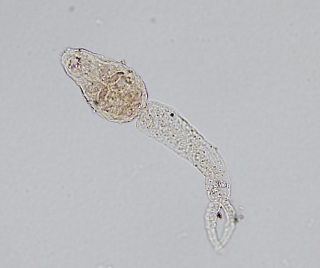
Infection begins when filariform larvae in soil penetrate the skin, migrate through the bloodstream to the lungs, and eventually are swallowed to mature in the small intestine. The most dangerous feature of Strongyloides is its capacity for autoinfection. Rhabditiform larvae passed in stool can develop into infective filariform larvae, penetrate the intestinal epithelium, and restart the lifecycle entirely within the same host. This allows the parasite to persist for decades and it also creates the risk for hyperinfection.
Click here to schedule a health coaching session with us.
Most patients with chronic infection remain asymptomatic or they have intermittent gastrointestinal or pulmonary symptoms. A small subset develop hyperinfection syndrome, systemic sepsis, and multiorgan failure from extensive larval damage. Disseminated strongyloidiasis may also develop with this type of infection, in which parasites spread to organs outside the gut, lungs, and skin. These serious outcomes occur primarily in immunocompromised individuals, or in asymptomatic patients who are inadvertently given steroids or immunosuppression for an unrelated condition. It's worth noting that chronic Strongyloides infection also has a higher prevalence in alcoholic patients, possibly due to changes in the hypothalamic-pituitary-adrenal axis, malnutrition and insulin resistance, that is often a root-cause of alcoholism, altered gastrointestinal transit, or weakening of the liver.Diagnosis is challenging as with most parasite infections. Stool studies can miss the infection, particularly when worm burden is low or if larvae are shed intermittently. Increasing the number of stool specimens tested from 3 to 7 improves diagnostic sensitivity from approximately 50% to nearly 100%, but the process of diagnosis delays treatment. Blood testing for IgG antibodies — particularly IgG4 anti-Strongyloides antibodies is the preferred detection method in conventional medicine though we advocate that patients begin self-treatment right away if they suspect this type of infection. Treatment is with ivermectin in conventional medicine, with repeat dosing for immunocompromised patients to account for larvae migrating through tissue. Patients who are self-treating at home can’t always obtain ivermectin easily without a doctor’s prescription.
Click here to learn more about the DreamLight.app, a guided meditation and brain-entrainment tool for natural trauma-release.
Self-treatment at home with wild tobacco (Nicotiana rustica) is recommended. Ivermectin works through modulation of nicotinic receptors, but tobacco is also a powerful, very broad-spectrum anti-parasitic medicine that can be administered using Ambil, a medicine manufactured by tribes in the Amazon and elsewhere in Latin America. Ambil combines tobacco and salts to produce a paste that is administered in very tiny doses against the gums and cheeks for absorption into the blood. Patients can swallow ambil in very tiny doses to treat intestinal worm infections. Contact us to set up a health coaching call to learn more about how to use this natural antiparasitic medicine to overcome threadworms.
Studies have also shown that mitragynine, one of the most studied alkaloids in the plant, Mitragyna speciosa (also known as kratom) is powerfully effective against threadworm larvae in ruminants. This plant medicine causes worms to become paralyzed, similar to what tobacco and other nicotinic receptor agents do. Once paralyzed, the worms are ushered out of the body naturally by intestinal peristalsis. Mitragyninen had dose-dependent anthelmintic activity for 24 hours after administration. The lowest effective dose of mitragyinine (the alkaloid, not the whole plant material) was 0.2 to 0.4 mg per mL. Note however, that kratom can be administered in doses up to 12 grams as a powerful pain-reliever, and as a medicine that’s used to help people overcome opiate addiction.
Click here to buy Mitragyna speciosa / Kratom.
Embelica ribes is also recommended as a threadworm cure. Administer 1 gram twice daily for 7 to 21 days. This Ayurvedic medicine is an effective treatment against several types of intestinal worms including tapeworms, roundworms, and pinworms, to name just a few. After you’ve completed the initial course of treatment, then administer 1 gram of Embelica ribes every 7 days for 3 months.
Click here to subscribe to the Chlorine Dioxide Protocols Database.
Chlorine Dioxide Solution / CDS / Miracle Mineral Supplement / MMS may also function to kill Strongyloides parasites.
Finally, methylene blue has been identified as a powerful medicinal agent against strongyloides. It can penetrate the outer cuticle and it has powerful anti-Strongyloides effects, but it’s best if it is combined with other treatments like wild tobacco.
Parasites: Self-Treatment and Prevention - BUY THE eBOOK HERE!!!
Resources:
• Williamson, S. M. et al. (2009). The Nicotinic Acetylcholine Receptors of the Parasitic Nematode Ascaris suum: Formation of Two Distinct Drug Targets by Varying the Relative Expression Levels of Two Subunits. Retrieved March 18, 2026 from https://pmc.ncbi.nlm.nih.gov/articles/PMC2705655/
• Bondarenko, V. et al. (2023). Structural Elucidation of Ivermectin Binding to alpha-7nAChR and the Induced Channel Desensitization. Retrieved March 18, 2026 from https://pmc.ncbi.nlm.nih.gov/articles/PMC10020961/#:~:text=Ivermectin%20(IVM)%20is%20a%20positive%20allosteric%20modulator,NMR**%20*%20**Molecular%20dynamics%20simulations%20(MD%20simulations)**
• Begum, T. et al. (2025). A review on multi-therapeutic potential of the Mitragyna speciosa (kratom) alkaloids mitragynine and 7-hydroxymitragynine: Experimental evidence and future perspectives. Retrieved March 13, 2026 from https://www.sciencedirect.com/science/article/pii/S2307410825000252
• Aziz, F. H. A. et al. (2012). Mitragynine as an anthelmintic for Caprine strongyles. Retrieved March 13, 2026 from http://psasir.upm.edu.my/id/eprint/26801/1/PROCEEDING%2026.pdf