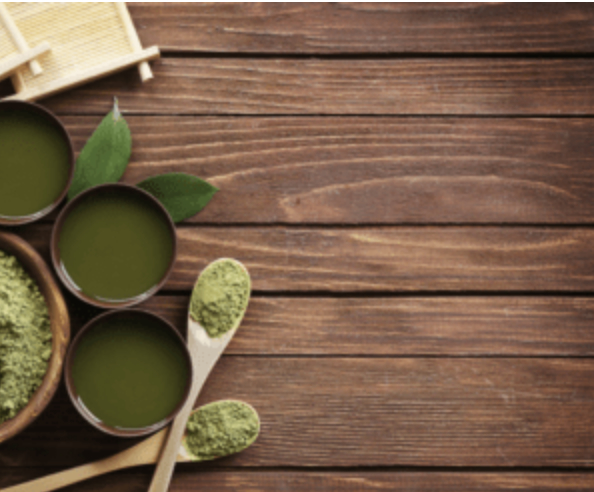
Kratom is a plant that is indigenous to Southeast Asia but some people grow kratom plants indoors in pots in the west. It is well-known in Southeast Asia for its ability to reduce pain, but its cancer-killing effects are not as widely known. Indeed, though kratom can make cancer cells more vulnerable to chemotherapy treatments, few doctors are in-the-know about this vital anti-cancer herb.
Kratom is an herb that people often use to break an addiction to opiates. It is for this reason that kratom has been demonized in the mass media. Kratom is relatively harmless in comparison with prescription opiates and street drugs, but it acts as a painkiller that also improves mood. Anyone who has had to try to battle a disease while being in constant pain will easily see the value of a non-addictive plant medicine to kill pain and psychologically fortify the patient. But kratom is special in regard to cancer because this herb kills pain while also killing cancer.
Click here to schedule a health coaching session with us.
Mitragyna speciosa as an Alternative Medicine for Cancer
In the scientific community, Mitragyna speciosa is viewed as an alternative cancer treatment or a functional food that kills cancer cells. It has been studied as an herbal anticancer treatment for the following types of cancer:
- Neuroblastoma
- Leukemia
- Colon cancer
- Rectal cancer
- Breast cancer
- Kidney cancer
- Liver cancer
- Nasopharyngeal cancer
- Lung cancer
- More…
Become an Expert. Do our Anticancer Video Course Series Online.
Kratom Phytochemicals
Kratom is rich in phytochemicals that include:
- Mitragynine
- 7-hydroxymitragynine
- Rutin
- Procyanidin
- Speciociliatine
- phenolics
- flavonoids.
Kratom alkaloids induce cancer cell death and they arrest the cancer cell cycle progression. Additionally, this herb inhibits cancer cell migration and metastasis as well as clonogenecity. Rutin and procyanidin act as antioxidants that also inhibit topoisomerase II-alpha, yet another anticancer mechanism of action. Some doctors have used kratom for cancer as an agent that synergizes with chemotherapy treatments. As such, kratom is a versatile herbal medicine that can be useful in most situations involving cancer.
Click here to buy Kratom.
How to Administer Kratom
Dose plays a major role in how kratom affects a person psychologically. Lower doses tend to be more energizing. Higher doses are more sedating and relaxing. But the vein-color and the location-name label also plays a role in the psychological effects associated with this herb.Though kratom can be addictive, most people compare the addictive qualities of kratom to a coffee addiction. But to avoid addiction, patients should administer a different vein color daily on a 3-day rotation. In other words, use one vein color one day, a different one the next day, and still a different vein color on the 3rd day of treatment before returning to the vein color that that patient used on the first day of treatment.
As a whole herb, kratom is sold as one of four vein colors which include:
- Red vein
- White vein
- Green vein
- Yellow vein / Gold vein
Also, the location where the kratom is grown is used as an identifying label that tells you whether that particular product is more energizing or more relaxing. Examples of location-name labels include:
- Hulu
- Maeng Da
- Borneo
- Malay
- Etc.
Start with a low dose of about 1 gram daily and increase the dose up to 8 grams per day slowly until you achieve the desired effect. Take a magnesium citrate supplement along with your kratom to prevent constipation.
Click here to buy the 4 volume Cancer Cure Catalog series.
Resources
Priatna, P. A. et al. (2024). Cytotoxic Potential of Mitragyna speciosa as Anticancer - A review. Retrieved December 1, 2025 from https://www.phcogj.com/article/2444
Permatasari, H. K. et al. (2025). Kratom (Mitragyna speciosa) in cancer chemoprevention – A provocative functional food perspective. Retrieved December 1, 2025 from https://www.sciencedirect.com/science/article/pii/S2666154325008968?dgcid=rss_sd_all
Priatna, P. A. et al. (2026). In silico and in vitro studies of Mitragynine isolated from Kratom leaves (Mitragyna speciosa) on targeting breast cancer apoptosis by activating caspase-3. Retrieved December 1, 2025 from https://jmpcr.samipubco.com/article_224810.html
Domnic, G. et al. (2020). Combinations of Indole based alkaloids from Mitragyna speciosa (Kratom) and cisplatin inhibit cell proliferation and migration of Nasopharyngeal carcinoma cell lines. Retrieved December 1, 2025 from https://www.biorxiv.org/content/10.1101/2020.12.18.423377v2.full