How to Do Addiction Recovery At Home
 Treating a substance abuse problem at home is absolutely possible. You can overcome substance abuse addiction through self-treatment and you can help a loved one manage their addiction too if the addicted person is ready to make a change.
The neurological bases of substance abuse are easily overcome using plant medicines like Mucuna pruriens and/or Kudzu with supportive vitamin therapies and trauma-informed therapies. Nutrients and herbs ensure that the dopamine precursors can be used by the body and then metabolized by the brain into dopamine (and other neurotransmitters) while trauma-informed therapies help the right-brain and the felt sense (a term coined by Dr. Peter Levine) make a connection with the logic of the left-brain. To be able to stop the addictive cycle and the symptoms of withdrawal using these plant medicines and trauma-informed therapies is a magic formula that works for most people to overcome addiction without rehab.
At AlivenHealthy, we view all addiction (including both substance abuse addictions and behavioral addictions) as a problem that’s rooted in different “layers”of the human experience. What we mean to say when we talk about the “layers” of human experience is that an addiction is always rooted in a past trauma (the psychological layer), which lead to nutritional deficiencies (the physical layer) that maintains the addiction and that prevent trauma from being properly released and processed, as well as psychosocial challenges (the relationship layer) that also serves to maintain the addictive process through negative interactions that are heavily encoded, often as a result of familial and even ancestral traumas that have been passed down for sometimes many generations.
If you or a loved one is struggling with addiction, it might be easiest to begin with treatment of the nutritional and physical layers of addiction, but it’s important to know that there are at-home treatments available for relationship issues and psychosocial challenges as well as the physical and biochemical imbalances that must be treated in order for a person to become permanently sober and addiction-free. Addiction recovery at home can be easier, more comfortable, more affordable, and more effective than going to an inpatient addiction rehab program if you address all of the layers of addiction that contribute to compulsive behaviors and attitudes.
That being said, it’s hard to overcome an addiction that’s expressed as a nutritional deficiency unless the nutritional deficiency is corrected. Many addiction rehab facilities don’t address the nutritional deficiencies that are common to all addictions (namely the lack of dopamine precursor amino acids and vitamins and minerals required to transform those aminos into dopamine and other neurotransmitters) which leads to high relapse rates. Given the right amino acids, like L-Tyrosine or an herb like Mucuna pruriens, the relapse rates drop precipitously and people who are properly nourished using supplements and an anti-addiction diet typically feel strong enough to address the trauma and stressors that ultimately led to their addictive behaviors initially.
Treating a substance abuse problem at home is absolutely possible. You can overcome substance abuse addiction through self-treatment and you can help a loved one manage their addiction too if the addicted person is ready to make a change.
The neurological bases of substance abuse are easily overcome using plant medicines like Mucuna pruriens and/or Kudzu with supportive vitamin therapies and trauma-informed therapies. Nutrients and herbs ensure that the dopamine precursors can be used by the body and then metabolized by the brain into dopamine (and other neurotransmitters) while trauma-informed therapies help the right-brain and the felt sense (a term coined by Dr. Peter Levine) make a connection with the logic of the left-brain. To be able to stop the addictive cycle and the symptoms of withdrawal using these plant medicines and trauma-informed therapies is a magic formula that works for most people to overcome addiction without rehab.
At AlivenHealthy, we view all addiction (including both substance abuse addictions and behavioral addictions) as a problem that’s rooted in different “layers”of the human experience. What we mean to say when we talk about the “layers” of human experience is that an addiction is always rooted in a past trauma (the psychological layer), which lead to nutritional deficiencies (the physical layer) that maintains the addiction and that prevent trauma from being properly released and processed, as well as psychosocial challenges (the relationship layer) that also serves to maintain the addictive process through negative interactions that are heavily encoded, often as a result of familial and even ancestral traumas that have been passed down for sometimes many generations.
If you or a loved one is struggling with addiction, it might be easiest to begin with treatment of the nutritional and physical layers of addiction, but it’s important to know that there are at-home treatments available for relationship issues and psychosocial challenges as well as the physical and biochemical imbalances that must be treated in order for a person to become permanently sober and addiction-free. Addiction recovery at home can be easier, more comfortable, more affordable, and more effective than going to an inpatient addiction rehab program if you address all of the layers of addiction that contribute to compulsive behaviors and attitudes.
That being said, it’s hard to overcome an addiction that’s expressed as a nutritional deficiency unless the nutritional deficiency is corrected. Many addiction rehab facilities don’t address the nutritional deficiencies that are common to all addictions (namely the lack of dopamine precursor amino acids and vitamins and minerals required to transform those aminos into dopamine and other neurotransmitters) which leads to high relapse rates. Given the right amino acids, like L-Tyrosine or an herb like Mucuna pruriens, the relapse rates drop precipitously and people who are properly nourished using supplements and an anti-addiction diet typically feel strong enough to address the trauma and stressors that ultimately led to their addictive behaviors initially.
Click here to subscribe to the DreamLight.app, a brain entrainment, guided meditation tool to reduce stress and overcome trauma.
Addiction takes shape initially to cover up the physical pain, high stress, or trauma. When trauma, stress, or physical pain due to injury or illness seems to be a permanent condition in the body, people are very motivated to find relief from that pain through any means necessary. Trauma and stress can and do cause physical pain in the body. Nutritional deficiencies actually play a role in the inability of the body to release trauma through the lack of dopamine and other biochemical changes in the brain that prevent the right-brain and autonomic nervous system from communicating with the left-brain.The social environment also plays a role in addiction. Indeed, our relationships dictate when or if we can scream out loud, fart, laugh, make jokes, run away, or simply just say it how it is. The rules that govern different social environments from the home to schools, churches, organizations, and more exist to ensure that we behave in a very specific way in each of those environments. While every other animal on earth will tremble violently to shake off a traumatic or stressful experience, humans prevent themselves from doing this particularly in environments that are very oriented toward rules. At AlivenHealthy, our experience with treating trauma demonstrates that, in fact, a person may develop an addiction originally because they have one or more profoundly negative feelings that drive them to seek out what later becomes the object of their addiction. These feelings are literally feelings or sensations in the body and though we might refer to these “feelings” as emotions, in fact, emotions are made-up almost entirely of physical sensations.
In a healthy person, every emotion involves a physical sensation in the body along with a memory or a narrative of what is causing the physical sensation. We are taught in the modern industrialized world to ignore these physical sensations that make up our emotions and instead focus only on the logical, linguistic, linear memory associated with the body-feeling. Any kind of discussion or acknowledgement of the strong bodily feelings by the logical, linguistic part of the brain, in particular like rage, sadness, and terror are discouraged in the modern world. We can talk about what caused our rage and we can talk about the story of a situation involving a lot of anger, but we’re discouraged from describing the feeling of the rage in the physical body and we are definitely discouraged from acting it out, even in potentially acceptable ways.
The physical experience of sadness or fear are similarly isolated and we’re discouraged from acting these feelings out in any context. We can talk about what made us sad linguistically in terms of facts and information, but we’re not given tools to connect the felt sense of sadness as we feel it in the physical body with the logical narrative of our lives. So a person’s physical experience of sadness, fear, or anger becomes locked inside the body and isolated or dissociated from the factual, linear experience of reality.
The addiction itself gets rid of the pain of trauma for short bursts of time, in large part, by literally killing the dopamine receptors that the body and brain need in order to release trauma in a natural way. Trauma and stress builds up in the body as a result without an outlet other than through damaging addictive behaviors. Once the addiction takes shape though, the addictive behaviors become the focus of treatment and trauma gets buried. Ultimately, though many drug rehab centers make trauma release a focal point in reality, it’s very hard to release trauma if the dopamine receptors are not fully functional. And, in comparison with working with the sacred medicines like psilocybin or Ayahuasca, trauma release proceeds at a snail’s pace using the trauma release methods used in drug treatment facilities.
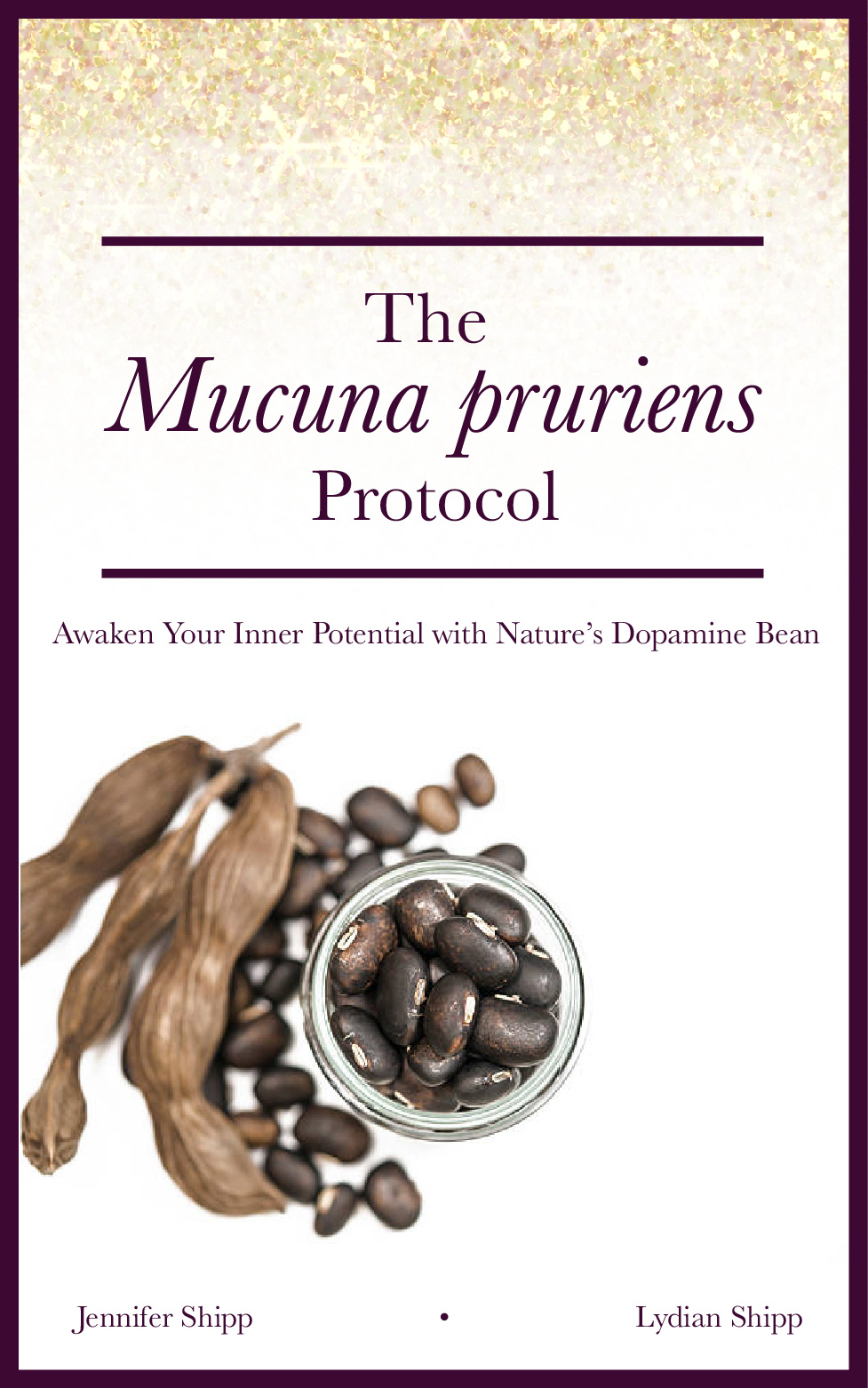
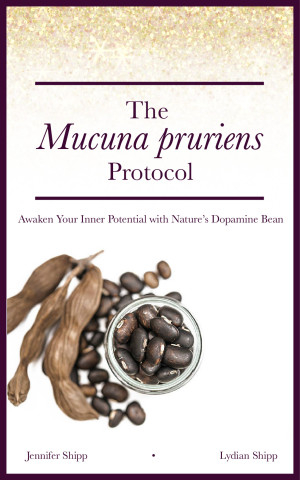
Click here to buy The Mucuna pruriens protocol.
Regrowing the dopamine receptors is the first step in the process of getting rid of an addiction at home. Without nutrient supplements like either L-Tyrosine or Mucuna pruriens, it can take years for the dopamine receptors to regrow and in fact, dopamine receptors may never fully regrow without appropriate nutrient supplementation. When supplementing with L-Tyrosine or Mucuna, on the other hand, the process of regrowing the dopamine receptors takes about 5 months if the addicted person is eating a fairly healthy and well-balanced diet. Even if the addicted person relapses once or twice during the 5 month dopamine receptor regrowth period, it won’t necessarily set the process of regrowing dopamine receptors back very far because the receptors are not going through the same kind of dopamine drought-and-flood-cycle anymore. As long as the addicted person continues to take the L-Tyrosine and Mucuna pruriens, dopamine receptor growth should continue on schedule for the most part even with occasional relapses.Once the dopamine receptors are regrown and the brain is fully charged with daily doses of amino acids that the body uses to produce dopamine, the brain is primed to begin dealing with trauma. Some people may begin to develop anxiety or depression during step two in the process of overcoming an addiction at home if they are not already doing trauma-informed therapies by the time the dopamine receptors regrow. This occurs because the dopamine receptors have regrown and the body is ready to discharge trauma that is making it feel emotionally or even physically unwell but before the trauma is discharged, it can first, make a person feel depressed, anxious, manic, panicky, and more. It’s wise to begin working with trauma-informed therapies at home or with trauma treatment practitioners starting as soon as possible as part of the at home addiction treatment protocol. Work with sacred indigenous medicines like psilocybin, Ayahuasca, Iboga, San Pedro (in moderate to higher doses), Sapito, Xananga (and others) is often what finally extinguishes the addictive behaviors to put the addicted person back in the driver’s seat of their own lives.
Trauma is a fairly new field in psychology and currently, it is not mainstream. This is because trauma-informed psychology makes the various mental health diagnoses used by insurance companies completely useless. Trauma-informed psychology explains the mind-body connection elegantly and trauma-informed therapies are powerful and much more effective than talk therapy. The most powerful at-home trauma treatment that was first developed by psychologists was Eye Movement Desensitization and Reprocessing / EMDR, a type of therapy that models REM sleep cycles except during the waking state to release trauma. It is a very simple, very powerful treatment method that uses one of the body’s own natural methods of discharging trauma to help patients make big strides in their therapy in much shorter periods of time than what’s possible using talk therapy by itself.
Click here to do a free trial of EMDR online.
Click here to read about EMDR for trauma along with 3 other treatments that target the autonomic nervous system - the part of the body that might be regarded as a mind-body interface. When we work with health coaching clients who are trying to address addiction and trauma online, we often combine the use of EMDR, alpha-theta therapy, brain entrainment technology, and psilocybin microdosing to release trauma much more easily than working with talk therapies which frankly, don’t work most of the time to release trauma. Talk therapy is not an effective way to release trauma because trauma is stored as a somatic, body-oriented feeling that defies words. In order to put trauma that’s being stored in the autonomic nervous system into words, it must pass through the dopamine system in the brain (once dopamine receptors are being healed) into the left, logical hemisphere of the brain where the brain must be able to interpret it with a special creativity from the right-hemisphere of the brain. One of the things we’ve learned by working hands-on with addiction clients is that before dopamine receptors regrow, patients must receive trauma-informed therapies to release trauma that has occurred during or before the addictive cycle began. Lydian and I work with clients in Mexico to help them gain access to sacred indigenous medicines that can move trauma therapy forward considerably following an addiction. Sacred indigenous medicines like Ayahuasca, Iboga and other dream roots and herbs, peyote, Sapito, Kambo, and Xananga, can help people with addiction move forward very quickly in just one treatment session. Lydian and I trained with a curandera to learn how to administer these medicines and generally, we recommend a course of treatment that includes not only microdosing, but also full doses of different medicines depending on the patient’s addiction type, their physical health issues, their mental health issues, and known traumas that the patient has experienced.
Click here to subscribe to the Living Database!
Most people who are suffering from an addiction require a course of about 120 “tripping” hours (more or less) to recover naturally from an addiction using the sacred indigenous medicines like psilocybin or Ayahuasca. A psilocybin trip, for example, takes about 4 hours so a person with an addiction will likely need about 30 trips using psilocybin and integrative psychotherapy following each trip so that the felt sense experienced on the trip will pass through into conscious linguistic awareness. Our clients usually start by doing about 10 trips (1/3rd of the total tripping hours that they would need) to get started and begin to understand what’s happening and how to work independently with the sacred medicines to overcome addiction without rehab. Lydi and I have over 10 years of experience working with the various shamanic medicines listed above and we are psychedelic integration therapists with a trauma-informed approach. We can assist patients remotely or we can provide a more hands-on approach face-to-face in-person to guide people through the process of addiction recovery at home. Contact us at [email protected] for more information about addiction recovery coach services, life coach addiction specialist services, psychedelic integration therapy services, and in-person drug addiction treatment outside of a rehab facility. Note that we are located in central Mexico, northwest of Mexico City.
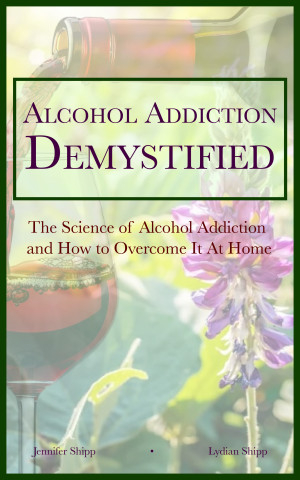
 Alcohol Addiction Demystified: The Science of Alcohol Addiction and How to Overcome It At Home - BUY HERE!
The Physical Layer
If you haven’t already read the Quick-Start Guide to Addiction Recovery at Home, take a moment and read it now. This guide provides the basic outline for how to overcome the physical manifestations of the addictive cycle for all types of addiction from an addiction to methamphetamines to an addiction to social media. By addressing nutritional needs through diet changes, the use of supplements, and herbal medicines, your or your loved one can first heal the brain and neuro-chemical aspects of addiction. Later, once the brain has started to heal, it will be possible to address psychological, relational, and spiritual issues related to the addiction. It may seem hard to believe that you can recover from addiction at home, but once you understand how and why an addiction takes shape (on the physical and psychological level), the idea of being able to overcome addiction outside of a treatment facility begins to make sense. In fact, as you read more about what causes addiction and how herbs, supplements, and sacred medicines, and treatments that address underlying trauma, address the addictive cycle, I think you’ll find that drug rehab centers are calibrated like many other healthcare facilities to make big profits by not solving addiction problems. This is not always the case – there are some really amazing drug treatment facilities out there that are honestly trying to help patients, but many of them exist to serve their own profit-centric motives. Again, once you understand the politics of drug rehabilitation and the underlying physiology and psychology of addiction, you’ll feel more confident about the treatments we describe in this book. Indeed, we hope that you’ll be able to see that addiction recovery at home is often easier, less expensive, and more effective than addiction rehab facility treatments.
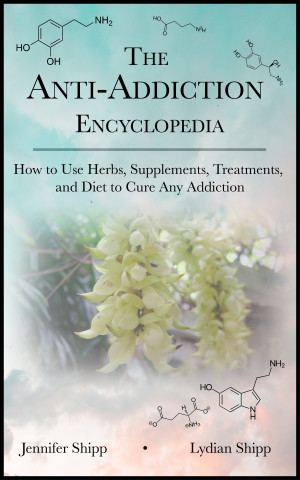
Click here to buy The Anti-Addiction Encyclopedia.
The Psychological Layer
Addictions and the addictive cycle wreak havoc on relationships. But sometimes, relationship issues and a lack of authentic connection lead people into the cycle of addiction in the first place. Relationships can be a source of trauma, after all, as well as a resource to overcome trauma. We discuss relationships more below, but in this section, I’d like to focus on our relationship with our “selves”. When I say our “selves”, I’m talking about the relationships that we have with parts of ourselves that have dissociated from our original Higher Self (according to Dr. Richard Schwartz’s Internal Family Systems therapy).Internal Family Systems therapy was developed to address how our minds naturally become fractured and dissociated from our Core Self as a result of trauma. As a result of this fracturing or dissociation process, we develop sub-personalities similar to the sub-personalities experienced by those with Dissociative Identity Disorder / DID (previously known as Multiple Personality Disorder). The only difference between someone with DID and a normal, relatively healthy person in the modern world is that modern humans living in industrialized societies have less inner conflict and fewer episodes of full amnesia than those with DID.
But how many of us in the modern world are not in the throes of some kind of extreme inner conflict most of the time? This inner conflict can be extreme when people go through decades of their lives without ever doing a single trauma-informed therapy or sacred medicine to release traumas and stressors from the past that have gotten stuck in the autonomic nervous system. In substance abuse addiction of any kind, the body is active in seeking out a “medicine” (e.g. street drugs, addictive prescription drugs, and other substances) of any kind to relieve the physical pain of experiencing unresolved negative emotions from traumatic or very stressful events in the body. The body will seek out a “medicine” in any form even if said “medicine” is harmful because the body is in pain as a result of the negative, unresolved emotions. Meanwhile, the logical left-hemisphere of the brain that loves to follow rules judges the body harshly for its addictive behavior. The logical left-hemisphere of the brain literally is not connected to the negative feelings in the body. Note that being “numb” is a common complaint among addicts as they’ve been taught not to feel their bodies and their emotions. In addiction, people tend to know the rules and wish to follow them but their bodies act without their left-brain’s consent. This type of inner conflict is incredibly uncomfortable and most people don’t realize that it can be permanently resolved using a 5 month Mucuna protocol along with work the sacred indigenous medicines and/or trauma-informed therapies like EMDR.
Trauma psychology is able to explain many psychological issues relatively succinctly and elegantly. The definition of “trauma” is any event or situation that makes a person feel as though their life or the life of someone they love is threatened by death. As such, “trauma”, according to this definition, is extremely subjective. It doesn’t matter if the person actually was in danger of losing their lives (or the life of a loved one) or not . All that matters in this definition of “trauma” is whether the person felt in the physical body as though their life was in peril.
I have an example of “trauma” in my own life that I’ll use to define trauma a bit further:
When my family and I moved to Mexico from the United States, we decided to stop in Tijuana, Mexico to get our amalgam mercury fillings removed from our teeth before heading to the city where we wanted to settle permanently. The dental clinic was located just minutes from the Mexican-U.S. border.
I had 5 fillings that had to be removed on the top and bottom jaws on both sides of my mouth. I opted to not be sedated for the procedure and to have all of the fillings removed at once to speed up the overall process. During the initial appointment, the dentist installed a rubber dam. I had never had a rubber dam installed for a dental appointment before. The rubber dam made me feel scared. I couldn’t speak and I couldn’t breathe through my mouth. The dentist and the assistants spoke only Spanish and my Spanish was pretty poor at that time, so I was very aware of the fact that it would be hard for me to communicate during the procedure.
The dentist leaned the chair back such that I was almost upside down so that he could get to the teeth at the back of my throat. He numbed both sides of my face, top and bottom by doing an injection at the back of my throat near the tongue on both sides. The sensation of having my entire face numbed along with the rubber dam really freaked me out. I sat up in the chair at one point. I motioned to the dental assistant to get me a pen. Everyone in the room looked at me with fear, not knowing what I was trying to say. I wrote “sedation” on my hand. The dentist said it was too late, I could not be sedated at this stage in the procedure.
I gathered my courage and laid back into the dental chair. The dentist and the assistants waited patiently for me to settle back into the chair for the procedure. Despite the numbing of my entire face, I could still feel parts of the procedure – jabs at exposed nerves inside my teeth, for example – and it was quite painful. The dentist was not especially responsive to me when I would indicate that something was painful.
After the procedure, my husband, John, daughter, Lydian, and I continued on into Mexico to the city where we planned to live. After we arrived there, Lydian and I got to know a curandera who introduced us to a frog venom called Sapito that contains 5-MeO-DMT. The first Sapito experience that I had involved ego dissolution. It was a powerful trip that lasted an abnormally long time.
After the trip, I had nightmares for a week that I was having my tongue cut out of my mouth and then that I was being thrown from a big dam into a body of water below. I would always wake from these nightmares with a jolt.
The nightmares ended and I forgot about them, but several months later, John, Lydian, and I were heading up to the United States to put on an annual Halloween event in a city where we owned some property. On our way back to Mexico after the event, we had set up an appointment to get temporary residency at the U.S.-Mexico border in Laredo, Texas.
As soon as I got into the car to head north for this event from Mexico, I had my first panic attack ever. I felt like I couldn’t breathe and like I might lose control over myself. I feared that “my spirit would leave my body”. I didn’t say a lot about this feeling of panic to John until it subsided a bit and then, once I talked about it, I realized that it was a panic attack. I wondered if the panic had to do with the event that we were putting on for Halloween because this event was high-stress and I was the one who was in charge with most of the responsibility for whatever happened during the event. That made sense and I worried that I might not be functional enough to manage our patrons properly.
Nonetheless, the panic attacks subsided somewhat until we got close to the U.S.-Mexico border. Again, as we neared the border, I thought that perhaps I felt panicky because we were getting closer to our home in Nebraska.
…but as we put on the Halloween event I felt no panic. I had no meltdowns. I was fine. We packed to go home to Mexico and again, I had another panic attack as soon as I got in the car to head back to the U.S.-Mexico border.
The panic attacks got worse and more frequent the closer we got to the U.S.-Mexico border. In Laredo, TX at the immigration office, I struggled to hold myself together long enough to get through the appointment. By this time, I was truly concerned about my mental health and I wondered what the hell was wrong with me.
We returned home from this trip and the panic attacks went away.
Eight years later, after studying trauma psychology and the sacred indigenous medicines, I realized that the nightmare I’d had after Sapito was my unconscious mind serving up that dental appointment as an symbolically “encoded” story about how the dental work felt to me. Sapito brought the traumatic material to the surface, into my conscious mind. My body still held the trauma which was now at the surface of my consciousness where it was causing me to have panic attacks. The nightmare was the trauma emerging from my unconscious felt sense into my conscious awareness. The nightmare (in retrospect), helped me understand how my body (not my mind) understood what was happening during that dental appointment. The panic attacks were a physical manifestation of the same material as the nightmare but they were triggered by crossing the U.S.-Mexico border. Obviously, my mind-body had mixed the experience of crossing the border to Mexico with the trauma of the dental experience. It’s common for the body to code an experience improperly with a focus on the symbolic meaning of an event without chronology or actual facts about the trauma.
I never sought any conventional treatment for the panic attacks and by the time I crossed the U.S.-Mexico border again, the panic attacks were gone, likely because of some sacred indigenous medicine that I worked on with the curandera while writing our Cancer Cure Catalog series. It’s important to point out though that while my panic attacks were CAUSED BY a Sapito session, in fact, a second Sapito session would have likely cleared them up as well by bringing the trauma fully to the surface to allow my body to fully release the physical felt sense of the trauma. Indeed, during the same Sapito session, Lydian also took Sapito. She has no memory of the trip, but she screamed and thrashed around violently, which I now understand as the release of trauma as this is exactly how trauma release looks in animals.
At this point, I’d like to direct readers to a YouTube video of a polar bear “shaking off trauma”. This video shows how it looks for animals to release trauma: https://www.youtube.com/watch?v=xDlR-wl7iFI
It is also worth noting that after childbirth, many women’s bodies shake violently. The shaking is the body releasing trauma. Since childbirth almost always, without exception, involves the feeling that one’s life or the life of the baby is threatened (especially during the second stage of labor when the baby “drops”), it makes sense that women’s bodies shake after they give birth.
Unfortunately though, after we experience most traumas in our lives, we don’t “shake it off”. Rather, we store the trauma in our autonomic nervous systems. We are encouraged to hold the trauma in our bodies to our own detriment and then our bodies act out in ways that often defy logic.
Above, I’ve detailed one of the most well-developed personal trauma experiences that I’ve had that I can trace through the various manifestations that trauma can take. Trauma is a situation that feels life threatening. It is a powerful experience that can be hard to put into words. Instead, trauma is encoded symbolically as emotional content without words. This emotional content is stored in the autonomic nervous system, a part of the body that consists of three branches: the fight-or-flight branch, the rest-and-digest branch, and the play-dead or freeze branch. Trauma can cause the autonomic nervous system to stay in a state of switching between fight-or-flight and play-dead chronically or it can trigger the autonomic nervous system to go into a fight-or-flight or play-dead response if a stimulus related in some symbolic way to the original trauma presents itself in the environment. The autonomic nervous system holds onto the emotional content of the original trauma where it creates tension in the body where the trauma-tension occurred during the traumatic experience. It holds the “felt sense” or physical experience of the emotional content of the trauma.
You may be able to name the emotion that you felt when you arrived at a carnival, for example. Many people feel “excited” when they arrive at a fun event. But what if you felt “excited” in your body at a moment when nothing exciting or fun was happening, let’s say, when you’re working on a really mundane and boring project at work? That would be odd, but not necessarily unpleasant because the feeling of excitement is usually pretty pleasant. If your physical body presents the sensation of being excited to your mind though at this moment when you’re bored, your mind will try to make sense of this sensory experience of excitement. Your mind is likely to come up with a story or mental images to go with the sensation of being excited, for example. If you’re bored, you might be inclined to notice these mental images and they might be weird enough to make you feel concerned in some way about your own mental health.
Let’s say that the feeling of excitement is like a tickle just under your rib cage along with a fast-beating heart, and a fluttering feeling in your throat. If you didn’t know better, you might worry that your body is sick, especially if this feeling of excitement frequently occurs suddenly and for no reason. You might feel compelled to go to the doctor thinking that you have some kind of heart problem.
In order to make this odd feeling of excitement stop, you might try to name the feeling first or describe a situation when you might feel a feeling such as this. You might also describe where it’s located in the body and what color it seems to be in your mind’s eye. You might also try to determine the trigger that causes the feeling to emerge. Triggers can be elusive and hard to pin down and there can be many of them for any given situation like this involving an emotion that’s lodged in the autonomic nervous system. A trigger is anything that sets off a sensory experience of a traumatic event in the body. The trigger often does not seem logically related to the sensory experience as my panic did not seem related to the U.S.-Mexico border crossing. It can be hard to observe a trigger when you’ve been triggered too. Being triggered causes the mind to dissociate from many of its own internal resources. A person who has been triggered becomes irritable and often irrational. Their ability to adapt and respond creatively to problems becomes seriously inhibited.
Triggers can be extremely mundane and something that people have trouble avoiding in their daily lives or they can be bigger, more obvious, and therefore easy to avoid (albeit sometimes while creating a lot of inconvenience). Trauma builds up in the autonomic nervous system and it can cause general dysfunction which can become a major problem both in terms of physical as well as mental health.
Below, I detail another example of how trauma can affect the body from my own personal experience.
In 2001, John and I had a stillborn baby. This was obviously a traumatic experience for both of us. Within a year, we decided to move from our home in Nebraska to Colorado. We knew that we were moving in large part to escape from our own memories, but nonetheless, it made sense to do this. It was the only thing we could think of to do to avoid confronting the pain of our loss on a daily basis. Essentially, we were trying to dissociate from the pain by running from our triggers.
We bought a house and we moved to Colorado but John’s online business collapsed shortly after 9/11 and within only a few months of living in the house, we couldn’t afford the mortgage payments. Within less than a year, we had rented out the house we’d bought and moved into a cheaper apartment. Shortly after we moved, I had to quit my job as a social worker with special needs kids because my boss had a nervous breakdown. The day after I quit my job, I got ill with a fever and vomiting. Within 3 days, my body had become stiff and arthritic and I had trouble even pulling up the sheets on my bed. Within 24 hours, I went from being a marathon runner to someone who could hardly walk from one side of our apartment to the other. I went to the doctor and the doctor diagnosed me with fibromyalgia.
I refused to accept this diagnosis and worked to find a cure for the general pain that I had throughout my body. Within a few years of using natural remedies for fibromyalgia, the pain had mostly disappeared, but I still had cystitis (bladder irritation), eye irritation and redness, and regular urinary tract infections for about a decade. The doctors diagnosed me with Reiter’s Syndrome, another disease that usually involves whole-body pain. My whole-body pain was gone by that point, but I had the other symptoms of this disease. Again, I refused to accept this diagnosis and I continued to work to find treatments to relieve the cystitis and the eye problems. Slowly, I overcame these physical health issues as well.
Eventually, the cystitis and the eye problems went away for the most part. I would only experience eye problems when my mother-in-law came to visit. I thought this was odd, but couldn’t explain it. Now I understand that it was a stress response. Whenever we would travel overseas, I would get cystitis on the longer flights. A Rolfer told me that everybody has a “weak link in the chain” as far as their body goes. All of us put trauma and stress in a location that makes sense to us. Later, I realized that trauma can be expressed psychosomatically as a physical illness. This is not conjecture but a scientifically proven fact.
My physical health improved most dramatically when we moved to Mexico even as we experienced some of the most painful and incomprehensible traumas of our lives (which were not caused by anything having to do with Mexico). I understand now why our bodies got healthier even as we experienced a lot of new traumas: even as we were accumulating all of these traumatic experiences, we were also working intensively with sacred indigenous medicines.
Essentially, when a traumatic experience occurs and a person does not follow through or “act out” the way that the traumatic experience feels or the way the body would react if the logical left-brain did not chastise it for doing so, these physical movements that we don’t do and that we don’t act on, get frozen in the body. I mentioned “shaking” above and provided a link to a polar bear that “shakes off” a traumatic experience. When our bodies don’t “shake off” these “incomplete actions” that pertain to a recent trauma, the trauma gets stored in the autonomic nervous system. For example, if I had made the movements I wanted to make during my excruciating dental appointment, I would’ve gotten up out of my chair (that was a movement I actually did make), hit the dentist, and I would’ve run screaming out into the lobby. These movements became stored in my body as fear and the fight-or-flight reflex because it would’ve been socially unacceptable for me to behave in this way. As such, whenever I got close to the U.S.-Mexico border, I was triggered and I felt “panic” (a combination of fear and a fight-or-flight adrenaline rush).
The fibromyalgia symptoms were more complex in terms of trauma. Instead of doing the fight-or-flight reflex, my autonomic nervous system stored my grief as a “play dead” or “frozen” reflex. I felt sick to my stomach and I had a fever (these are both “play dead” reflexes) and I became stiff and “frozen” (somewhat literally).
Trauma can manifest in a variety of ways depending on the trauma in question. Many people who become addicts have more than one trauma that triggers an addictive behavior. These addictive behaviors are actually the body’s efforts to transform the trauma into something positive, but often, addiction actually has the opposite effect. Once a trauma settles into the body, it can be hard to gain access to it to confront it head on. Trauma, as a rule, is a situation that is nearly impossible for a person to describe in words. It is, therefore, something that lodges itself in our bodies as an emotion, usually an emotion that involves some combination of fear, sadness, and / or anger. The emotion that develops (which is usually quite complex) also has no words paired with it and it exists only as a sensory experience (e.g. heaviness in one’s chest, tightness in the throat, painful intestinal cramping, nausea, etc.). Fear, sadness, and anger are emotions that are hard to approach using our logical minds. Most of us use dissociation or depersonalization to deal with these emotions if no other tools (like sacred medicines) are available to us. What this means is that we may engage in activities or behaviors that we actually hate or that seem foreign to us in some way because we’re dissociating from our Core Self. Dissociation makes it hard for us to confront our “selves” (literally, the different parts of our psyche that break off and begin to take on personality traits that are separate from our original, core personality), the parts of us that are frightened, angry, and sad. These selves actually frighten us and we seek to avoid them and hide from them at all costs. Each represents an emotion that we don’t want to feel.
Trauma can drive people to addiction because people are trying to release their trauma. And trauma release and dopamine release and uptake work together. Though the release of trauma involves more than just a dopamine hit, people with addictions are ultimately trying to get their dopamine system to give them a burst of mental energy and good feelings that they need to be able to confront the bad feelings stored in the body. Again, the release of trauma is more complex for humans than just making sure that a person has plenty of dopamine on tap with fully functional dopamine receptors. But having a dopaminergic system that is functioning properly is definitely a first step toward releasing the trauma that often drives addition.
As humans, we are animals, but we also have a higher level of thought and “logic” that sets us apart from other animals. We have to realize that our minds often punish our bodies for the feelings / traumas that our bodies carry. While our minds strive to achieve spiritual goals and find meaning, our bodies are encumbered with the felt sense of any trauma that we’ve been through. This felt sense can be a huge burden for the body and the mind can look down its nose at this burden, but also feel a lot of terror about the presence of this “thing”, which can be encoded in any number of ways that the mind interprets as threatening (even if life is good and there is nothing actually creating a threat).
Addiction is an effort that the mind makes to try to overcome the horrible tickle and extreme terror that is often the felt sense of a traumatic experience. In this author’s view, addiction is a person’s wayward effort to heal when that person does not know about the tools that actually exist to heal trauma and addiction.

Click here to schedule a health coaching session with us.
The Relational Layer
If you have relationships as someone with a substance-addiction, many of your relationships may have come under a great deal of strain as a result of addiction. Healing relationships is one of the most challenging aspects of healing from an addiction because relationships expose our most basic vulnerabilities. They make us feel raw, but they are also our biggest source of support and encouragement. Indeed, loved ones who are involved in some way with a person struggling with addiction often also need treatment to overcome the trauma of worrying about whether the addict is going to survive or not.As you begin the process of overcoming addiction, consider making an appointment with someone to do Constellation Therapy, EMDR, Hypnotherapy, Craniosacral Therapy, or any number of other trauma-informed therapies. Past Life Hypnotherapy is another powerful treatment option that can help you explore the metaphor of your family’s history to better understand who you are and who the other members of your family are to you. Life Between Lives Hypnotherapy is yet another hypnosis-based model that can have powerful effects for people who are recovering from addiction. In Life Between Lives Hypnotherapy sessions, patients get to make contact with inner resources and better understand their soul’s purpose in life.
You don’t have to believe in past lifetimes or even an after-life to benefit fully from these treatment modalities. If you want to make big changes quickly, these are therapy options that can be done online from the comfort of your home and that can promote big changes within a very short period of time. They are therapies that can address trauma more effectively than talk therapy, but they don’t require people to go far afield to seek out sacred medicines or other treatments that may seem too scary or challenging in the beginning stages of healing.
On the other hand though, if you’re ready to really get down to business and do some intensive work to heal a broken relationship (or several relationships), we recommend that you work with one or more of the sacred medicines including:
- Kambo
- Sapito
- Ayahuasca
- Iboga / Ibogaine
- San Pedro
- Psilocybin
- Sananga
There are a number of protocols that can benefit a person who wishes to repair a broken relationship after addiction. For people who wish to work on an intimate relationship with a partner, it is often ideal to include the partner in the healing process although, in the beginning stages, it may be necessary to begin treatment solo in order to have any hope of recruiting the other person in the relationship if that person has been wounded emotionally many times. Parent-child relationships, friendships, and even toxic relationships can be dealt with in surprising ways using the sacred medicines which can teach a person about themselves and about the other person in the relationship.
Some of the sacred medicines can be administered as a microdose or they can be administered as a full macrodose. Many people have to go through a period of detoxification. Dietas with certain sacred medicines can help a person develop a relationship with the plant or animal in the context of microdosing or taking low doses before working intensively with the medicine as a full dose.
We’ve seen relationships that were totally on the rocks heal to a point of reconciliation and renewal using sacred medicines. Even so-called “toxic” relationships can sometimes be resurrected into a supportive situation if both partners are committed to doing intense work. But most of the time, work on relationships using sacred medicines begins with deep work that addresses the individual themselves, specifically trauma. Healing in relationships always starts with one person who is working intensively on themselves.
Click here to buy psilocybin online.
The Spiritual Layer
In the United States, spirituality is scoffed at and most Americans live lives that are completely disconnected from themselves and from nature. Addiction for some people, results from this sense of profound disconnection from the Self and nature, but also from a sense of dissociation, depersonalization, and disconnection from everything in the real world. If we’ve been traumatized and we haven’t released the trauma, our bodies are burdened with carrying the felt sense of this trauma every day of our lives. Over the course of time, we try to avoid feelings in the body because every little thing triggers us and we don’t know what our triggers even are. When trauma builds up, life can begin to feel meaningless and we may start to feel existentially lost.There are many ways to foster a reconnection with nature and spirituality as part of a self-healing process. Some may choose to go on a Vision Quest (where a person spends a specific period of time in a desert or forest environment to reconnect with their inner world). Others may seek out a shamanic healer to go off in search of lost soul parts (a powerful experience that we highly recommend), or they may do sacred indigenous medicine ceremonies like Ayahuasca. At first, people may opt to work with treatments that are the least scary and that require the least amount of self-confrontation. Eventually though, when a person’s pain becomes greater than their fear, it begins to make sense to seek out the sacred medicines and therapies that are more challenging because these therapies also often yield better results more quickly.
Having a sense of meaning in life is derived, at least to some extent, from our humanity. And being human means that we have both a body (which feels what happens to us both as a sensory experience as well as as an emotional experience) and a mind (which makes commentary on our experiences and tries to establish spiritual and existential meaning). The mind, at times, does not acknowledge or it underestimates what our bodies carry in terms of trauma. The mind can then become like a tyrant that beats up verbally on the body even more. To bring the mind and the body together, patients often need to seek out self-confrontation therapies that challenge them and that aren’t “too easy”. The parts of us that we’re scared of are often not as frightening as they seem and until we confront our Inner Monsters, we often don’t have access to some of the most powerful inner resources available to us.