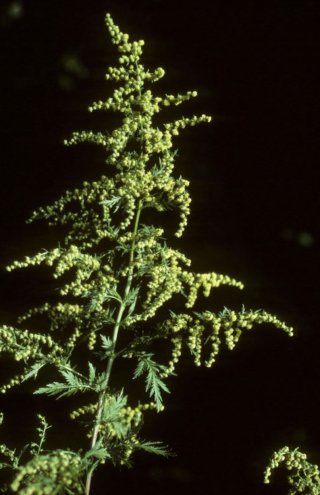
That being said, doctors who work with malaria patients in third-world countries on a regular basis have noted that the whole herb, Artemisia annua, is better at treating malaria than artemisinin as an isolated substance. Keep this in mind as you decide how to treat toxoplasmosis.
Note that Artemisia annua combines well with Cinchona officinalis. And also note that it may be more effective to make a fresh batch of Artemisia annua daily rather than making it in advance for longer-term treatment. Take it separately from other supplements, herbs, and food to make sure that it is fully potentized as a natural treatment for toxoplasmosis.
In addition to calcium homeostasis disruption in Toxoplasma gondii pathogens, Artemisia is also able to produce powerful reactive oxygen species that act as anti-Toxoplasma antimicrobials. Reactive oxygen species are released by Chlorine Dioxide Solution (CDS) / Miracle Mineral Supplement (MMS), another substance that has powerful effects against toxoplasmosis. There are a number of reactive oxygen species medicines like Artemisia annua or CDS / MMS that can be used to successfully treat toxoplasmosis.
Read more about Chlorine Dioxide Solution / Miracle Mineral Supplement here. Read more about Reactive Oxygen Species medicines like Artemisia and Chlorine Dioxide Solution.
Artemisia as a General Anti-Parasitic
In addition to being able to treat Toxoplasma infections and malaria, wormwood can also be used to kill other parasites, such as pinworms, roundworms, tapeworms, Schistosoma spp. parasites, Enterobius spp. parasites, malaria, and others.
Read more about misdiagnosed tapeworm infections here.
The compound present inside of wormwood known as artemisinin can also be effective in treating some (but not all) strains of Toxoplasma bacteria. For this reason, using the whole Artemisia annua plant is preferable in the treatment of toxoplasmosis since parasites and other pathogens are generally less likely to be or become resistant to the whole plant.
Again, we recommend combining Artemisia annua with Cinchona officinalis, but if you only have access to Artemisia annua, this is a powerful herbal remedy when it is used at the proper dose.
Artemisia annua may be taken as a tea, in capsules, or as a tincture/extract. Because the plant is quite bitter, most people prefer capsules or tinctures/extracts.
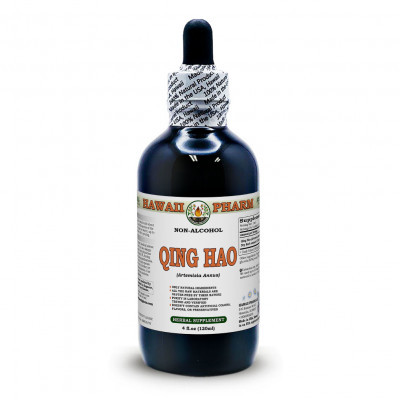
Artemisia annua Dosing:
Different sources recommend different dosing strategies with this herb. Over the years, Lydian and I have worked with Artemisia annua in different settings. One of our clients included Artemisia annua in a Schistosomiasis treatment protocol that included medicinal agents like Lugol’s iodine and he swore by the Artemisia and continued taking it daily for many years.
We have worked with Artemisia annua in face-to-face situations with clients to treat viral infections in children like Coxsackievirus, for example too. An infection like Coxsackievirus can manifest with acute symptoms of disease (hand, foot, and mouth disease) or it can look like type 1 diabetes. We’ve used Artemisia annua to treat both of these conditions (always as a protocol and not as a stand alone treatment – we almost always combine Artemisia with Cinchona and sometimes added quinine). In our experience, it’s best to work with a much higher dose than what scientific articles recommend and instead use the anecdotal reports by doctors working in Africa with malaria in organizations like La Maison de l’Artemisia.

Carlyle Wormwood Capsules 430mg | Artemisia Annua Herb | 200 Count | Non-GMO & Gluten Free Supplement
For Disease Prevention
Artemisia annua is a tolerable medicinal agent to work with on a daily basis. For disease prevention you can take it at a lower dose in one of the following formats:
For tinctures, administer 0.5-1.5mL of liquid in a glass of water, 3-4 times per day, ideally on an empty stomach. Children should take a significantly lower dose (ages 2-4 may take between 0.1-0.2mL per dose, ages 5-9 may take 0.1-0.5mL per dose, ages 10-14 may take 0.3-0.6mL per dose). For the treatment of malaria, some sources recommend dosing adults with 500 mg of dried A. annua leaf twice daily over the course of 5 days.
Women who are pregnant can take wormwood. It is not recommended for pregnant women except in cases involving severe infections (like malaria or toxoplasmosis) and we usually steer pregnant clients toward CDS / MMS instead because CDS / MMS is very safe for pregnant women. Artemisia annua can be administered during breastfeeding and infants can take this medicine as well. Individuals with an allergy to Asteraceae family plants should also avoid sweet wormwood. The medicine purportedly should only be taken for 4-5 weeks at a time before taking a 1 week break, but we have clients, as noted above, who take it all the time with few or no breaks from it.
For the Treatment of Toxoplasmosis and Other Serious Infections:
Use the dried, powdered form of the herb. For adults, combine 5 grams of the dried Artemisia annua powder with 1 liter of water that has been brought to a boil. Pour the water over the Artemisia annua and let it sit for at least 15 minutes. Drink all of this dose throughout the day. Do not reuse it later. The patient should spend some time in the sunlight while drinking this beverage.
For children under the age of 5 years, put 500 mL of water in a pot and bring it to a boil. Put 2.5 grams of powdered Artemisia annua in a separate container. After the water reaches a boiling point, remove it from the heat and pour the water over the powder. Let it sit for at least 15 minutes. Drink all of this dose throughout the day. Do not reuse it later. The patient should spend some time in the sunlight while drinking this beverage.
Make a fresh dose daily for best results when using this herb therapeutically.
 Resources: