Viburnum opulus vs. Cinchona spp.: Treatments for Major Childhood Illnesses at Home
Cinchona officinalis was in use in South America where it was originally found, but when this medicinal tree was first discovered by European colonists, South America did not have malaria. Rather, at this time in history Europe was the place where malaria was the biggest problem. Native people in South America knew about the healing effects of Cinchona, but they also knew that this medicine could be toxic if it was overused. But Europeans took some of the powder back home with them and discovered its incredible value in terms of its ability to cure malaria. Malaria was a huge problem at that time, so Cinchona seemed like a real miracle.
Click here to schedule a health coaching session with us.
Cinchona is still an extremely valuable medicine, but it has to be used with caution. It IS a miracle, but it requires a combination of study and intuition to use it properly.On the other hand, Viburnum opulus is an herbal remedy for major childhood illnesses that has a much better safety profile than Cinchona officinalis. This herb contains trace amounts of quinine, but it is used to treat similar diseases that can be treated using Cinchona officinalis. Viburnum opulus oil can be used topically on the skin and it will soak into the blood, which makes it easier to administer to young children and babies.
Click here to buy Cinchona officinalis / Quina.
For children in particular, Viburnum opulus is a very important herb. Viburnum opulus oil can be administered to a child’s body in situations in which a child might refuse medication by mouth. Viburnum opulus is quite safe. It’s hard to give a patient too much of this herb. It contains quinine in small amounts along with other medicinal substances which explains, at least to some extent, why this herb is effective against so many different diseases.Cinchona officinalis is acceptable for both children and adults as long as the person administering the medicine to the patient is cautious in regard to dosing. Cinchona is relatively easy to find and it’s an affordable medicine in most cases. It should generally be administered with Artemisia annua. But Viburnum opulus oil can be hard to find in some areas of the world, so when Lydi and I find some, we save it for the youngest members of our family.
Click here to buy Viburnum opulus oil.
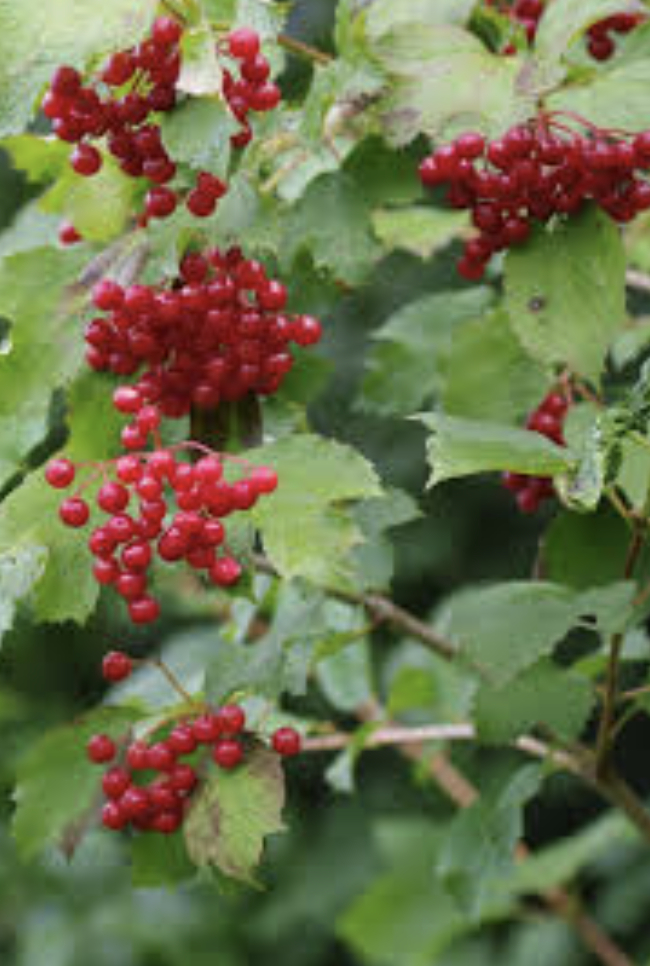
Viburnum opulus produces berries from which the sedative and anti-inflammatory medicinal oil can be extracted. The bark of the Viburnum shrub, known as “cramp bark” contains salicin, in contrast. Cramp bark is particularly well-known for its ability to reduce menstrual cramping through the combination of antispasmodic medicinal effects and salicin. Its pain-relieving, inflammation-reducing effects build up with daily dosing over the course of time. In other words, while Cinchona officinalis is an herb that should generally be administered only over the short term (take breaks every few days or at least every 2 weeks), Viburnum opulus does its best work when it is given over the course of a longer period of time.Click here to buy Viburnum opulus / Cramp Bark tincture.
If your child develops a major disease that can be treated using Cinchona and Artemisia annua, you might begin with Cinchona and Artemisia at first, but quickly switch to Viburnum opulus once the disease seems to be yielding to the child’s immune system. Viburnum opulus treatment can then be continued for a longer period of time safely to prevent relapse or cytokine storm.
Click here to buy Cinchona officinalis.
Resources
Kundu, S. et al. (2024). Scopoletin alleviates high glucose-induced toxicity in human renal proximal tubular cells via inhibition of oxidative damage, epithelial-mesenchymal transition, and fibrogenesis. Retrieved April 25, 2026 from https://pubmed.ncbi.nlm.nih.gov/38709349/
Joshi, H. et al. (2021). Review on Scopoletin: A Phenolic Coumarin with Its Medicinal Properties. Retrieved April 25, 2026 from https://ijpsr.com/bft-article/review-on-scopoletin-a-phenolic-coumarin-with-its-medicinal-properties/#:~:text=Scopoletin%20has%20a%20number%20of%20pharmacological%20activities%2C,Antibacterial%20*%20Antifungal%20*%20Antitubercular%20*%20Antioxidant
Al-Harbi, L. N. et al. (2022). Cinchona officinalis Phytochemicals-Loaded Iron Oxide Nanoparticles Induce Cytotoxicity and Stimulate Apoptosis in MCF-7 Human Breast Cancer Cells. Retrieved April 25, 2026 from https://pmc.ncbi.nlm.nih.gov/articles/PMC9565860/#:~:text=Plant%2Dbased%20nanoparticles%20have%20the,phytosterols%20have%20also%20been%20identified.
Gbotolorun, S. C. et al. (2018). Quinine inhibits ovulation and produces oxidative stress in the ovary of cyclic Sprague-Dawley rats. Retrieved May 8, 2026 from https://pmc.ncbi.nlm.nih.gov/articles/PMC6306975/
Keri, R. S. and Patil, S. A. (2014). Quinoline: A promising antitubercular target. Retrieved May 8, 2026 from https://www.sciencedirect.com/science/article/abs/pii/S075333221400136X