How to Get Rid of Trichenella spiralis Infection
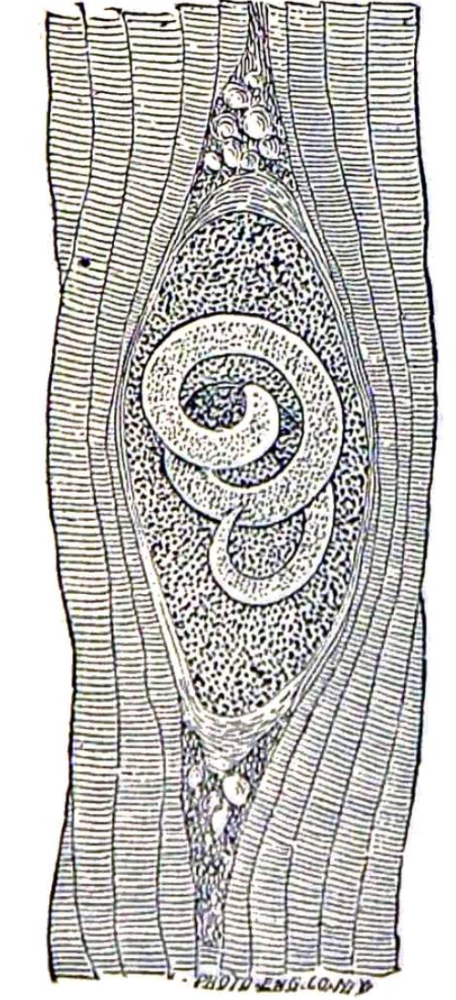
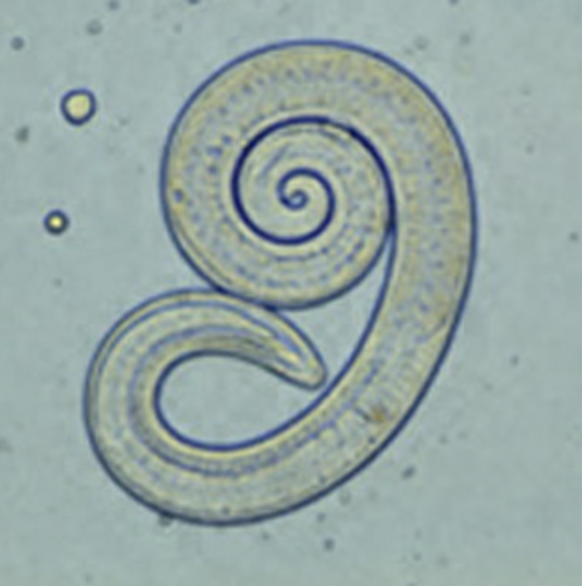 Trichninella spiralis is the nematode that causes trichinosis, also known as trichinellosis. This disease is contracted by eating undercooked or raw pork that contains the encysted larvae of this parasite. Larvae from Trichinella spiralis take up residence in human muscle tissue after infection.
Trichinella spiralis infection begins at the dinner table. When a person consumes infected undercooked meat, most commonly pork, wild boar, or bear, larvae encysted in the muscle tissue are released into the stomach. They migrate to the small intestine, where they mature into adult worms and reproduce. The resulting newborn larvae are what cause the most serious symptoms of this disease. The larvae penetrate the intestinal wall, enter the bloodstream, and migrate systemically until they reach skeletal muscle, where they encyst and can remain viable for years. It is this muscle encystment phase that distinguishes trichinellosis from most other intestinal nematode infections and that drives the most severe symptoms.
The clinical picture of trichinellosis unfolds in two phases that reflect the two stages of the parasite's migration. The intestinal phase, when adult worms are establishing themselves in the gut, produces gastrointestinal distress including symptoms like nausea, diarrhea, and abdominal discomfort. As the newborn larvae disseminate through the bloodstream and invade muscle tissue, the systemic phase begins which includes high fever, muscle pain, and periorbital or facial edema. The swelling around the eyes is a unique symptom involved with this parasite infection. In severe infections with high larval burden, larvae can migrate to cardiac muscle or the CNS, producing myocarditis or neurological complications that can be fatal if left untreated.

Click here to schedule a health coaching session with us.
Trichinella is a zoonotic infection maintained in animal reservoirs, primarily pigs and wild game, and transmitted to humans through the consumption of infected, undercooked meat. Wild boar and bear meat carry particular risk in hunting communities. The parasite is not transmitted person-to-person.
The most reliable prevention is the use of heat in cooking. Cooking meat to safe internal temperatures kills the larvae. Proper meat inspection and processing standards at the regulatory level provide a second layer of protection, particularly for commercially processed pork. Home hunters and those consuming wild game should be especially attentive to cooking temperatures, as wild animals are not subject to the same inspection infrastructure as farmed livestock.

Click here to learn more and subscribe to the Living Database now.
In conventional medicine, treatment with antihelminthic drugs like albendazole or mebendazole is most effective during the intestinal phase, when adult worms are accessible in the gut. Once larvae have encysted in muscle tissue, these drugs are less effective at reaching the larva, creating issues for conventional medicine doctors who have little else to offer their patients. Anti-inflammatory agents, including corticosteroids, may be added in severe cases to manage the inflammatory response to migrating larvae, but as noted in our discussion of threadworms, the administration of corticosteroids can cause hyperinfection of other parasites, a problem that can be life-threatening. Take note of this if your doctor prescribes a corticosteroid like tetracycline or doxycycline without explaining that a concurrent infection with threadworms could lead to serious illness and death. Your doctor likely has no idea that this could happen if they prescribe corticosteroids.Nigella sativa, also known as black cumin, and Allium cepa (onion) oils can be administered either to prevent infection or to treat infection with Trichinella spiralis at a dose of 5 mg per kilogram body weight daily for 2 weeks. Nigella sativa is more powerful as a preventative agent against infection and it kills adult worms as well as worms in muscle tissue. Allium cepa oil, in contrast, is more powerful as a treatment for an infection that’s already in progress. Like Nigella sativa, Allium cepa oil kills adult worms and muscle-larvae. For best results, patients should use both Nigella sativa and Allium cepa oils together for Trichinella spiralis infection.
Click here to buy Nigella sativa oil.
Trichinellosis can also be treated using myrrh (Commiphora molmol) and thyme (Thymus vulgaris). Both of these herbs work against enteral and encysted (parenteral) phases of the Trichinella spiralis parasite.In studies that observed the effects of myrrh and thyme for Trichinella spiralis, 500 mg / kg body weight of myrrh and 500 mg / kg body weight of thyme daily led to a reduction in adult worms. Raising the dose of these two herbs to 1000 mg / kg body weight led to larvae reduction. Myrrh at 500 mg / kg body weight reduced adult worm load by 90.9% while thyme at 500 mg / kg body weight daily reduced the adult worm load by 79.4%. At the higher dose of 1000 mg / kg body weight, myrrh reduced larvae numbers by 79.6% while thyme reduced larvae count by 71.3%.
In comparison, albendazole produces a reduction in adult worms by 94.2% and larvae by 90.9%. However, Trichinella spiralis can become resistant to albendazole, especially if it is over-used. Myrrh and thyme are natural treatments for parasite infection that have a high rate of effectiveness against Trichinella spiralis and other types of parasite infection.
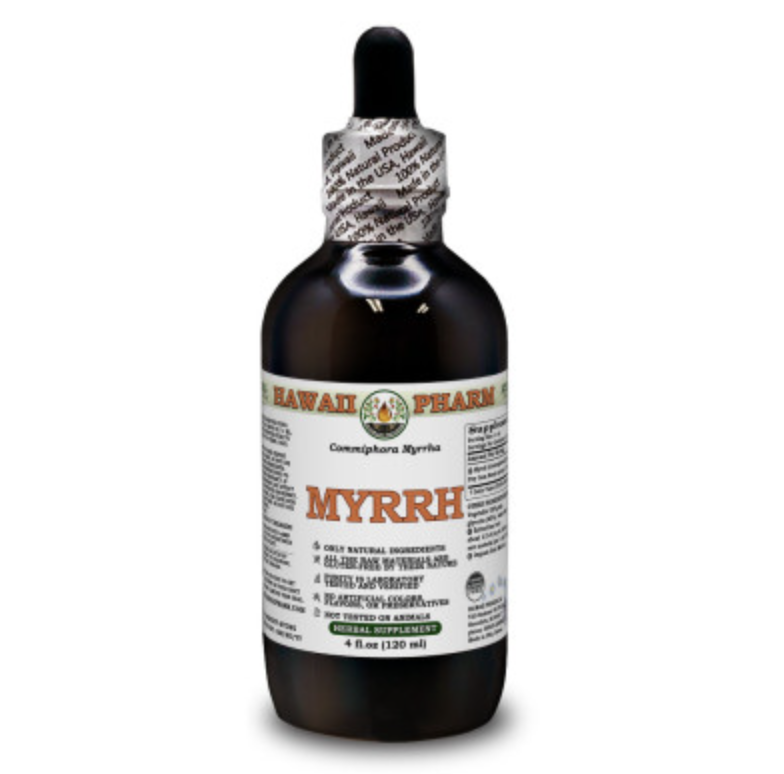
Click here to buy Myrrh tincture.
Parasites: Self-Treatment and Prevention - BUY THE eBOOK HERE!!!
Resources:
• Sheir, Z. et al. (2001). A safe, effective, herbal antischistosomal therapy derived from myrrh. Retrieved March 13, 2026 from https://www.ajtmh.org/view/journals/tpmd/65/6/article-p700.xml#:~:text=Schistosomiasis%20is%20a%20widespread%20helminthic,of%20them%20showed%20living%20ova.
• Massoud, A. M. et al. (2012). Effects of Mirazid® and myrrh volatile oil on adult Fasciola gigantica under laboratory conditions. Retrieved March 13, 2026 from https://pmc.ncbi.nlm.nih.gov/articles/PMC3609237/#:~:text=Observations%20of%20the%20efficacy%20of,mid%2Dbody%20region%20of%20flukes.
• Attia, R. A. H. et al. (2015). Effect of myrrh and thyme on Trichinella spiralis enteral and parenteral phases with inducible nitric oxide expression in mice. Retrieved March 13, 2026 from https://pmc.ncbi.nlm.nih.gov/articles/PMC4708024/#:~:text=A%20dose%20of%20500%20mg,to%2079.6%25%20against%20muscle%20larvae.