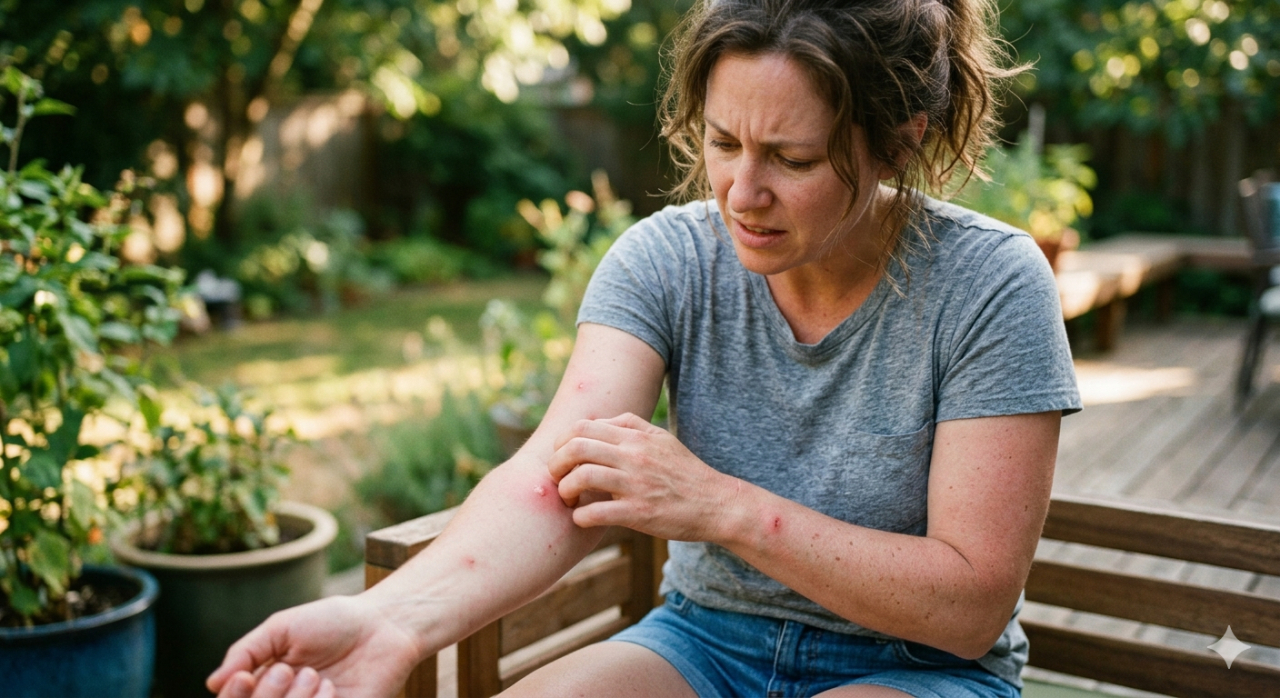
How to Treat Itch at Home: Kratom
Rather than acting as an antihistamine, the mitragynine in kratom works to modulate or block Transient Receptor Potential / TRPV1 receptors. Histamine receptors are directly linked to TRPV1 receptors and disruption of this link between histamine receptors and the TRPV1 receptors can significantly reduce itching and other physiological reactions that involve histamine.
Kratom can be administered orally to treat chronic itch or acute itching or it can be administered topically as a paste. For example, you might make a paste using kratom powder to apply directly to insect bites, but if you suffer from atopic dermatitis, you might take kratom orally.
White vein kratom may be more effective at treating itch, but it depends on the nature of the itch. Again, itch and pain are very similar in terms of how they’re produced in the body. The different veins and strains of kratom work a bit differently to provide pain relief so it stands to reason that the different veins and strains would also impact itch relief. Experiment with three or more different vein-colors (Red, Green, Yellow, Gold, White) and strains (these are named for the locations where the specific kratom tree was grown) to treat itch naturally.
Click here to schedule a health coaching session with us.
Note that quinine can potentiate kratom effects. Quinine is a naturally-occurring substance that is prescribed by doctors for severe types of itch such as uremic pruritis due to kidney disease. Quinine by itself is a drug that can produce severe side effects, but quinine is present in the Cinchona bark and can be administered as a natural treatment that produces far less risk of side effects. Patients should self-administer tryptophan at a dose of 2000 mg per day for 3 days before beginning treatment with Cinchona bark and then 500 mg of tryptophan should be administered daily at least 12 hours after Cinchona is administered along with kratom.Click here to buy Kratom.
Cinchona is given at a dose of 0.25 grams per kilogram of the patient’s body weight. It must be placed in water and simmered on low heat for 20 minutes and then allowed to cool before administration by mouth. Administer kratom along with Cinchona to produce a stronger itch-relieving effect. Ideally, you should put the Cinchona in some bubbly mineral water along with a sweetener and drink it over the course of about 4-8 hours.Side effects caused by quinine and Cinchona are caused by tryptophan deficiency so it’s important to administer tryptophan before beginning treatment with Cinchona. Cinchona and quinine may inhibit tryptophan metabolism, so you need to make sure that you administer tryptophan regularly, but not at the same time that you are taking the Cinchona. Ideally, you should take tryptophan at a time when you have not taken Cinchona for 4-6 hours. After you take the tryptophan, wait for 4-6 hours after to administer Cinchona again.
Do not combine kratom with other prescription or over-the-counter antihistamine medications as the combination of kratom with this type of medicine can cause seizures.
Click here to subscribe to the Living Database now.
Resources:
• Xie, Z. Hu, H. (2018). TRP Channels as Drug Targets to Relieve Itch. Retrieved May 26, 2026 from https://pmc.ncbi.nlm.nih.gov/articles/PMC6316386/
• No Author (2017). Antihistamines. Retrieved May 26, 2026 from https://www.ncbi.nlm.nih.gov/books/NBK547896/
• Alford, A. S. et al. (2025). Exploring the Therapeutic Potential of Mitragynine and Corynoxeine: Kratom-Derived Indole and Oxindole Alkaloids for Pain Management. Retrieved May 26, 2026 from https://www.mdpi.com/1424-8247/18/2/222