Piracetam for Alcohol Addiction
In the bloodstream, piracetam reduces red blood cell stickiness such that fewer red blood cells adhere to the inside of blood vessels. It hinders vascular spam and it promotes microcirculation to improve the oxygenation of tissues, including brain tissues.
Though piracetam is a derivative of GABA, it does not seem to function like GABA in the body. Rather, it appears the piracetam acts to reduce the “closed” quality of human cells. We’ve discussed the idea of cellular dormancy, the Cell Danger Response (as set forth by Dr. Robert Naviaux in his research on autism / ASD), and insulin resistance as related concepts that pertain to the problem of cells becoming “closed” to the outside world.
Click here to subscribe to the DreamLight.app, a brain entrainment, guided meditation tool to reduce stress and overcome trauma.
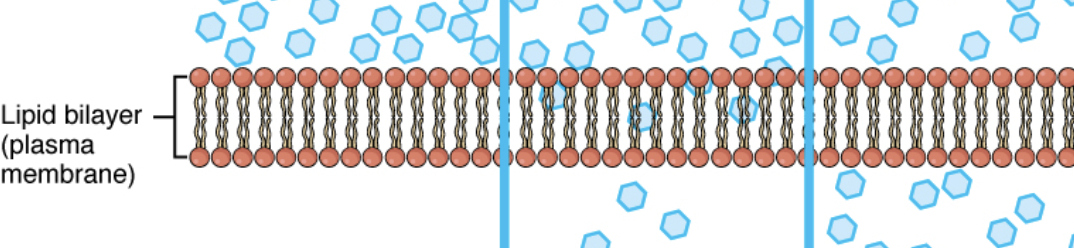
Piracetam has the ability to make “hard-shelled cells” into “soft-shelled cells” so to speak. Piracetam restores cell membrane fluidity in cells throughout the whole body. Healthy human cells are made up of two layers of lipid molecules that contain protein molecules within them. The membranes in healthy people are “fluid” or “gel-like” while proteins that are interspersed throughout the membrane act to transport nutrients or medicines across the membrane into the cell. These proteins also function in enzyme reactions, chemical secretion, and they play a role in receptor binding and stimulation too. The proteins are important. They act like portals to the outside world. But the lipid-based membrane bilayer surrounding the cell acts as the ultimate boundary between the contents of the cell and the external environment. We might think of this somewhat “fluid” boundary as the cell’s “emotional and biological shield” that protects it from assault, but that can also take a certain amount of buffeting and beating because of its fluid nature.In alcohol addiction, the cells in the body become “hardened” and insulin resistant. These “hard-shelled cells” are not as flexible as the fluid, “soft-shelled cells” that are characteristic of good health. Proteins in a hard-shelled cell are not able to move about within the membrane bilayer to interact with the external environment in an optimized way.
Piracetam has been observed in situations involving alcohol addiction as a medicine that can prevent alcohol-related changes from soft-shells to hard-shells in cells. This effect has been supported by MRI where scientists have observed piracetam molecules surrounding the polar head group of phospholipids in cell membranes. Piracetam-lipid complexes are mobile within the cell membrane. They can move about across the surface of a cell to induce a reorganization of the lipids such that membrane fluidity and function is enhanced.
Click here to buy Piracetam powder.
Studies have shown that amyloid peptides aggregate in a toxic way on nerve cell membranes in dementia patients to cause lipid disorganization on the cell membrane. Incubating cells that have been damaged by amyloid peptides decreased the destabilizing effects of the amyloid peptides. The scientists who studied amyloid peptide and the protective effect of piracetam against these peptides believe that this interaction increases the area occupied by the polar head group of the lipids to produce a healthier curve to the exterior of a cell. By encouraging the cell to produce a more well-rounded exterior, free from peptides that fuse outer lipid-molecules to each other in a pathogenic way, piracetam reduces membrane fusion.In people who do not have cellular membrane issues, piracetam appears to do nothing to change the cellular membrane as no changes are necessary.
High doses of piracetam are often necessary to accomplish health-related goals related to alcohol addiction, but piracetam is well-tolerated and it is very hard to overdose on this medicine.
Click here to do a free trial of EMDR online.
Hippocampus damage is an observable neurotoxic effect that occurs as a result of chronic alcohol intoxication. Piracetam is a nootropic that can prevent impairment in working memory that occurs during alcohol withdrawal.Degeneration of the cerebellum (including both the cerebellar cortex and the Purkinje cells) occurs as a result of vitamin B1 / thiamine deficiency, which is one of the reasons why we recommend high-dose thiamine / vitamin B1 supplementation as part of the protocol for alcohol recovery at home. Thiamine deficiency and subsequent cerebellum degeneration can cause tremor and cerebellar ataxia (which manifests as poor muscle control and coordination), but piracetam in relatively high doses can help the cerebellum heal.
In one 57 year old, divorced, retired man with tremors and balance-issues (ataxia) who had been chronically addicted to alcohol for 48 years arrived at a hospital to receive treatment for his movement disorder. An MRI showed that this man had obvious cerebellum degeneration. Nutrient supplements along with 250 mg of vitamin B1 / thiamine was administered daily. A high-dose infusion of piracetam was administered experimentally at a dose of 60 grams daily for 3 days, 45 grams daily for 3 days, and then 30 grams daily for 3 additional days. The man’s upper and lower tremor disappeared and his ataxia also regressed after treatment.
Click here to schedule a health coaching session with us.
The result of this treatment surprised the doctors who presented this case study in the European Psychiatry journal. They proposed that serotonin and other neurotransmitters were impacted by the piracetam and thiamine / vitamin B1.The mechanism of action by which piracetam works isn’t clear. It is believe that piracetam binds to the polar head groups of membrane layers to produce noteworthy changes in membrane structure. In the nervous system, piracetam is known to modulate several neurotransmitter systems with a generally neuroprotective and anti-seizure effect. Piracetam also has a positive effect on neural plasticity.
As a nootropic that may be able to prevent Delirium Tremens (DTs), seizures, and some of the other potentially risky side effects of alcohol withdrawal, piracetam supplementation along with high-dose vitamin B1 / thiamine is recommended.
The enhanced fluidity of cells coincides with behavior changes in animal models with a reduction in avoidance learning. Of course, if cells are already “soft-shelled”, for example, as they are in most young animals, including humans, piracetam produces no change.
The effect of piracetam on cell membrane fluidity impacts cells of different types throughout the body, not just those in the nervous system. It has an effect on neurotransmission in a general way, not just in terms of one neurotransmitter. It impacts cholinergic, serotonergic, noradrenergic, and glutamatergic systems. Piracetam does not produce any kind of direct receptor agonism or antagonism. Rather, it seems to increase the number of post-synaptic receptors to restore the function of the neuron in a general way.
Click here to subscribe to the Living Database!
Piracetam in changes acetylcholine levels in the hippocampus and it increase the number of muscarinic receptors in the frontal cortex by up to 40% in aged, but not in young mice. Piracetam seems to normalize a number of the functional deficits that are associated with aging.
In the glutamatergic system, 14 days of treatment with piracetam increases NMDA receptor density in the forebrain of aging mice by up to 20%. It also normalizes the age-related, increased affinity of L-glutamate for the NMDA receptor, suggesting that it has the ability to restore NMDA receptor functioning. Restoration of NMDA receptor functioning is significant because NMDA receptors play a vital role in synaptic plasticity and the ability to learn and unlearn habitual behaviors. The NMDA receptor is often dysfunctional in alcohol dependence and it plays a role in tolerance, dependence, withdrawal symptoms, craving, and relapse. Piracetam does not modulate NMDA receptors by acting directly on them as an agonist or antagonist, but rather it restores normal NMDA receptor functioning directly.
The excessive stimulation of NMDA receptors is believed to be involved in the development of seizures and cell death in people with alcohol addiction. Studies have shown that in people with chronic alcohol addiction, there’s an adaptive up-regulation of the NMDA receptors that can contribute to alcohol withdrawal symptoms when that person stops drinking. Piracetam dosing may be able to prevent alcohol withdrawal seizures if administered prior to drinking cessation along with the appropriate nutritional supplements including the B vitamins.
Piracetam Dosing
Administer 300 mg / kg body weight daily for 8 weeks to produce a significant level of cell-membrane fluidity in the brain and body. A person who weighs 60 kg, for example, would administer 18 grams of piracetam daily in divided doses to heal cells after chronic alcohol addiction.Click here to buy The Anti-Addiction Encyclopedia.
Resources:
• Kolik, L. G. et al. (2022). Correction of alcohol-induced disorders of working memory with noopept. Retrieved June 13, 2025 from https://journals.eco-vector.com/1728-2918/article/view/321370/en_US
• Oksuz, G. and Ergelen, M. (2023). High dose piracetam on alcoholic cerebellar degeneration: A case report. Retrieved June 13, 2025 from https://www.cambridge.org/core/journals/european-psychiatry/article/high-dose-piracetam-on-alcoholic-cerebellar-degeneration-a-case-report/F3D953BF32F295CCB35B733D783EB120
• Winblad, B. et al. (2006). Piracetam: A Review of Pharmacological Properties and Clinical Uses. Retrieved June 13, 2025 from https://pmc.ncbi.nlm.nih.gov/articles/PMC6741724/
• Araj, S. K. et al. (2025). Physicochemical and structural analysis of N-phenylacetyl-L-prolyglycine ethyl ester (Noopept) - An active pharmaceutical ingredient with nootropic activity. Retrieved June 13, 2025 from https://www.sciencedirect.com/science/article/pii/S0731708524005144#:~:text=Unlike%20traditional%20racetam%20compounds%2C%20such,cycloprolylglycine%20(cGP)%20(Fig.
• Ostrovskaya, R. U. et al. (2014). Neuroprotective effect of novel cognitive enhancer noopept on AD-related cellular model involves attenuation of apoptosis and tau hyperphosphorylation. Retrieved June 13, 2025 from https://pmc.ncbi.nlm.nih.gov/articles/PMC4422191/
• Ron, D. and Wang, J. (n.d.). The NMDA Receptor and Alcohol Addiction. Retrieved June 13, 2025 from https://www.ncbi.nlm.nih.gov/books/NBK5284/
• Hoffman, P. L. and Tabakoff, B. (n.d.). The role of the NMDA receptor in ethanol withdrawal. Retrieved June 13, 2025 from https://link.springer.com/chapter/10.1007/978-3-0348-7330-7_7