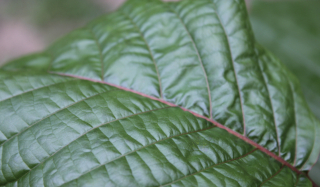
Mitragyna speciosa
NOTE: Do not take Mitragyna speciosa if you have to drive or operate heavy machinery. Do not combine Mitragyna speciosa with NSAIDs (ibuprofen, aspirin, diclofenac, etc.), antidepressants, or MAOIs or SSRIs (this includes methylene blue, discussed below; M. speciosa should not be taken with methylene blue.)
Mitragyna speciosa, also known as kratom, is an herbal pain-reliever that works remarkably well to kill dental pain. It is not itself an opiate drug, but Mitragyna speciosa does interact with opioid receptors to produce an opiate-like effect, albeit without the same risk of addiction as opiates. Mitragyna speciosa can be extremely valuable in the treatment of teething pain for babies. It is a much safer option than Tylenol for young children and it works very well to eliminate the excruciating pain that children experience when their teeth come in.

Click here to schedule a health coaching call with us.
Mitragyna speciosa is remarkably safe and it works very well for natural dental pain control for patients of all ages. It is far safer than opiates and in fact, people who are addicted to opiates often use kratom to stop taking opiate medication. But Big Pharma has worked hard to cover up the benefits of kratom because this herb can be used to treat cancer and it has the potential to destroy the opiate-industry. Kratom is also one of the most important anti-diabetic herbs currently known, so it makes sense that Big Pharma would invest a lot of money into producing propaganda to scare people away from it.
If you are taking kratom for dental pain control, be sure to use capsules rather than drinking kratom as a tea to ensure that you get a consistent, adequate dose – also keep in mind that kratom is quite bitter, so it’s more pleasant to take it in capsule-form. Also, it’s best not to hold the kratom powder or leaves in the mouth or smoke them if you are trying to treat a dental problem. Drink plenty of water throughout the day and take 1 teaspoon of a magnesium citrate supplement (equivalent to 400 mg) once daily in water. .
Kratom is safe for use in children older than 1 year of age. The use of kratom for teething pains in children is discussed more below.
Kratom for Adults with Dental Pain
If you have an ongoing dental issue that’s causing you pain, you’ll want to work with green vein kratom on the first day of treatment. Start with 500 mg of green vein kratom in the morning. Wait for 1 hour. If you still feel pain, take another 500 mg. After this, wait for another 2-3 hours before dosing again if necessary starting with 1000 mg.
On the second day of treatment, give yourself 500 mg of gold / yellow vein kratom. Again, wait for 1 hour before you take another 500 mg. After the first hour, again, wait another 2-3 hours and then start with another 1000 mg. Yellow / gold vein kratom is different in terms of its pain-killing effects than green vein.
If 1000 mg doesn’t kill your pain using green or yellow vein kratom, on the third day, start by taking 1500 mg of red vein kratom – red Maeng Da is one of the most powerful strains, and preferable for daytime use (red Malay, red Hulu, and red Bali are good, powerful choices for evening/nighttime use). Red vein kratom is ideal for pain relief, and most people experience pain-killing properties with this color of kratom specifically, though some people do have good results working with green and/or yellow veins as well. Be sure to keep notes on your experiences, and the doses and kratom veins that you use on different days/times so that you can find which veins and doses work best for you.
Take up to 3000 mg (3 grams) per dose of red or yellow vein kratom (or green vein kratom if you’re taking it during daytime hours) to relieve dental pain. Increase your dose slowly and only when necessary – if a smaller dose is working to relieve pain, continue taking that dose when needed. A dose of kratom can be taken every 4-6 hours if needed. Do not exceed a total daily dose of 8 grams per day (plan your individual dosing accordingly to stay within this daily dose range).
Click here to learn more and subscribe to the Living Database now.
Kratom for Teething and Growing Pains in Children
IMPORTANT NOTE: DO NOT combine kratom with Tylenol or any other pharmaceutical medication. If you decide to alternate between Tylenol and kratom for teething pains or growing pains, administer the Tylenol first and then only give the kratom 6 hours AFTER giving the Tylenol. This gives the body a chance to metabolize and excrete more of the acetaminophen from the system, which reduces the risk of acetaminophen poisoning.
I don’t recommend using kratom until your child is old enough to use even a few words to communicate about how they feel, and until they can walk relatively well (older than 1 year). Give a dose of kratom during the daytime hours to observe their response to the medicine.
For children over 18 months, give 0.25 grams of kratom every 4-6 hours. For severe teething or growing pains, an additional 0.25 grams can be given after the first 0.25 gram dose if needed if your child is still in pain within 1 hour after the first dose. In children between 6-18 months, start with 0.15 grams, and again, add another 0.15 grams after 1 hour if needed. Use a gram scale to measure the dose and administer the powder with raw honey.
For children struggling with teething or growing pains, yellow veins can be used during the daytime hours, and red veins (especially Red Hulu and Red Bali) can be used either during the day or at night. Some children do also benefit from green veins during daytime hours, but yellow veins are ideal since these are most likely to be pain-relieving without being overly sedative. For sleep problems, use only the red veins. Get a few different yellow and red veins and alternate which ones you use to reduce the risk of a tolerance developing. Take days off from the kratom whenever possible, and supplement with NAC to support liver health (NAC powder can easily and safely be added into juices or milk, even for very young babies; use ¼ of the adult dose for infants ages 6-12 months, and ½ of the adult dose for children over 12 months).
How to Heal Your Mouth, Teeth, and Jaw: Reclaim Dental and Orthodontic Health At Home for Kids and Adults
Methylene Blue
We’ve talked about methylene blue in a few other places regarding dental health. Methylene blue is a medicinal agent that kills bacteria, viruses, and other pathogens. But methylene blue is also a pain-killer.
Methylene blue has been specifically studied for its ability to get rid of burning mouth syndrome symptoms. This is an oral condition that can be disabling. It is characterized by spontaneous pain in the mouth with no oral lesions present. As an at-home treatment for burning mouth syndrome, patients would administer a solution containing 0.5% methylene blue with water. You can make a 0.5% methylene blue solution using a pipette to measure exactly 0.5 mL of methylene blue and place it in 99.5 mL of water to treat burning mouth syndrome at home.
The 0.5% methylene blue mouthwash when administered for 5 minutes per day, every 6 hours (3 times daily) for 7 days, burning mouth pain was significantly reduced. Some patients felt that their pain had diminished by 66% while others had no burning mouth pain at all. There are no side effects associated with the methylene blue mouthwash treatment. Patients may need to continue to administer the daily methylene blue mouthwash long term to get rid of burning mouth syndrome.
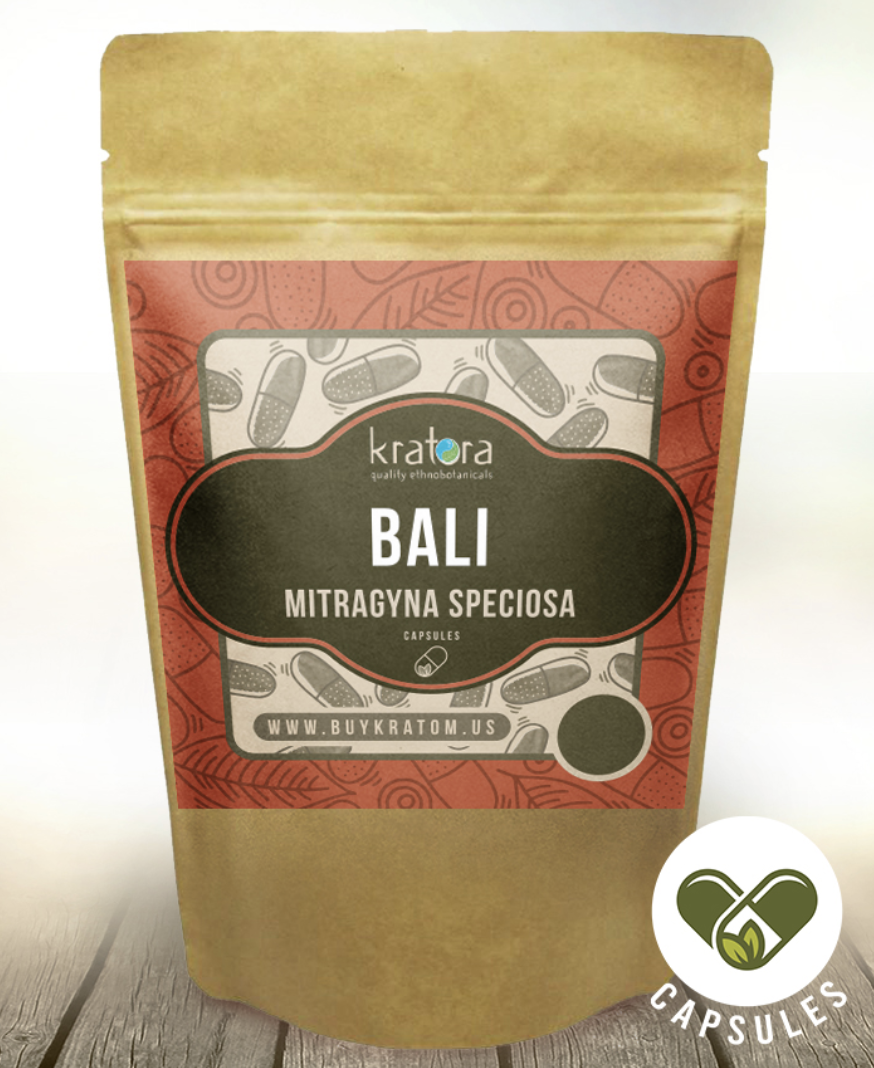
Click here to buy Kratom.
Patients with inflammation in the mouth or ulcers that produce pain may benefit from the methylene blue mouthwash protocol. Also, patients with oral mucositis caused by chemotherapy treatment, might also be able to use methylene blue to reduce symptoms naturally. Some patients experience prolonged benefits from a mouthwash containing 10 times less methylene blue (0.05%) while doing long-term treatment.
As a mouthwash, methylene blue is safe and can be used long term, but when taken internally, it can cause stomach ulcers, so its use needs to be modulated. Nonetheless, methylene blue is an important medicine that works to reduce pain when taken orally and swallowed. It works through the following mechanism of action:
- It is an anti-inflammatory agent.
- It reduces the sodium current.
- It has a denervation effect.
Resources
Lecor, P. A. et al. (2020). Could methylene blue be used to manage burning mouth syndrome? A pilot case series. Retrieved December 17, 2025 from https://www.jomos.org/articles/mbcb/full_html/2020/03/mbcb190056/mbcb190056.html
Roldan, C. J. et al. (2017). Methylene Blue for the Treatment of Intractable Pain Associated with Oral Mucositis. Retrieved December 17, 2025 from https://pubmed.ncbi.nlm.nih.gov/28226414/
Lee, S. W. and Han, H. C. (2021). Methylene Blue Application to Lessen Pain: Its Analgesic Effect and Mechanism. Retrieved December 17, 2025 from https://www.frontiersin.org/journals/neuroscience/articles/10.3389/fnins.2021.663650/full
EUDA (n.d). Kratom drug profile. Retrieved August 19, 2025 from: https://www.euda.europa.eu/publications/drug-profiles/kratom_en#level-3
Singh, Darshan, et. al. (2017). Changing trends in the use of kratom (Mitragyna speciosa) in Southeast Asia. Retrieved August 19, 2025 from: https://onlinelibrary.wiley.com/doi/full/10.1002/hup.2582
Atikarn, Janthongkaw, et. al. (2023). Effect of Green and Red Thai Kratom (Mitragyna speciosa) on pancreatic digestive enzymes (alpha-glucosidase and lipase) and acetyl-carboxylase 1 activity: A possible therapeutic target for obesity prevention. Retrieved August 21, 2025 from: https://pmc.ncbi.nlm.nih.gov/articles/PMC10513218/
Nakaphan, Thanat, et. al. (2016). Traditional Use of Kratom (Mitragyna speciosa Korth) among Folk Healers in Southern Thailand. Retrieved August 24, 2025 from: https://he01.tci-thaijo.org/index.php/JTTAM/issue/view/7119