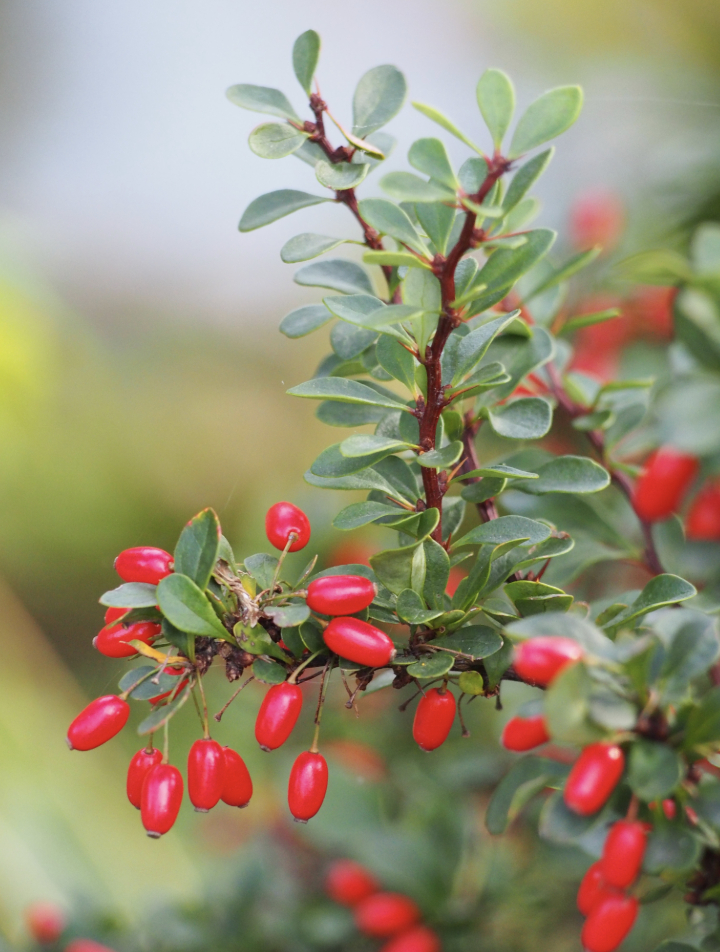
Berberis microphylla: Increase Browning of White Adipose Tissue
Berberis microphylla also contains carotenoids as bioavailable forms of vitamin A, another fat-soluble vitamin that plays a role in bone health, heart heart, eye health, thyroid gland health, and reproductive organ health. This herb also improves triglyceride and cholesterol levels as well as the use of cholesterol in the body, which ultimately works to balance reproductive hormone levels (cholesterol is one of the most important precursor substances used in the production of reproductive hormones).
Click here to schedule a health coaching session with us.
Studies have shown that Berberis microphylla / Calafate causes the browning of white adipose tissue. As we’ve discussed above, the browning of white fat tissue releases fat-soluble vitamins that have been stored in the white fat, making them available for our body to use. This improves bone health (including dental health) as well as eye health because the body may not be able to gain access to these stored nutrients without the browning of the white fat, in some cases. While cold exposure therapy should also be administered, Berberis microphylla is a good adjunct treatment that aims to rebuild brown adipose tissue by browning white fat.In addition to its high nutrient content to help the body naturally overcome a low-level infection involving anemia of chronic inflammation, Berberis microphylla also contains berberine, a substance that has antidiabetic, insulin-sensitivity-promoting effects. This is, of course, a weight-loss herb that works via the conversion of white to brown fat combined with its high nutrient content and insulin-sensitivity promotion, but it is also valuable in situations involving fever as insulin-sensitivity-promoting activity would tend to also have a fever-lowering effect on the body.
Finally, berberine has antimicrobial effects on the body that are particularly important for treating gastrointestinal infections and gut-health issues.
Click here to subscribe to the Living Database now.
Berberis microphylla Dosage
Administer between 900 to 2,000 mg per day in 3 to 4 divided doses in adults and children over 10 years of age. In kids between 5 to 10 years, administer 600-750 mg per day in divided doses (divide the total dose into smaller amounts if stomach upset occurs). In children 1 to 5 years of age, administer between 200 to 500 mg per day in tiny, divided doses throughout the day. Administer this herb with meals or shortly afterward to reduce blood sugar spikes.Note that berberine interacts with medications such as cyclosporine, statins, and blood thinners.
Click here to learn more about the DreamLight.app, an online guided meditation and brain-entrainment tool.
Resources:
• Ramirez, L. A. et al. (2021). The administration of an extract from Berberis microphyllla stimulates energy expenditure, thermogenesis, and mitochondrial dynamics in mice brown adipose tissue. Retrieved February 19, 2026 from https://researchers.unab.cl/es/publications/the-administration-of-an-extract-from-berberis-microphylla-stimul/#:~:text=Huella%20*%20Berberis%20microphylla%20Agricultura%20y%20biolog%C3%ADa,*%20heat%20production%20Agricultura%20y%20biolog%C3%ADa%2056%25
• Edgerton, D. S. et al. (2006). Insulin’s direct effects on the liver dominate the control of hepatic glucose production. Retrieved February 20, 2026 from https://pmc.ncbi.nlm.nih.gov/articles/PMC1359060/
• Hanssen, M. J. W. et al. (2015). Short-term cold acclimation improves insulin sensitivity in patients with type 2 diabetes mellitus. Retrieved February 20, 2026 from https://pubmed.ncbi.nlm.nih.gov/26147760/
• Bo, T. et al. (2024). Hepatic selective insulin resistance at the intersection of insulin signaling and metabolic dysfunction-associated steatotic liver disease. Retrieved February 20, 2026 from https://www.sciencedirect.com/science/article/pii/S1550413124001268
• Li, M. et al. (2024). Brown adipose tissue facilitates the fever response following infection with Salmonella enterica serovar Typhimurium in mice. Retrieved January 26, 2026 from https://pubmed.ncbi.nlm.nih.gov/39128824/
• Xu, J. et al. (2023). The Chinese herbal medicine Dai-Zong-Fang promotes browning of white adipocytes in vivo and in vitro by activating PKA pathway to ameliorate obesity. Retrieved February 17, 2026 from https://pmc.ncbi.nlm.nih.gov/articles/PMC10211343/
• .
• Harris, T. A. et al. (2020). Resistin-like molecule alpha provides vitamin A-dependent antimicrobial protection in the skin. Retrieved February 19, 2026 from https://pmc.ncbi.nlm.nih.gov/articles/PMC6628910/#:~:text=We%20find%20that%20bacterial%20colonization,and%20protects%20against%20skin%20infection.
• Andres, E. and Lorenzo-Villa, N. (2024). Fat-Soluble Vitamins A, D, E, and K: Review of the Literature and Points of Interest for the Clinician. Retrieved February 19, 2026 from https://pmc.ncbi.nlm.nih.gov/articles/PMC11242131/