Cinchona Bark and Quinine: Herbal Remedy for Strep Throat and Gut Health
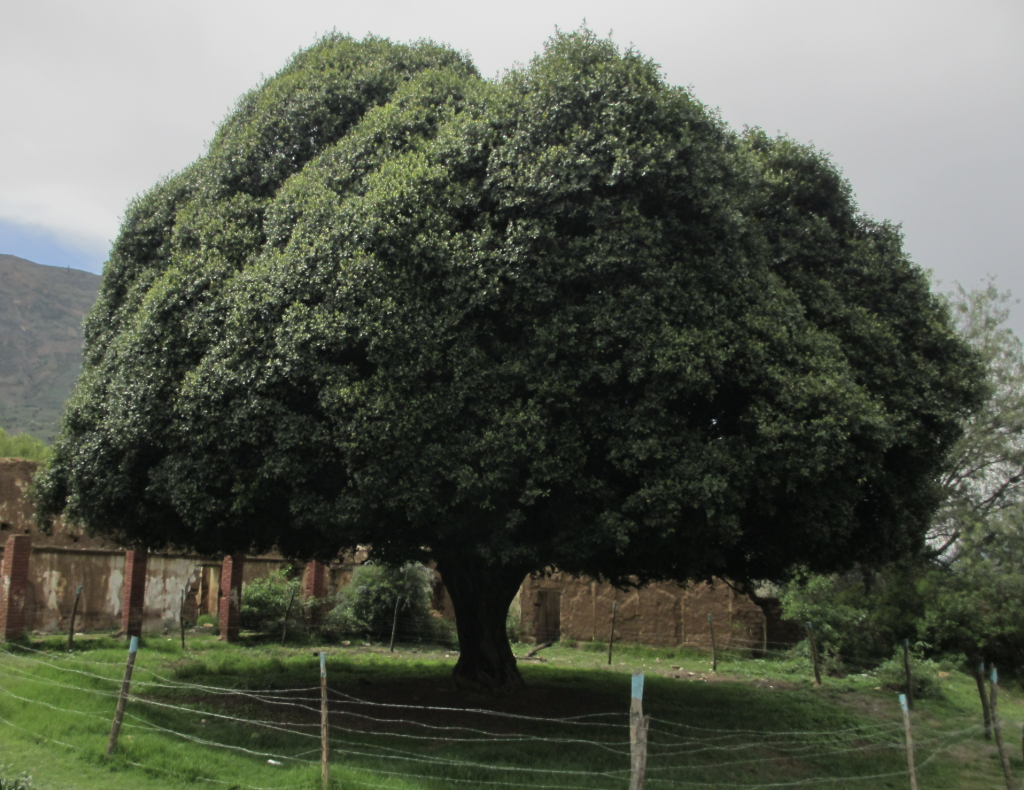 When you’re treating a child (or an adult) who’s sick, you have to consider the medication that you choose to work with in terms of its holistic effect on the body, the environment in which the illness occurs including stress level, the age of the child (or the adults), etc. Every body is different. Young children and the elderly respond differently to medicines than older children and adults. Medication “compliance” can be an issue too in that a patient of any age might refuse a particular type of treatment because it tastes bad or because it is simply too aversive for the patient to “stomach”.
Gut health and the effects of that chosen medication on the gut, is also important because the gut contains a huge proportion of immune system elements that help us get well or that cause us to sometimes feel worse. While some diseases and infections produce mostly respiratory effects where breathing is the primary concern, other diseases and infections produce primarily digestive effects. Some infections produce both respiratory and digestive effects, but many children tend to have more issues with either the respiratory system OR the digestive system, indicating a weakness of a particular type that should be considered when choosing an appropriate medication. So if you’re considering quinine as a medicine for an infectious disease treatment, note that it does impact the gut and also the respiratory system. It doesn’t just kill pathogens and acute infection, but rather, this is a medicine that can be used to treat the symptoms of chronic disease too.

Click here to schedule a health coaching call with us.
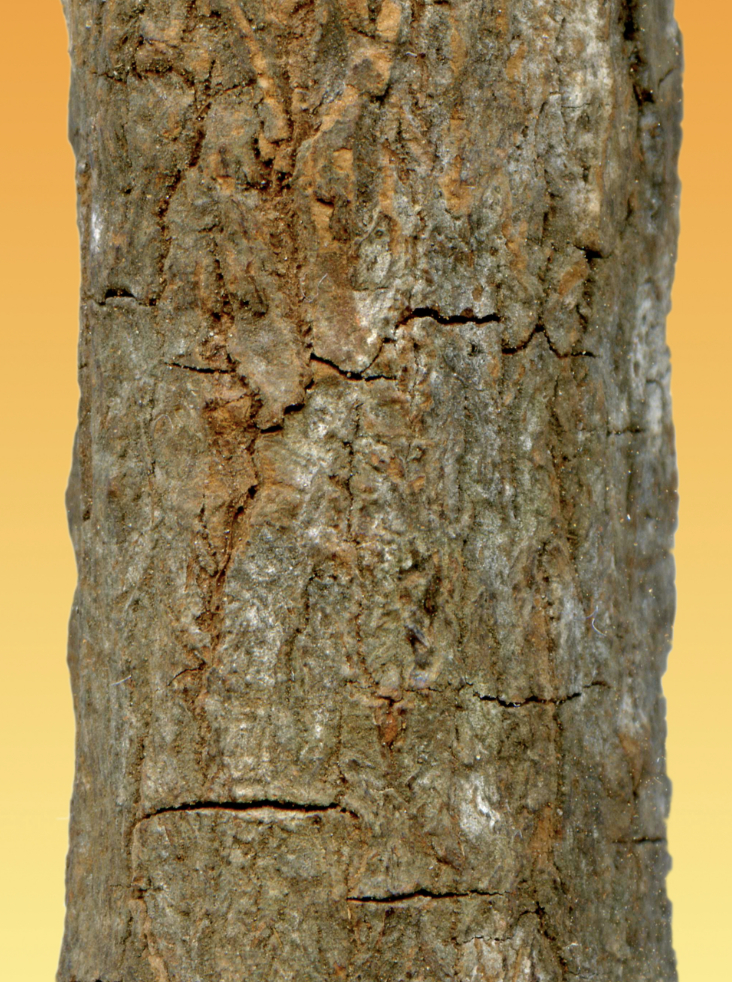
Cinchona officinalis is relatively gentle in terms of the gut in comparison with other medications that you might choose for the at-home treatment of an acute childhood illness. Cinchona bark is given in relatively low doses and as long as you’re within a fairly close range of this dose when dosing your child, it is a safe medication. Quinine requires more attention to detail and it lends itself well to short-term dosing to overcome severe infection, but is less well suited for long-term preventative dosing than Cinchona officinalis. Both Cinchona officinalis and quinine are bitter so they require combination with something sweet like monk fruit or stevia to make them enjoyable as they should be administered, as a general rule, throughout the day, preferably at least once hourly.
Click here to buy The Renegade Parent’s Guide to Children’s Health and Healing - Encyclopedia of Herbal Remedies.
But let’s talk about quinine or Cinchona officinalis (the whole herb) as a medicine that can be used to restore gut health in a general way. Obviously, for infections involving nausea and vomiting, quinine and Cinchona bark can be beneficial. Cinchona bark and quinine are bitters so they encourage the production and release of enzymes in the digestive system which can have a generally beneficial, tonifying effect on slack intestines or inflammation in the stomach (gastritis) and digestive organs. But additionally, let’s talk about another herb that comes from the northern latitudes, Viburnum opulus, a vital herbal remedy for gut-related issues that are both acute and chronic. Viburnum opulus and Cinchona officinalis share certain medicinal effects in common despite their differences. While Cinchona officinalis contains a lot of quinine and also quinic acid, Viburnum opulus contains a lot of quinic acid and trace amounts of quinine. Quinic acid is a medicinal or nutriceutical substance that’s also found in Cinchona officinalis along with quinine. Quinic acid is not as chemically complex as quinine. Rather, it’s a water-soluble, sour-tasting acidic compound that’s found in coffee as well as in Cinchona officinalis and Viburnum opulus (among other things). Quinic acid can be used to produce quinine in laboratory settings, but our bodies cannot produce quinine from quinic acid. Nonetheless, we’ll discuss the importance of quinic acid in various herbs including Cinchona officinalis. Quinic acid is an anti-inflammatory substance in the digestive system that helps make it easier for the body to absorb and use other medicinal agents in Cinchona officinalis (and other medicinal plants). While the quinine in Cinchona officinalis can be used to kill hemolytic pathogens like Streptococcus pyogenes that can produce serious infections like scarlet fever, as just one example, quinic acid can help repair leaky gut in a slow-but-steady manner. There are other substances in Cinchona officinalis that we’ll talk about too as we go along to explain why this is such an important medicinal plant.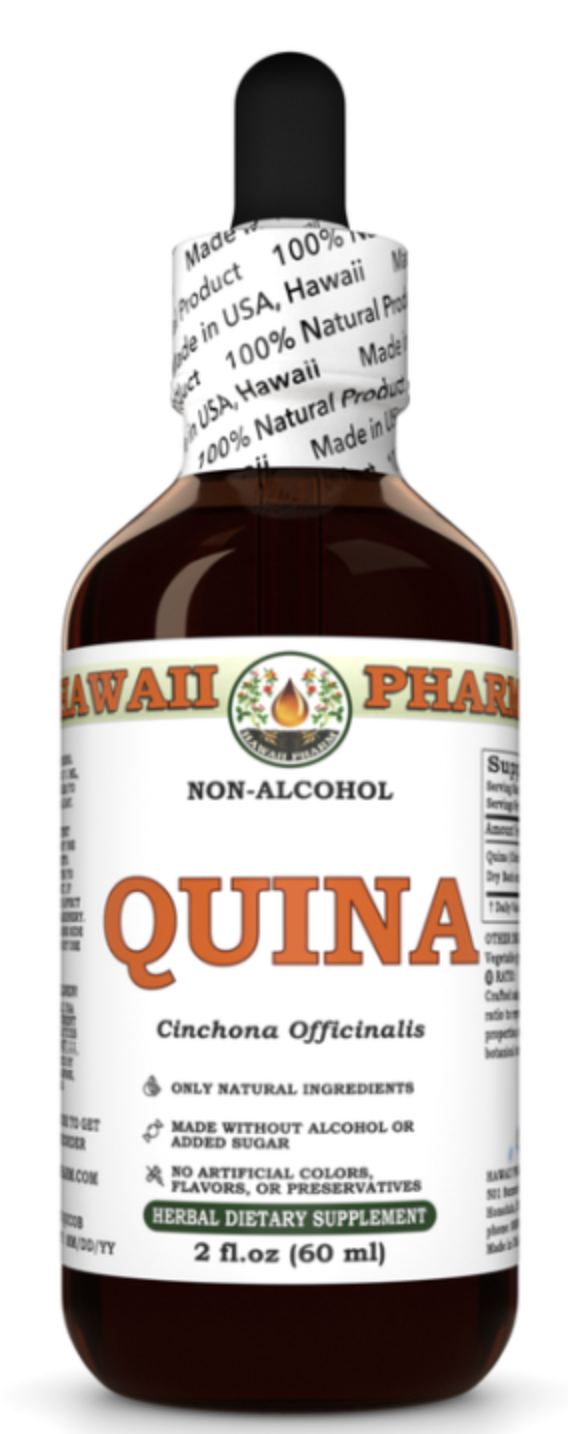
Click here to buy Cinchona bark tincture.
Resources:
• Yang, Z. B. et al. (2020). Artesunate alleviates the inflammatory response of ulcerative colitis by regulating the expression of miR-155. Retrieved January 17, 2026 from https://www.tandfonline.com/doi/full/10.1080/13880209.2020.1867196
National Institute of Diabetes and Digestive and Kidney Diseases (2018). Quinine. Retrieved January 17, 2026 from https://www.ncbi.nlm.nih.gov/books/NBK548596/
• Wolf, R. et al. (2002). Quinine sulfate and bacterial invasion. Retrieved January 17, 2026 from https://pmc.ncbi.nlm.nih.gov/articles/PMC149380/
National Institute of Diabetes and Digestive and Kidney Diseases (2018). Quinine. Retrieved January 17, 2026 from https://www.ncbi.nlm.nih.gov/books/NBK548596/
• Ghasemi-Dehnoo, M. et al. (2023).Quinic acid ameliorates ulcerative colitis in rats, through the inhibition of two TLR4-NF-kappaB and NF-kappaB-INOS-NO signaling pathways. Retrieved January 17, 2026 from https://pmc.ncbi.nlm.nih.gov/articles/PMC10408368/
• Gulada, B. O. et al. (2025). Impact of Viburnum opulus L. Fruit Extracts on the Physicochemical, Sensory, and Bioactive Properties of Wheat Waffles. Retrieved January 17, 2026 from https://www.mdpi.com/1420-3049/30/24/4677
• Bujor, A. et al. (2019). Metabolite profiling, arginase inhibition and vasorelaxant activity of Cornus mas, Sorbus aucuparia, and Viburnum opulus fruit extracts. Retrieved January 17, 2026 from https://scholar.google.com/scholar_lookup?title=Metabolite+profiling,+arginase+inhibition+and+vasorelaxant+activity+of+Cornus+mas,+Sorbus+aucuparia+and+Viburnum+opulus+fruit+extracts&author=Bujor,+A.&author=Miron,+A.&author=Luca,+S.V.&author=Skalicka-Wozniak,+K.&author=Silion,+M.&author=Ancuceanu,+R.&author=Dinu,+M.&author=Girard,+C.&author=Demougeot,+C.&author=Totoson,+P.&publication_year=2019&journal=Food+Chem.+Toxicol.&volume=133&pages=110764&doi=10.1016/j.fct.2019.110764&pmid=31437471
• Ask Ayurveda (n.d.). Quinic Acid. Retrieved January 17, 2026 from https://ask-ayurveda.com/wiki/article/6536-quinic-acid
• Erly, B. et al. (2023). A Perilous Combination: Streptococcus Coinfection with Human Plague–Report of Two Cases and Review of the Literature, 1937-2022. Retrieved January 17, 2026 from https://www.liebertpub.com/doi/full/10.1089/vbz.2022.0084#:~:text=Streptococcus%20pneumoniae%20most%20frequently%20causes,pestis%E2%80%93Streptococcus%20coinfection.
• Loofbourow, S. (2018). The History of Green Coffee Extract + Recipes - One of Coffee’s First Brew Methods. Retrieved January 25, 2026 from https://royalcoffee.com/green-coffee-extract/?srsltid=AfmBOopy6Tdacd8jxU-5r1DL5W6NiiF70HeR6hrFXx924wdGCiKWPXHI
• Coohill, T. P. and Sagripanti, J. L. (2009). Bacterial Inactivation by Solar Ultraviolet Radiation Compared with Sensitivity to 254 nm Radiation. Retrieved January 26, 2026 from https://onlinelibrary.wiley.com/doi/10.1111/j.1751-1097.2009.00586.x#:~:text=It%20is%20not%20surprising%20that,the%20next%20morning%20(45).
• Lee, K. C. et al. (2022). Relation of pandemics with solar cycles through ozone, cloud seeds, and vitamin D. Retrieved January 25, 2026 from https://pmc.ncbi.nlm.nih.gov/articles/PMC9510177/