Anisakiasis Self-Treatment Options
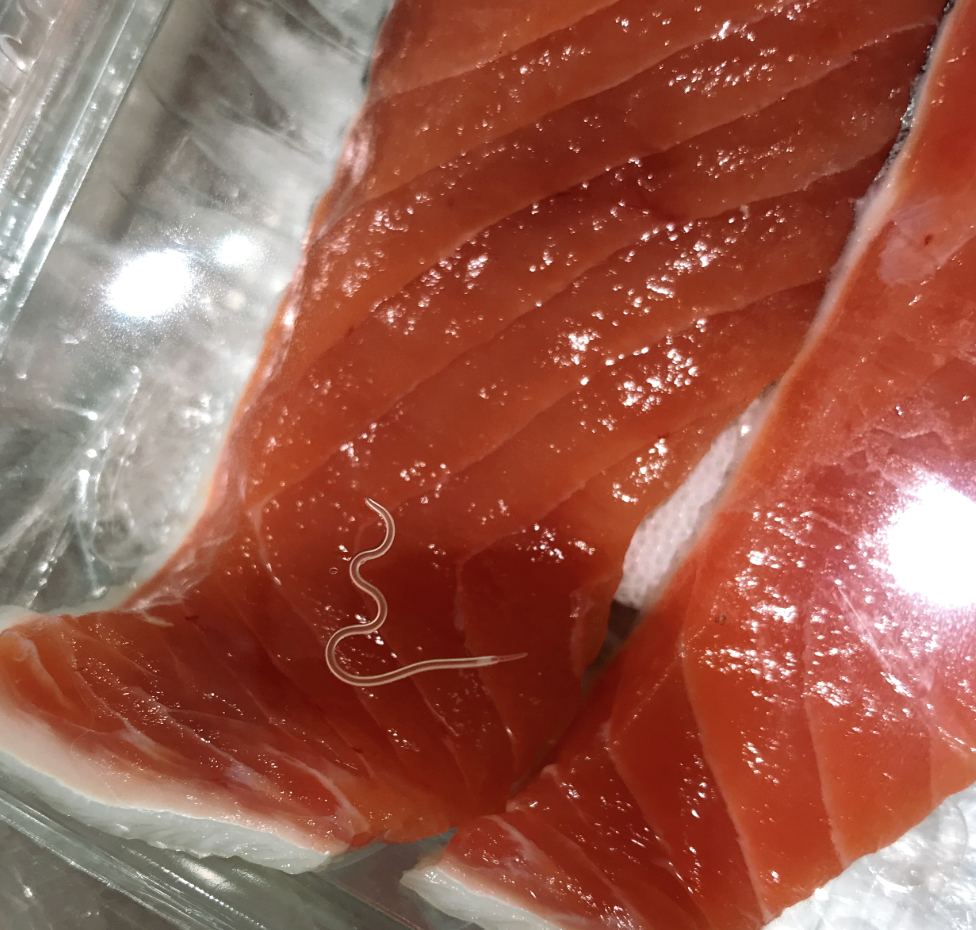
Though anisakiasis is a treatable disorder, diagnosis is difficult in conventional medicine. The most common symptom is severe abdominal pain that requires painkillers in patients who eat sushi or undercooked fish. Very few hospitals can do capsule endoscopy or double-balloon endoscopy to quickly diagnose this disease and immunological diagnosis takes a week and is thus, not helpful.
Intestinal anisakidosis is often misdiagnosed because of the non-specific nature of its symptoms. Doctors might diagnose it as appendicitis, Crohn’s disease, ulcerative colitis, or even colon cancer which results in unnecessary laparotomy or even bowel resection, a massive tragedy for patients who could otherwise be treated with peppermint essential oil or some form of wild tobacco.
Click here to schedule a health coaching call with us.
Chronic intestinal anisakiasis, which might be misdiagnosed specifically as eosinophilic gastroenteritis, Crohn’s disease or ulcerative colitis, involves the formation of eosinophilic granulomas around the larvae that develop into an intestinal obstruction or tumor as the body reacts to the presence of this parasite with allergic response. The development of inflammation around infected areas of the intestinal wall leads to general inflammation of the intestines, small intestinal obstruction, or even intestinal perforations that present as acute abdomen.While there are short-term treatments for anisakiasis in conventional medicine (namely albendazole, ivermectin, or pyrantel pamoate), some studies have reported that these treatments are more likely to leave behind ulcerations in the intestines. Natural treatments like Embelia ribes, Nicotiana rustica, or even peppermint essential oil might be a better choice for those who eat sushi or seafood that might be undercooked. These treatments can be given often, even daily to prevent infection.
This disease, though usually self-limiting, can also become chronic with parasites moving beyond the gastrointestinal system to almost any other area of the body to produce different symptoms or the potential for autoimmune disease or cancer misdiagnosis.
In conventional medicine, treatment involves albendazole (400 mg) or endoscopic removal of the worms. Conservative treatment approaches using albendazole and other antiparasitic medications seem to work in most cases to treat this disease in conventional medicine.
Ivermectin has been used to treat anisakiasis with a fairly high level of effectiveness.
Pyrantel pamoate has also been used to treat this parasitic illness with success.
If you are self-treating for this condition at home, Embelia ribes is an Ayurvedic remedy for anisakiasis. As we’ve noted several times above, Embelia ribes is an effective treatment for a number of different types of intestinal worms which makes it a good choice for those who aren’t sure about their exact diagnosis or simply for an annual parasite cleanse. Administer 1 gram twice daily for 7 to 21 days. Then administer 1 gram every 7 days for 3 months.
As a natural treatment for anisakiasis, Mentha piperita / peppermint has strong larvicidal activity that’s more effective than albendazole. In animal models of anisakiasis, large stomach lesions were present in 46.7% of lab rats after treatment with albendazole. In contrast, lab animals treated with peppermint essential oil, menthol, menthyl acetate, or menthone had no gastrointestinal lesions after treatment.
Nicotine-containing plants like wild tobacco can be used to prevent and treat a number of parasite infections. For individuals who are doing self-treatment at home, the use of wild tobacco in the form of Ambil or Hápe can be extremely valuable to prevent serious diseases like anisakiasis, to protect the thyroid gland, and to prevent high worm load naturally. Wild tobacco, when properly dosed is not addictive in the same way that commercial tobacco products are addictive (because they contain other addictive ingredients).
Parasites: Self-Treatment and Prevention - BUY THE eBOOK HERE!!!
Resources:
• Shrestha, S. et al. (2014). Intestinal anisakiasis treated successfully with conservative therapy: Importance of clinical diagnosis. Retrieved March 19, 2026 from https://pmc.ncbi.nlm.nih.gov/articles/PMC3923037/
• Styinski, R. et al. (2024). The response of Anisaki simplex (s. s.) to anthelmintics - Specific changes to xenobiotic metabolic processes. Retrieved March 19, 2026 from https://www.researchgate.net/publication/379698171_The_response_of_Anisakis_simplex_s_s_to_anthelmintics_-_specific_changes_in_xenobiotic_metabolic_processes
• Dziekonska-Rynko, J. et al. (2002). Effects of ivermectin and albendazole against Anisakis simplex in vitro and in guinea pigs. Retrieved March 19, 2026 from https://pubmed.ncbi.nlm.nih.gov/12054018/
• Romero, M. C. et al. (2014). Peppermint (Metha piperita) and albendazole against anisakiasis in an animal model. Retrieved March 19, 2026 from https://pubmed.ncbi.nlm.nih.gov/25330410/
• Ramanan, P. et al. (2013). Parametrial Anisakidosis. Retrieved March 19, 2026 from https://pmc.ncbi.nlm.nih.gov/articles/PMC3811649/#:~:text=Anisakidosis%20is%20acquired%20by%20the,decipiens%20(1%2C%202).
• Thorburn, L. P. et al. (2015). Variable effects of nicotine, anabasine, and their interactions on parasitized bumble bees. Retrieved March 19, 2026 from https://pmc.ncbi.nlm.nih.gov/articles/PMC4786900/#:~:text=Nicotine%20is%20an%20agonist%20of,et%20al.%2C%202015a).
• Roulette, C. J. et al. (2014). Tobacco use vs. helminths in Congo basin hunter-gatherers: self-medication in humans? Retrieved March 19, 2026 from https://www.sciencedirect.com/science/article/abs/pii/S1090513814000567#:~:text=Saliva%20samples%20were%20assayed%20for,use%20helps%20defend%20against%20parasites.