Alternative Treatments for Hymenolepis nana and Hymenolepis diminuta
The dwarf tapeworm (Hymenolepis nana) is the most common cestode infecting humans, measuring 1.5 to 4.0 cm in length as an adult. Unlike most cestodes, Hymenolepis nana can be transmitted directly from person to person, a characteristic that permits both autoinfection and spread to household contacts unfortunately. Its eggs can be ingested by small arthropods like flour or grain beetles, and they then develop into cysticercoid larvae that are transferred to the next host.Doctors typically prescribe praziquantel for this infection. Treatment for both Hymenolepis nana and Hymenolepis diminuta is a single dose of praziquantel (25 mg/kg), with H. nana requiring a second dose one week later. Household members should be treated as well.
Praziquantel is a broad spectrum antiparasitic medicine that causes rapid calcium influx into the worm. This leads to severe tegument damage and muscle contraction that ultimately causes the parasite to die.
Click here to schedule a health coaching session with us.
Albendazole is another treatment that might be warranted in some patients. Albendazole is administered for tapeworm infections that involve tissue invasion such as neurocysticercosis (invasion of the brain to cause epilepsy symptoms) or echinococcosis (microscopic tapeworms that usually come from dog feces and form tumor-like hydatid cysts or solid lesions in the liver or the lungs).Embelia ribes is an important Ayurvedic remedy to consider for tapeworms at a dose of 1 gram twice daily for 21 days. As noted above, this Ayurvedic remedy is also an effective treatment for several other types of intestinal worms, thus if you aren’t sure what type of infection you’re struggling with, Embelia ribes is a good place to start with in terms of treatment. After you’ve completed the initial 21 day treatment, then administer 1 gram every 7 days for 3 months to prevent re-infection.
Click here to learn more and subscribe to the Living Database now.
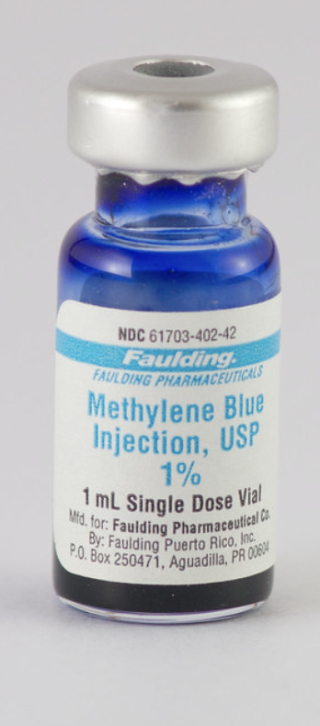
Methylene blue can penetrate the cuticle of tapeworms as well as many other parasites. It is also capable of killing larvae by penetrating their cuticle. Methylene blue works by producing reactive oxygen species that are able to kill adult tapeworms, their larvae, and other types of parasites. To enhance its effects, methylene blue should be administered about 2 hours before an infrared sauna session that lasts 15 to 30 minutes.Methylene blue only penetrates living tapeworms like Hymenolepis nana to kill them. Dead tapeworms don’t interact with the methylene blue in any meaningful way.
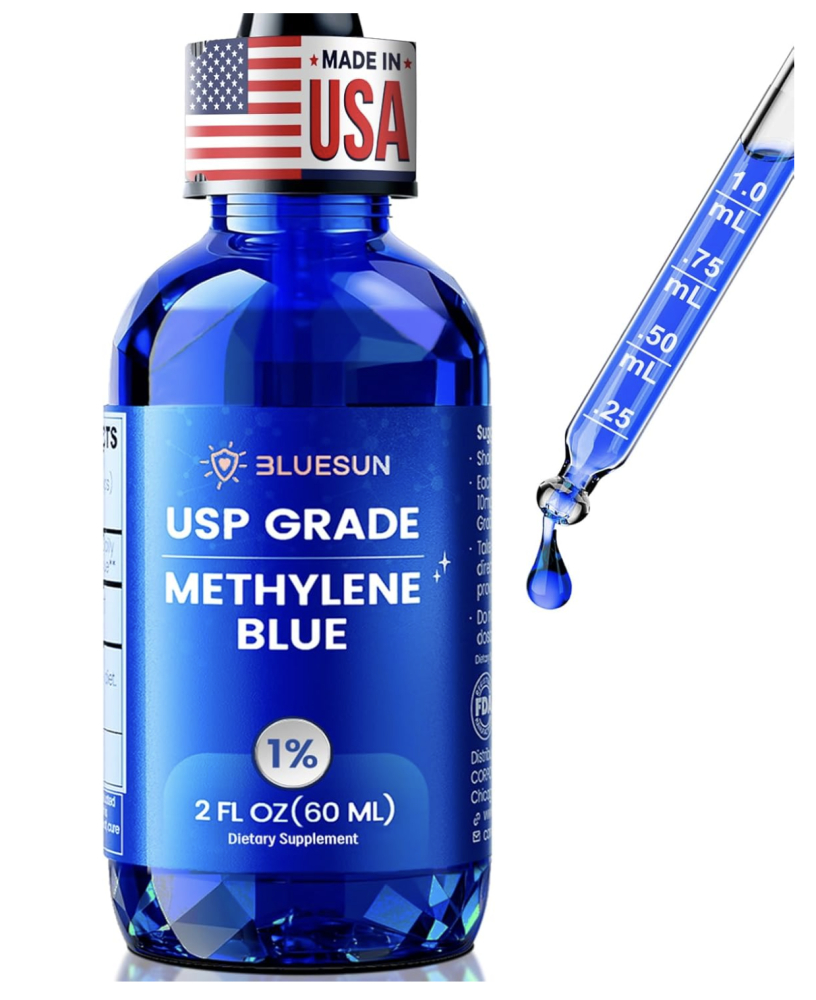
If you have a higher concentration of methylene blue note that at 0.1%, 1 mL of methylene blue equals 1 mg. Get a pipette to measure the proper dose in millilters. Administer 1 mg per kilogram (or per 2.2 pounds) of the patient’s body weight.
Click here to buy Methylene Blue.
Below is a dosing chart for methylene blue at a concentration of 1%. Doses are given as drops from a standard dropper:- Body Weight: 50 kg/110 lbs: 1 mg/kg dose = 50 mg/day or 100 drops/day
- Body Weight: 55 kg/121 lbs: 1 mg/kg dose = 55 mg/day or 110 drops/day
- Body Weight: 60 kg/132 lbs: 1 mg/kg dose = 60 mg/day or 120 drops/day
- Body Weight: 65 kg/143 lbs: 1 mg/kg dose = 65 mg/day or 130 drops/day
- Body Weight: 70 kg/154 lbs: 1 mg/kg dose = 70 mg/day or 140 drops/day
- Body Weight: 75 kg/165 lbs: 1 mg/kg dose = 75 mg/day or 150 drops/day
- Body Weight: 80 kg/176 lbs: 1 mg/kg dose = 80 mg/day or 160 drops
- Body Weight: 85 kg/187 lbs: 1 mg/kg dose = 85 mg/day or 170 drops/day
- Body Weight: 90 kg/198 lbs: 1 mg/kg dose = 90 mg/day or 180 drops/day
- Body Weight: 95 kg/209 lbs: 1 mg/kg dose = 95 mg/day or 190 drops
- Body Weight: 100 kg/220 lbs: 1 mg/kg dose = 100 mg/day or 200 drops/day
Glinis lotoides, also known as “mettere”, is an Ethiopian herb that is active against cestode infections in humans. The seeds are used to kill Hymenolepis nana.
Ethanolic extracts are administered at a dose of 1 mg per milliliter or a hydroalcoholic extract can be administered up to a dose of 4.5 grams per kilogram body weight (lower doses than this are recommended). Administer the daily dose in divided doses throughout the day rather than all at once.
Parasites: Self-Treatment and Prevention - BUY THE eBOOK HERE!!!
Resources:
• Kumar, R. et al. (2024). Phytopharmaceuticals as an Alternative Treatment against Parasites. Retrieved March 14, 2026 from researchgate.net/publication/372573626_Phytopharmaceuticals_as_an_Alternative_Treatment_against_Parasites
• El Ezz, N. M. T. A. (2005). Effect of Nigella sativa and Allium cepa oils on Trichinella spiralis in experimentally infected rats. Retrieved March 14, 2026 from https://www.researchgate.net/publication/7677161_Effect_of_Nigella_sativa_and_Allium_cepa_oils_on_Trichinella_spiralis_in_experimentally_infected_rats#:~:text=Abstract,life%20cycle%20of%20this%20parasite.
• IBSAL (2024). Dyes could fight intestinal parasites. Retrieved March 14, 2026 from https://ibsal.es/en/dyes-could-fight-intestinal-parasites/#:~:text=A%20new%20USAL%20and%20IBSAL,%2DAb%C3%A1n%20J%2C%20Pel%C3%A1ez%20R.