How to Find a Lost Mind
DISCLAIMER: CONSULT WITH A DOCTOR BEFORE DECIDING ON A TREATMENT PLAN FOR ANY DISEASE.
ome links may be affiliate links. We may get paid if you buy something or take an action after clicking one of these. We use this revenue to keep the site free to you.
Finding a Lost Mind

Some time ago, I was working with the Amanita muscaria mushroom (a mushroom that can provoke powerful lucid dreams) and I had a dream where a part of me had been sealed intentionally into a human-sized wine bottle while another part of me was standing nearby with a Guide. The part of me that was inside the wine bottle was aware and alive, but it was a little nervous about the situation, as you might expect. I had been positioned in this bottle like a corpse and though I couldn’t open my eyes, there were engravings and frieze-like images inside the bottle to help me understand and remember why this part of me, my “dream-double” was in there.
Click here to schedule a health coaching session with us.
Meanwhile, another part of me was standing nearby discussing “light-bugs” with my Guide. There was a “light-bug” inside the wine bottle on or near the cork to provide light to the part of me inside the bottle, but my Guide discussed these “light-bugs” at length. Unfortunately, the narrative, logical aspects of this conversation weren’t available to me in the dream.
It is, however, the season of lightning bugs here in Mexico. Real-life lightning bugs are a quintessential symbol for the Law of Attraction and how we find what we want. A male lightning bug puts out a sequence of flashing lights in order to be found, but it also seeks out a female who responds with a specific sequence of flashing lights to beckon him. So, to me, the lightning bug is an apt symbol in terms of the Intention of this Amanita muscaria trip. I was trying to understand neurodegenerative diseases, schizophrenia, epilepsy, and a variety of other dis-ease states that involve soul loss or what we, in the modern world, might refer to colloquially as losing one’s mind.
I had taken these Amanita muscaria mushrooms intentionally to work with some fairly complex material that could, by itself, fill a book, but for the purposes of this discussion, let’s say that I took these mushrooms to better understand the cholinergic nervous system, especially the “locked out” situation that happens when muscarinic receptors are blocked. A muscarinic blockade can happen when a person is exposed to organophosphates (as a result of their irreversible acetylcholinesterase inhibitor action), atropine, scopolamine, and other agents, but it can also happen as a result of a major trauma.
Click here to do a free trial of EMDR to Release Trauma.
The drug that is most famous for its ability to produce a muscarinic receptor blockade is scopolamine, but there are other powerful muscarinic receptor blockers too like atropine. Electroconvulsive therapy (ECT) is a muscarinic blocker as well. And as noted above, organophosphates used in agriculture, veterinary medicine, and as drugs known as bisphosphonates for osteoporosis in humans can also cause a muscarinic blockade when exposures occur in cumulative, small doses over time, or in one large dose. But dementia studies in animals tend to use scopolamine to produce dementia-like states in animals because muscarinic receptor blockers produce a situation that is closely related to death but where the body survives, at least in cases where dosing is carefully controlled. Essentially, scientists have acknowledged that studying how scopolamine, a powerful muscarinic receptor blocker that is sometimes known as “devil’s breath”, affects the nervous system is roughly analogous to studying what happens to the nervous system in dementia.
This is valuable information, of course. Scopolamine, in tiny doses, is used for motion sickness. In higher doses, it produces amnesia wherein the body continues to act and behave normally but memory is impeded. At even higher doses, people may turn rabid and completely lose control, flailing and screaming in a red, murderous rage. And, of course, at a high enough dose, scopolamine can kill you.

Click here to buy Amanita muscaria mushrooms.
But while drugs that cause a muscarinic blockade can be very dangerous, medicinal agents that activate the muscarinic receptors can be used to produce insights into this system of the body, or rather into these technologies and landscapes that the human body can find and go to. These ideas are not so far removed from modern science that an average person of average intelligence cannot understand them, but they are challenging nonetheless. This morning, I woke up from a very short dream where my Guides were urging me to do more “ear-search” (a play on the word, “research”). A woman then flippantly walked past me (in the dream) to write the Spanish word ir on a transparent wall. I woke up and immediately recognized that ir and ear are homonyms. They sounds the same even though they’re from different languages. In Spanish, ir means “to go” and I knew, based on some other material that’s come to me recently that this idea of “going” and “ears” has to do with a type of soul loss. It was a reference to the kidneys and fear as the kidneys are related to the ears in Traditional Chinese medicine. These ideas are like the beads on a necklace and when I wake with a dream like this that’s both short and profound, I know I need to dig to find the logical, scientific relationships that exist between them. They exist and I’ll expand on them more throughout this book.
A young friend of Lydian’s, a nurse, has a child who is currently struggling with a vestibular issue. He cannot balance his body. Clients recently have contacted us for help in resolving autism with catatonia and schizophrenia. This material is important to me personally, but the story about why and how it is important is too far out for average readers. Also, my personal interest belongs to my family lineage. Nonetheless, I will, at times, allude to this material as we unpack the idea that a person can lose their mind and that the mind can then be found.
Click here to learn more about the DreamLight.app, an online guided meditation and brain-entrainment tool.
Some minds wander. And some minds get lost. But the muscarinic receptors of the cholinergic nervous system that I just talked about above represent a technology that exists within the human body to leave, to wander, to GO, and yes, at times to get lost. Shaman are people who know how to leave this plane of reality, how to wander on certain, specific, other planes of reality, and how to find their way back to this reality using the technology of these or other receptors that exist within the body. Essentially, a shaman knows how to wander within the planes of reality that we regard as crazy or demented and find their way back to this world of non-crazy, non-demented reality.
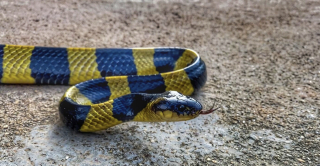
Nicotinic receptors are the other type of receptor found in the cholinergic nervous system. These receptors respond to nicotinic acid (vitamin B3) as well as nicotine that’s found in cigarettes, cigars, and the sacred medicines Ambil and Hápe / Rápe. These receptors, when blockaded, produce an experience that is just as scary as a muscarinic blockade. In fact, if you administer a block to either the nicotinic or the muscarinic receptors, the person who is being “blocked” may feel nauseated, vomit, or get very dizzy. But while muscarinic receptor blocks produce an experience in which the “mind” (or soul) gets “locked out”, a nicotinic receptor blockade produces an experience in which the mind-soul gets “locked in”. The person’s consciousness, during a nicotinic receptor blockade is fully aware and fully able to feel and hear and see what’s going on around his or her body, but this person cannot move. It is, as though, the energy field of the person with the nicotinic blockade becomes too small or too weak and that person then suffers from what’s known as Totally Locked In Syndrome. This is a real syndrome that takes shape when someone is shot with a curare-covered arrow in the Amazon, bitten by a Burmese cobra, or as a result of inundation with the cholera toxin. A lesser form of Totally Locked In Syndrome, known as just Locked In Syndrome, also exists to describe partial experiences of paralysis in which the consciousness is awake and aware, but only somewhat immobilized. The COVID spike protein can produce Locked In Syndrome by lodging itself into nicotinic receptors as well to produce what’s known as “Long COVID”.
As a knee-jerk reflex, many people wonder if nicotine patches might be the answer to the problem of Locked In Syndromes, but my experience has been that, while Mapacho, a wild form of Tobacco is a powerful sacred medicine that can be beneficial in targeting and release certain dis-ease states, the nicotinic and the muscarinic receptors of the cholinergic nervous system belong to a type of human tech that most people do not know how to use anymore. This human technology might be likened to a type of virtual reality that we can access with nothing more than our bodies and specific types of sacred medicines, administered with great care and wisdom.
The modern human in today’s world tends to think about nervous system “receptors” and other structures or physiological processes in the body in terms of non-intelligent manipulation of those receptors or processes. In other words, a doctor might prescribe a nicotinic receptor agonist like the nicotine patch to a patient who has Long COVID with a very primitive Intention to clear the nicotinic receptors of substances or objects like COVID spike proteins that might be gumming them up. In fact, if someone presents with a disease that involves paralysis or a movement disorder, nicotine and Mapacho specifically might be valuable, but as a medicine that’s used to go to another plane of reality in order to either apply a treatment on that plane or to speak to a Guide that lives on that plane of reality who can provide the name or some cue regarding the necessary treatment to help that patient. The patient may take the nicotinic medicine themselves or someone else, a loved one, might take it on their behalf.
Like my dream with the woman who wrote ir on a translucent screen to help me understand that I need to look more closely at ears in regard to the material that I’m writing about right now, there is guidance available through these receptors if we choose to use them and pass onto other planes of reality with Intention in order to heal ourselves or the people we love.
Everything we need exists in nature. The solutions to our problems, including medical problems, already exist, but we can’t always find them in time to stop death or to prevent certain types of diseases from taking shape. If you get bitten by a cobra in Burma / Myanmar, you’ll probably die of Totally Locked In Syndrome unless someone can ventilate you until you can get the antivenin, but a Burmese python is a type of snake that can get bitten by a cobra and suffer no negative effects. Why? The Burmese python’s body responds to the nicotinic blockade of the cobra venom with an electrostatic charge repulsion. This stops the nicotinic blockade from being able to block the nicotinic receptors.
Click here to subscribe to the Living Database now.
Resources
Chandrasekara, U. et al. (2024). High-Voltage Toxin-Roll: Electrostatic Charge Repulsion as a Dynamic Venom Resistance Trait in Pythonid Snakes. Retrieved July 22, 2026 from https://www.mdpi.com/2072-6651/16/4/176
Nys, M. et al. (2022). The molecular mechanism of snake short-chain alpha-neurotoxin binding to muscle-type nicotinic acetylcholine receptors. Retrieved July 22, 2026 from ttps://www.nature.com/articles/s41467-022-32174-7
Carlson, A. B. and Kraus, G. P. (2023), Physiology: Cholinergic Receptors. Retrieved July 22, 2026 from https://www.ncbi.nlm.nih.gov/books/NBK526134/
Corsini, S. et al. (2016). Nicotinic receptor activation contrasts pathophysiological bursting and neurodegeneration evoked by glutamate uptake block on rat hypoglossal motoneurons. Retrieved July 22, 2026 from https://pmc.ncbi.nlm.nih.gov/articles/PMC5108918/
Rosal, N. et al. (2021). Wooden Chest Syndrome: A Case Report of Fentanyl-Induced Chest Wall Rigidity. Retrieved July 22, 2026 from https://pmc.ncbi.nlm.nih.gov/articles/PMC8312149/
Ruffalo, M. L. (2026). A Brief History of Electroconvulsive Therapy. Retrieved July 22, 2026 from https://www.psychologytoday.com/us/blog/from-freud-to-fluoxetine/201811/a-brief-history-of-electroconvulsive-therapy
Fink, M. (1984). Meduna and the origins of convulsive therapy. Retrieved July 22, 2026 from https://pubmed.ncbi.nlm.nih.gov/6147103/
Robinson, R. (2009). Serotonin’s Role in the Pancreas Revealed at Last. Retrieved July 23, 2026 from https://journals.plos.org/plosbiology/article?id=10.1371/journal.pbio.1000227




















Be sure to take a look at a few of our e-Books titles below that might pertain to your health search:
Finding a Lost Mind
Some time ago, I was working with the Amanita muscaria mushroom (a mushroom that can provoke powerful lucid dreams) and I had a dream where a part of me had been sealed intentionally into a human-sized wine bottle while another part of me was standing nearby with a Guide. The part of me that was inside the wine bottle was aware and alive, but it was a little nervous about the situation, as you might expect. I had been positioned in this bottle like a corpse and though I couldn’t open my eyes, there were engravings and frieze-like images inside the bottle to help me understand and remember why this part of me, my “dream-double” was in there.
Click here to schedule a health coaching session with us.
Meanwhile, another part of me was standing nearby discussing “light-bugs” with my Guide. There was a “light-bug” inside the wine bottle on or near the cork to provide light to the part of me inside the bottle, but my Guide discussed these “light-bugs” at length. Unfortunately, the narrative, logical aspects of this conversation weren’t available to me in the dream.
It is, however, the season of lightning bugs here in Mexico. Real-life lightning bugs are a quintessential symbol for the Law of Attraction and how we find what we want. A male lightning bug puts out a sequence of flashing lights in order to be found, but it also seeks out a female who responds with a specific sequence of flashing lights to beckon him. So, to me, the lightning bug is an apt symbol in terms of the Intention of this Amanita muscaria trip. I was trying to understand neurodegenerative diseases, schizophrenia, epilepsy, and a variety of other dis-ease states that involve soul loss or what we, in the modern world, might refer to colloquially as losing one’s mind.
I had taken these Amanita muscaria mushrooms intentionally to work with some fairly complex material that could, by itself, fill a book, but for the purposes of this discussion, let’s say that I took these mushrooms to better understand the cholinergic nervous system, especially the “locked out” situation that happens when muscarinic receptors are blocked. A muscarinic blockade can happen when a person is exposed to organophosphates (as a result of their irreversible acetylcholinesterase inhibitor action), atropine, scopolamine, and other agents, but it can also happen as a result of a major trauma.
Click here to do a free trial of EMDR to Release Trauma.
The drug that is most famous for its ability to produce a muscarinic receptor blockade is scopolamine, but there are other powerful muscarinic receptor blockers too like atropine. Electroconvulsive therapy (ECT) is a muscarinic blocker as well. And as noted above, organophosphates used in agriculture, veterinary medicine, and as drugs known as bisphosphonates for osteoporosis in humans can also cause a muscarinic blockade when exposures occur in cumulative, small doses over time, or in one large dose. But dementia studies in animals tend to use scopolamine to produce dementia-like states in animals because muscarinic receptor blockers produce a situation that is closely related to death but where the body survives, at least in cases where dosing is carefully controlled. Essentially, scientists have acknowledged that studying how scopolamine, a powerful muscarinic receptor blocker that is sometimes known as “devil’s breath”, affects the nervous system is roughly analogous to studying what happens to the nervous system in dementia.
This is valuable information, of course. Scopolamine, in tiny doses, is used for motion sickness. In higher doses, it produces amnesia wherein the body continues to act and behave normally but memory is impeded. At even higher doses, people may turn rabid and completely lose control, flailing and screaming in a red, murderous rage. And, of course, at a high enough dose, scopolamine can kill you.
Click here to buy Amanita muscaria mushrooms.
But while drugs that cause a muscarinic blockade can be very dangerous, medicinal agents that activate the muscarinic receptors can be used to produce insights into this system of the body, or rather into these technologies and landscapes that the human body can find and go to. These ideas are not so far removed from modern science that an average person of average intelligence cannot understand them, but they are challenging nonetheless. This morning, I woke up from a very short dream where my Guides were urging me to do more “ear-search” (a play on the word, “research”). A woman then flippantly walked past me (in the dream) to write the Spanish word ir on a transparent wall. I woke up and immediately recognized that ir and ear are homonyms. They sounds the same even though they’re from different languages. In Spanish, ir means “to go” and I knew, based on some other material that’s come to me recently that this idea of “going” and “ears” has to do with a type of soul loss. It was a reference to the kidneys and fear as the kidneys are related to the ears in Traditional Chinese medicine. These ideas are like the beads on a necklace and when I wake with a dream like this that’s both short and profound, I know I need to dig to find the logical, scientific relationships that exist between them. They exist and I’ll expand on them more throughout this book.
A young friend of Lydian’s, a nurse, has a child who is currently struggling with a vestibular issue. He cannot balance his body. Clients recently have contacted us for help in resolving autism with catatonia and schizophrenia. This material is important to me personally, but the story about why and how it is important is too far out for average readers. Also, my personal interest belongs to my family lineage. Nonetheless, I will, at times, allude to this material as we unpack the idea that a person can lose their mind and that the mind can then be found.
Click here to learn more about the DreamLight.app, an online guided meditation and brain-entrainment tool.
Some minds wander. And some minds get lost. But the muscarinic receptors of the cholinergic nervous system that I just talked about above represent a technology that exists within the human body to leave, to wander, to GO, and yes, at times to get lost. Shaman are people who know how to leave this plane of reality, how to wander on certain, specific, other planes of reality, and how to find their way back to this reality using the technology of these or other receptors that exist within the body. Essentially, a shaman knows how to wander within the planes of reality that we regard as crazy or demented and find their way back to this world of non-crazy, non-demented reality.
Nicotinic receptors are the other type of receptor found in the cholinergic nervous system. These receptors respond to nicotinic acid (vitamin B3) as well as nicotine that’s found in cigarettes, cigars, and the sacred medicines Ambil and Hápe / Rápe. These receptors, when blockaded, produce an experience that is just as scary as a muscarinic blockade. In fact, if you administer a block to either the nicotinic or the muscarinic receptors, the person who is being “blocked” may feel nauseated, vomit, or get very dizzy. But while muscarinic receptor blocks produce an experience in which the “mind” (or soul) gets “locked out”, a nicotinic receptor blockade produces an experience in which the mind-soul gets “locked in”. The person’s consciousness, during a nicotinic receptor blockade is fully aware and fully able to feel and hear and see what’s going on around his or her body, but this person cannot move. It is, as though, the energy field of the person with the nicotinic blockade becomes too small or too weak and that person then suffers from what’s known as Totally Locked In Syndrome. This is a real syndrome that takes shape when someone is shot with a curare-covered arrow in the Amazon, bitten by a Burmese cobra, or as a result of inundation with the cholera toxin. A lesser form of Totally Locked In Syndrome, known as just Locked In Syndrome, also exists to describe partial experiences of paralysis in which the consciousness is awake and aware, but only somewhat immobilized. The COVID spike protein can produce Locked In Syndrome by lodging itself into nicotinic receptors as well to produce what’s known as “Long COVID”.
As a knee-jerk reflex, many people wonder if nicotine patches might be the answer to the problem of Locked In Syndromes, but my experience has been that, while Mapacho, a wild form of Tobacco is a powerful sacred medicine that can be beneficial in targeting and release certain dis-ease states, the nicotinic and the muscarinic receptors of the cholinergic nervous system belong to a type of human tech that most people do not know how to use anymore. This human technology might be likened to a type of virtual reality that we can access with nothing more than our bodies and specific types of sacred medicines, administered with great care and wisdom.
The modern human in today’s world tends to think about nervous system “receptors” and other structures or physiological processes in the body in terms of non-intelligent manipulation of those receptors or processes. In other words, a doctor might prescribe a nicotinic receptor agonist like the nicotine patch to a patient who has Long COVID with a very primitive Intention to clear the nicotinic receptors of substances or objects like COVID spike proteins that might be gumming them up. In fact, if someone presents with a disease that involves paralysis or a movement disorder, nicotine and Mapacho specifically might be valuable, but as a medicine that’s used to go to another plane of reality in order to either apply a treatment on that plane or to speak to a Guide that lives on that plane of reality who can provide the name or some cue regarding the necessary treatment to help that patient. The patient may take the nicotinic medicine themselves or someone else, a loved one, might take it on their behalf.
Like my dream with the woman who wrote ir on a translucent screen to help me understand that I need to look more closely at ears in regard to the material that I’m writing about right now, there is guidance available through these receptors if we choose to use them and pass onto other planes of reality with Intention in order to heal ourselves or the people we love.
Everything we need exists in nature. The solutions to our problems, including medical problems, already exist, but we can’t always find them in time to stop death or to prevent certain types of diseases from taking shape. If you get bitten by a cobra in Burma / Myanmar, you’ll probably die of Totally Locked In Syndrome unless someone can ventilate you until you can get the antivenin, but a Burmese python is a type of snake that can get bitten by a cobra and suffer no negative effects. Why? The Burmese python’s body responds to the nicotinic blockade of the cobra venom with an electrostatic charge repulsion. This stops the nicotinic blockade from being able to block the nicotinic receptors.
Click here to subscribe to the Living Database now.
Resources
Chandrasekara, U. et al. (2024). High-Voltage Toxin-Roll: Electrostatic Charge Repulsion as a Dynamic Venom Resistance Trait in Pythonid Snakes. Retrieved July 22, 2026 from https://www.mdpi.com/2072-6651/16/4/176
Nys, M. et al. (2022). The molecular mechanism of snake short-chain alpha-neurotoxin binding to muscle-type nicotinic acetylcholine receptors. Retrieved July 22, 2026 from ttps://www.nature.com/articles/s41467-022-32174-7
Carlson, A. B. and Kraus, G. P. (2023), Physiology: Cholinergic Receptors. Retrieved July 22, 2026 from https://www.ncbi.nlm.nih.gov/books/NBK526134/
Corsini, S. et al. (2016). Nicotinic receptor activation contrasts pathophysiological bursting and neurodegeneration evoked by glutamate uptake block on rat hypoglossal motoneurons. Retrieved July 22, 2026 from https://pmc.ncbi.nlm.nih.gov/articles/PMC5108918/
Rosal, N. et al. (2021). Wooden Chest Syndrome: A Case Report of Fentanyl-Induced Chest Wall Rigidity. Retrieved July 22, 2026 from https://pmc.ncbi.nlm.nih.gov/articles/PMC8312149/
Ruffalo, M. L. (2026). A Brief History of Electroconvulsive Therapy. Retrieved July 22, 2026 from https://www.psychologytoday.com/us/blog/from-freud-to-fluoxetine/201811/a-brief-history-of-electroconvulsive-therapy
Fink, M. (1984). Meduna and the origins of convulsive therapy. Retrieved July 22, 2026 from https://pubmed.ncbi.nlm.nih.gov/6147103/
Robinson, R. (2009). Serotonin’s Role in the Pancreas Revealed at Last. Retrieved July 23, 2026 from https://journals.plos.org/plosbiology/article?id=10.1371/journal.pbio.1000227