Quinic Acid Effects in Cinchona Bark
Quinic acid is found in Cinchona bark as well as green coffee beans and some fruits. It is used as the chiral starting material for antiviral drugs like Oseltamivir and, by itself, it acts as a powerful antioxidant, anti-inflammatory agent, and antidiabetic substance. But here’s where it gets interesting: while the quinine in Cinchona can inhibit normal tryptophan metabolism, the quinic acid in Cinchona can be converted into tryptophan and vitamin B3 in the gut. So, as with most herbs, the whole plant material, Cinchona, provides balancing effects to protect humans against the imbalanced effects of quinine that cause serious, sometimes life-threatening side effects in humans when quinine is used by itself.
Click here to schedule a health coaching session with us.
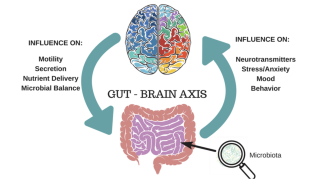
So the quinic acid content in Cinchona provides some protection against tryptophan deficiency and the downstream effects caused by a lack of proper tryptophan metabolism. But to really understand the potential value of quinic acids as a treatment for gut health (and also mental health), we have to look more closely at vitamin B3, a nutrient that’s derived from quinic acids and tryptophan in the gut.If you have a tryptophan deficiency or a vitamin B3 / niacin deficiency or some defect in the metabolism of tryptophan in the gut to vitamin B3 from quinic acids, then you could end up with either a gut health issue like Crohn’s disease and ulcerative colitis or you could end up with a neurological issue like schizophrenia or autism. While some people might develop gut issues in response to a defect or blockage in the normal metabolism of quinic acids, other people might be affected neurologically. The gut does impact our sense of grounding and our mood states, as well as our experience of reality as a whole. Essentially, quinic acids are both medicinal and nutritional for our bodies, but they can help mitigate some of the potential side effects that can be caused by quinine, highlighting just one of the reasons why Cinchona bark as a whole plant is a better choice than working with the solitary medicinal substance that’s derived from Cinchona, quinine.
Click here to buy Viburnum opulus / Cramp Bark tincture.
Cinchona bark contains a greater quantity of quinic acid than Viburnum opulus, but Cinchona, as a result of its high quinine content, also needs to provide the body with a medicinal substance to balance out some of the effects of quinine on the body. But before we consider how this changes the medicinal profile of these plants and how we might administer them to heal the gut, let’s consider the difference between quinine and quinic acid in terms of their medicinal effects.Quinine:
Quinine can be used to treat an array of different diseases and symptoms of disease including:
- Diphtheria
- Coronaviridae
- SARS-CoV
- COVID-19
- MERS
- Herpesviruses
- Cytomegalovirus / Herpesviruses
- HSV / Herpesviruses
- HSV-1
- HSV-2
- HHV-6 / 7
- HHV-8
- Epstein-Barr Virus / EBV
- Chickenpox / Varicella Zoster Virus - (Also shingles)
- Poxviruses
- Orthopox virus
- Smallpox / Variola virus
- Monkeypox / Mpox
- Vaccinia virus (used in the smallpox vaccine)
- Orthopox virus
- Rhabdoviridae
- Rabies
- Vesicular stomatitis
- Filoviridae
- Ebola
- Marburg
- Orthomyxoviridae
- Influenza A, B, and C
- Thogotoviruses
- Thogoto
- Dhori
- Bourbon virus
- HIV
- Human T-Lymphotropic Virus / HTLV
- Flaviviridae
- West Nile virus
- Dengue
- Yellow Fever
- Zika
- Japanese Encephalitis
- Tick-Borne Encephalitis
- Hepatitis C
- Murray Valley Encephalitis
- St. Louis Encephalitis
- Kyasanur Forest Disease
- Omsk Hemorrhagic Fever
- Paramyxoviridae
- Respiratory Synctitial Virus / RSV
- Measles
- Mumps
- Human Parainfluenza Virus
- Nipah (zoonotic)
- Hendra (zoonotic)
- Hepadnaviruses
- Hepatitis B virus
- Escherichia coli infection
- Nocturnal Leg cramps
- Malaria treatment - kills malaria by interfering with their ability to safely eat hemoglobin
Click here to buy Cinchona officinalis / Quina.
Quinic Acid:
Quinic acid is often viewed more like a dietary supplement or as a precursor compound, but don’t let this fool you into thinking that quinic acids aren’t important medicinally. Quinic acids have powerful anti-inflammatory activity in the gut along with antioxidant effects that play a role in its ability to heal the digestive system lining. High dose vitamin B3 / niacin has been used to cure Crohn’s disease and ulcerative colitis and vitamin B3 is ultimately derived from quinic acids (which convert to tryptophan and then to vitamin B3 or serotonin).
Quinic acid also has the following direct medicinal effects on the body:
- Antioxidant
- Reduces brain inflammation
- Reduces muscle atrophy
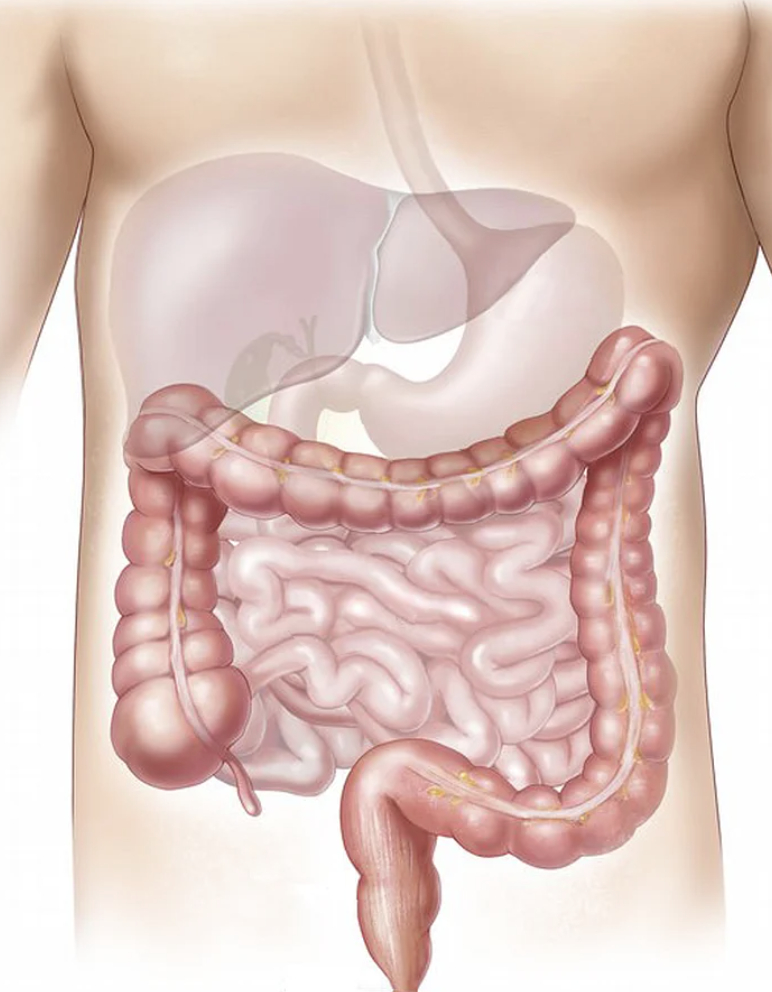
- Reduces gut inflammation / colitis
- Reduces edema in the colon
- Reduces infiltration of inflammatory cells
- Reduces epithelium damage in the colon
- Reduces cell death in the colon to promote healing
- Reduces blood vessel hardening and inflammation / atherosclerosis
- Treatment for endothelial dysfunction
- Treatment for impaired vasodilation
- Anticancer
- Note that for colorectal cancer in particular, quinic acid is a vital medicinal agent to reduce inflammation.
- Antiviral
- Antidiabetic
- Analgesic / pain-relieving
- Modulates cytokines like NF-kappaB
- Anti-arthritic / Reduces joint inflammation
- Can off-set the inhibiting effects on tryptophan caused by quinine
Click here to subscribe to the Living Database now.
Quinic acid is often used by pharmaceutical companies as a building block for drugs like oseltamivir, a drug that’s used to treat influenza A and B. As it turns out, quinic acid is also a metabolite of epicatechin and procyanidins and a precursor to chlorogenic acid which generally protects the digestive system, including the liver.Quinic acid can reduce brain inflammation in Alzheimer’s disease, schizophrenia, or autism and other nervous system issues while simultaneously improving gut microbiota. And it also acts as a prebiotic to support the growth of healthy intestinal flora.
Quinic acid has low bioavailability but it’s possible to consume a fair amount of it in foods that contain quinic acid. Green coffee contains a high amount of quinic acids that protects the gut through various mechanisms of action. By consuming higher doses of quinic acid, you can experience a more pronounced healing effect from it.
In comparison with quinine, quinic acid is more of a nutraceutical agent. While quinine is a potent medicine that can, at times, even produce uncomfortable side effects as a result of treatment, the body can use quinic acids to reduce these side effects.
Note that gender has an impact on the overall response that a patient has to bitter compounds like the quinine in Cinchona bark so not all patients will respond in the same way to quinine or Cinchona depending on their gender. Females tend to dislike the bitter taste of quinine more than males, for example.
In addition to its effect on respiratory pathogens, Cinchona bark and quinine modulate the release of various gut hormones to improve gut health during digestive system infections. Cinchona in general and quinine in particular has an effect on upper-gut motility and they play a role in hormones that impact blood sugar levels. Cinchona bark, as such, can be a valuable tool in overcoming both acute and chronic gut problems through a number of different mechanisms of action.
Become an Expert. Do an AlivenHealthy Video Course Now.
Resources
Kundu, S. et al. (2024). Scopoletin alleviates high glucose-induced toxicity in human renal proximal tubular cells via inhibition of oxidative damage, epithelial-mesenchymal transition, and fibrogenesis. Retrieved April 25, 2026 from https://pubmed.ncbi.nlm.nih.gov/38709349/Joshi, H. et al. (2021). Review on Scopoletin: A Phenolic Coumarin with Its Medicinal Properties. Retrieved April 25, 2026 from https://ijpsr.com/bft-article/review-on-scopoletin-a-phenolic-coumarin-with-its-medicinal-properties/#:~:text=Scopoletin%20has%20a%20number%20of%20pharmacological%20activities%2C,Antibacterial%20*%20Antifungal%20*%20Antitubercular%20*%20Antioxidant
Al-Harbi, L. N. et al. (2022). Cinchona officinalis Phytochemicals-Loaded Iron Oxide Nanoparticles Induce Cytotoxicity and Stimulate Apoptosis in MCF-7 Human Breast Cancer Cells. Retrieved April 25, 2026 from https://pmc.ncbi.nlm.nih.gov/articles/PMC9565860/#:~:text=Plant%2Dbased%20nanoparticles%20have%20the,phytosterols%20have%20also%20been%20identified.
Gbotolorun, S. C. et al. (2018). Quinine inhibits ovulation and produces oxidative stress in the ovary of cyclic Sprague-Dawley rats. Retrieved May 8, 2026 from https://pmc.ncbi.nlm.nih.gov/articles/PMC6306975/
Keri, R. S. and Patil, S. A. (2014). Quinoline: A promising antitubercular target. Retrieved May 8, 2026 from https://www.sciencedirect.com/science/article/abs/pii/S075333221400136X
Wolf, R. et al. (2002). Quinine sulfate and bacterial invasion. Retrieved January 17, 2026 from https://pmc.ncbi.nlm.nih.gov/articles/PMC149380/
National Institute of Diabetes and Digestive and Kidney Diseases (2018). Quinine. Retrieved January 17, 2026 from https://www.ncbi.nlm.nih.gov/books/NBK548596/
Ghasemi-Dehnoo, M. et al. (2023).Quinic acid ameliorates ulcerative colitis in rats, through the inhibition of two TLR4-NF-kappaB and NF-kappaB-INOS-NO signaling pathways. Retrieved January 17, 2026 from https://pmc.ncbi.nlm.nih.gov/articles/PMC10408368/
Gulada, B. O. et al. (2025). Impact of Viburnum opulus L. Fruit Extracts on the Physicochemical, Sensory, and Bioactive Properties of Wheat Waffles. Retrieved January 17, 2026 from https://www.mdpi.com/1420-3049/30/24/4677
Bujor, A. et al. (2019). Metabolite profiling, arginase inhibition and vasorelaxant activity of Cornus mas, Sorbus aucuparia, and Viburnum opulus fruit extracts. Retrieved January 17, 2026 from https://scholar.google.com/scholar_lookup?title=Metabolite+profiling,+arginase+inhibition+and+vasorelaxant+activity+of+Cornus+mas,+Sorbus+aucuparia+and+Viburnum+opulus+fruit+extracts&author=Bujor,+A.&author=Miron,+A.&author=Luca,+S.V.&author=Skalicka-Wozniak,+K.&author=Silion,+M.&author=Ancuceanu,+R.&author=Dinu,+M.&author=Girard,+C.&author=Demougeot,+C.&author=Totoson,+P.&publication_year=2019&journal=Food+Chem.+Toxicol.&volume=133&pages=110764&doi=10.1016/j.fct.2019.110764&pmid=31437471
Ask Ayurveda (n.d.). Quinic Acid. Retrieved January 17, 2026 from https://ask-ayurveda.com/wiki/article/6536-quinic-acid
Li, S. et al. (2024). Quinic acid alleviates high-fat diet-induced neuroinflammation by inhibiting DR3/IKK/NF-κB signaling via gut microbial tryptophan metabolites. Retrieved May 9, 2026 from https://pubmed.ncbi.nlm.nih.gov/38972055/
Erly, B. et al. (2023). A Perilous Combination: Streptococcus Coinfection with Human Plague–Report of Two Cases and Review of the Literature, 1937-2022. Retrieved January 17, 2026 from https://www.liebertpub.com/doi/full/10.1089/vbz.2022.0084#:~:text=Streptococcus%20pneumoniae%20most%20frequently%20causes,pestis%E2%80%93Streptococcus%20coinfection.