Cinchona, Quinine, Cinchonine, and the Thyroid Gland
Cinchona bark contains various substances like cinchonine in addition to quinine. Cinchonine is yet another substance in Cinchona officinalis, like quinine, that has anti-obesity effects, but quinine also alters thyroid function in interesting ways that impacts gut health at the same time. Studies have shown that quinine, for example, can give the thyroid the opportunity to rest, thereby reducing inflammation (goiter) and allowing hypothyroid states such as Grave’s disease to be rebalanced and even healed. Studies indicate, in fact, that quinine lowers the production of Thyroid Stimulating Hormone (TSH) which is released from the pituitary gland. Quinine’s lowering effect on TSH levels via the pituitary gland gives the thyroid gland an opportunity to rest and thus, to heal.
Click here to schedule a health coaching session with us.
So this is something to consider if you are trying to overcome thyroid disease naturally, for example. Lugol’s iodine, is vital as a medicine for hypothyroid, hyperthyroid, and autoimmune thyroiditis, but desiccated thyroid gland is an important tool as well. Additionally, some patients might benefit greatly from the use of Cinchona bark to intentionally give the thyroid gland time to rest and to heal. Cinchona might also be used to kill pathogens that are a root cause of the thyroid problems.During an acute infection, the quinine in Cinchona bark can help maintain a patient’s gut health and promote recovery by keeping blood sugar levels balanced. Keeping blood sugar levels balanced gives cells the fuel they need in order to heal. By putting the thyroid gland into a state of rest using Cinchona bark, certain types of fevers that are caused by an overactive thyroid gland can also be reduced, a medicinal effect for which quinine is famous. Quinine’s impact on the thyroid gland and the lessening of muscle cramping may also play a role in its ability to control pain during infection.
Click here to buy Cinchona officinalis / Quina.
Fevers can be caused by different physiological responses in the body. Cinchona bark and quinine, of course, can also be used to quell a cytokine storm which also makes it a valuable tool for the reduction of fever that’s caused by a cytokine storm. Quinine is fairly well known as a medicinal agent that can stop restless legs syndrome and treat leg cramps and other skeletal muscle cramps, but during infection, patients who are suffering through a painful, restless fever can sometimes benefit from quinine or Cinchona bark administration to promote a more restful state throughout the body.Become an Expert. Do an AlivenHealthy Video Course Now.
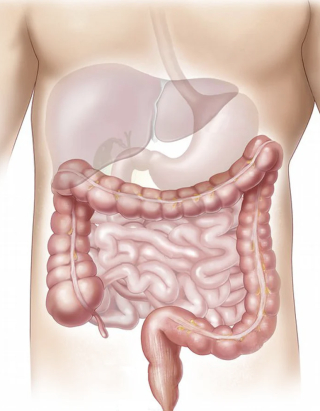
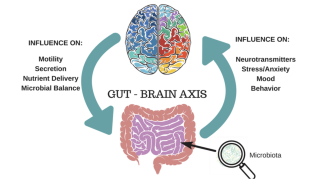
Nonetheless, thyroid health is vital in terms of healing the gut. If the thyroid gland is afflicted with infection or if it is overwhelmed with a toxic agent like bromide or fluoride (among other things), metabolic rate will change. Thyroid hormones dictate how quickly food is digested and moved through the gastrointestinal system. For this reason, thyroid dysfunction also tends to cause gut health issues. Cinchona bark is a potentially valuable medicine for thyroid health because it treats the gut with quinic acids (to keep tryptophan metabolism normalized) while killing infectious agents that might infect the thyroid, while simultaneously giving the thyroid time to rest.Click here to subscribe to the Living Database now.
Resources
Kundu, S. et al. (2024). Scopoletin alleviates high glucose-induced toxicity in human renal proximal tubular cells via inhibition of oxidative damage, epithelial-mesenchymal transition, and fibrogenesis. Retrieved April 25, 2026 from https://pubmed.ncbi.nlm.nih.gov/38709349/Joshi, H. et al. (2021). Review on Scopoletin: A Phenolic Coumarin with Its Medicinal Properties. Retrieved April 25, 2026 from https://ijpsr.com/bft-article/review-on-scopoletin-a-phenolic-coumarin-with-its-medicinal-properties/#:~:text=Scopoletin%20has%20a%20number%20of%20pharmacological%20activities%2C,Antibacterial%20*%20Antifungal%20*%20Antitubercular%20*%20Antioxidant
Al-Harbi, L. N. et al. (2022). Cinchona officinalis Phytochemicals-Loaded Iron Oxide Nanoparticles Induce Cytotoxicity and Stimulate Apoptosis in MCF-7 Human Breast Cancer Cells. Retrieved April 25, 2026 from https://pmc.ncbi.nlm.nih.gov/articles/PMC9565860/#:~:text=Plant%2Dbased%20nanoparticles%20have%20the,phytosterols%20have%20also%20been%20identified.
Gbotolorun, S. C. et al. (2018). Quinine inhibits ovulation and produces oxidative stress in the ovary of cyclic Sprague-Dawley rats. Retrieved May 8, 2026 from https://pmc.ncbi.nlm.nih.gov/articles/PMC6306975/
Keri, R. S. and Patil, S. A. (2014). Quinoline: A promising antitubercular target. Retrieved May 8, 2026 from https://www.sciencedirect.com/science/article/abs/pii/S075333221400136X
Wolf, R. et al. (2002). Quinine sulfate and bacterial invasion. Retrieved January 17, 2026 from https://pmc.ncbi.nlm.nih.gov/articles/PMC149380/
National Institute of Diabetes and Digestive and Kidney Diseases (2018). Quinine. Retrieved January 17, 2026 from https://www.ncbi.nlm.nih.gov/books/NBK548596/
Ghasemi-Dehnoo, M. et al. (2023).Quinic acid ameliorates ulcerative colitis in rats, through the inhibition of two TLR4-NF-kappaB and NF-kappaB-INOS-NO signaling pathways. Retrieved January 17, 2026 from https://pmc.ncbi.nlm.nih.gov/articles/PMC10408368/
Gulada, B. O. et al. (2025). Impact of Viburnum opulus L. Fruit Extracts on the Physicochemical, Sensory, and Bioactive Properties of Wheat Waffles. Retrieved January 17, 2026 from https://www.mdpi.com/1420-3049/30/24/4677
Bujor, A. et al. (2019). Metabolite profiling, arginase inhibition and vasorelaxant activity of Cornus mas, Sorbus aucuparia, and Viburnum opulus fruit extracts. Retrieved January 17, 2026 from https://scholar.google.com/scholar_lookup?title=Metabolite+profiling,+arginase+inhibition+and+vasorelaxant+activity+of+Cornus+mas,+Sorbus+aucuparia+and+Viburnum+opulus+fruit+extracts&author=Bujor,+A.&author=Miron,+A.&author=Luca,+S.V.&author=Skalicka-Wozniak,+K.&author=Silion,+M.&author=Ancuceanu,+R.&author=Dinu,+M.&author=Girard,+C.&author=Demougeot,+C.&author=Totoson,+P.&publication_year=2019&journal=Food+Chem.+Toxicol.&volume=133&pages=110764&doi=10.1016/j.fct.2019.110764&pmid=31437471
Ask Ayurveda (n.d.). Quinic Acid. Retrieved January 17, 2026 from https://ask-ayurveda.com/wiki/article/6536-quinic-acid
Li, S. et al. (2024). Quinic acid alleviates high-fat diet-induced neuroinflammation by inhibiting DR3/IKK/NF-κB signaling via gut microbial tryptophan metabolites. Retrieved May 9, 2026 from https://pubmed.ncbi.nlm.nih.gov/38972055/
Erly, B. et al. (2023). A Perilous Combination: Streptococcus Coinfection with Human Plague–Report of Two Cases and Review of the Literature, 1937-2022. Retrieved January 17, 2026 from https://www.liebertpub.com/doi/full/10.1089/vbz.2022.0084#:~:text=Streptococcus%20pneumoniae%20most%20frequently%20causes,pestis%E2%80%93Streptococcus%20coinfection.