Traditional Chinese Medicine for Hand, Foot, and Mouth Disease
In Traditional Chinese Medicine (TCM), hand, foot, and mouth disease belongs to a category of febrile diseases. Hand, foot, and mouth disease take shape as a result of accumulation of “damp heat”. The problem of “damp heat” in turn, can be caused by irregularities in the child’s diet during a growth phase or the consumption of larger than usual quantities of fatty or oily foods that injure the spleen or the stomach.
Click here to schedule a health coaching call with us.
In TCM, the spleen is vital in terms of the transportation of nutrients. In conventional medicine, the spleen plays a role in the transportation of nutrients via its role in maintaining a healthy blood supply. The TCM view of the spleen is similar in that it acknowledges that damage to the spleen results in malnutrition in one form or another.The treatment in TCM aims to dispel wind, eliminate dampness, clear heat, and purge fire to resolve toxicity in the body. Interventions that have been investigated in the scientific literature include:
-
- Reduning injection
-
-
- The Reduning injection clear heat, dispels wind and encourages rash resolution.
- This is a TCM medicine that contains three herbs:
- Sweet Wormwood / Artemisia annua (the dry, aboveground parts)
- Honeysuckle / Lonicera japonica (flowers)
- Gardenia fruit / Gardenia jasminoides (fruit)
-
-
- Xiyanping injection
-
-
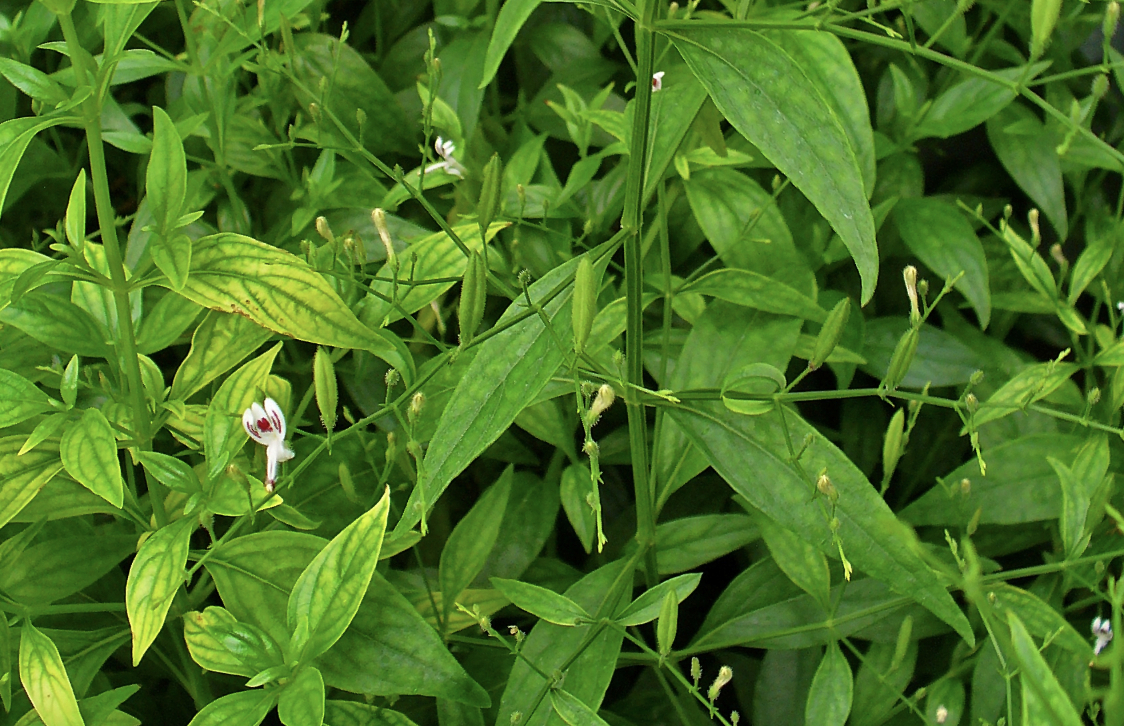
- The Xiyanping injection is an extraction of Andrographis paniculata (also known as Chuan Xin Luan) that is then semi-synthesized. It is noteworthy, in particular, for its effectiveness at treating respiratory infection and hand, foot, and mouth disease.
- This treatment has been studied as an effective treatment for:
- Adenovirus
- Influenza virus
- Respiratory syncytial virus / RSV
- This TCM medicine contains:
-
-
-
-
- Andrographis paniculata in a pure form that can reduce adverse reactions
-
-
-
- Yanhuning injection
-
-
- This is an extraction of andrographolides from Andrographis paniculata, Arctium lappa, and Scuttelaria baicalensis.
- The Yanhuning injection is immunomodulatory and it has anti-viral and anti-inflammatory effects that are useful in treating the following:
- Hand, foot, and mouth disease
- COVID-19
- Pneumonia
-
Click here to buy Andrographis paniculata / Chuan Xin Luan.
Resources:
• Beck, M. A. et al. (1994). Benign human entervirus becomes virulent in selenium-deficient mice. Retrieved January 11, 2026 https://pubmed.ncbi.nlm.nih.gov/8083665/
• Beck, M. A. et al. (1994). Increased virulence of a human enterovirus (coxsackievirus B3) in selenium-deficient mice. Retrieved January 11, 2025 from https://pubmed.ncbi.nlm.nih.gov/8035022/
• Stanford Medicine Children’s Health (2026). Selenium. Retrieved January 11, 2025 from https://www.stanfordchildrens.org/en/topic/default?id=selenium-19-Selenium
• Wu, R. et al. (2018). Chinese herbal medicine for hand-foot-and-mouth disease in children: An overview of systematic reviews. Retrieved January 31, 2026 from https://www.sciencedirect.com/science/article/pii/S2095754818300425