Kratom for Cough, Allergies, and Other Respiratory Issues
Kratom and other plants within the Tribe Naucleeae, act on opioid receptors without activating the beta-arrestin-2 pathway. Activation of the beta-arrestin-2 pathway is what causes opioid overdose deaths due to respiratory depression. Though mitragynine is primarily responsible for cough suppression, the substance corynoxeine has anti-inflammatory and neuroprotective effects that are particularly relevant for cancer pain relief as well as cancer treatment. Though both mitragynine and corynoxeine have opioidergic effects, neither of them recruit the beta-arrestin-2 pathway to cause severe respiratory depression, constipation, or the rapid onset of tolerance.
Click here to schedule a health coaching session with us.
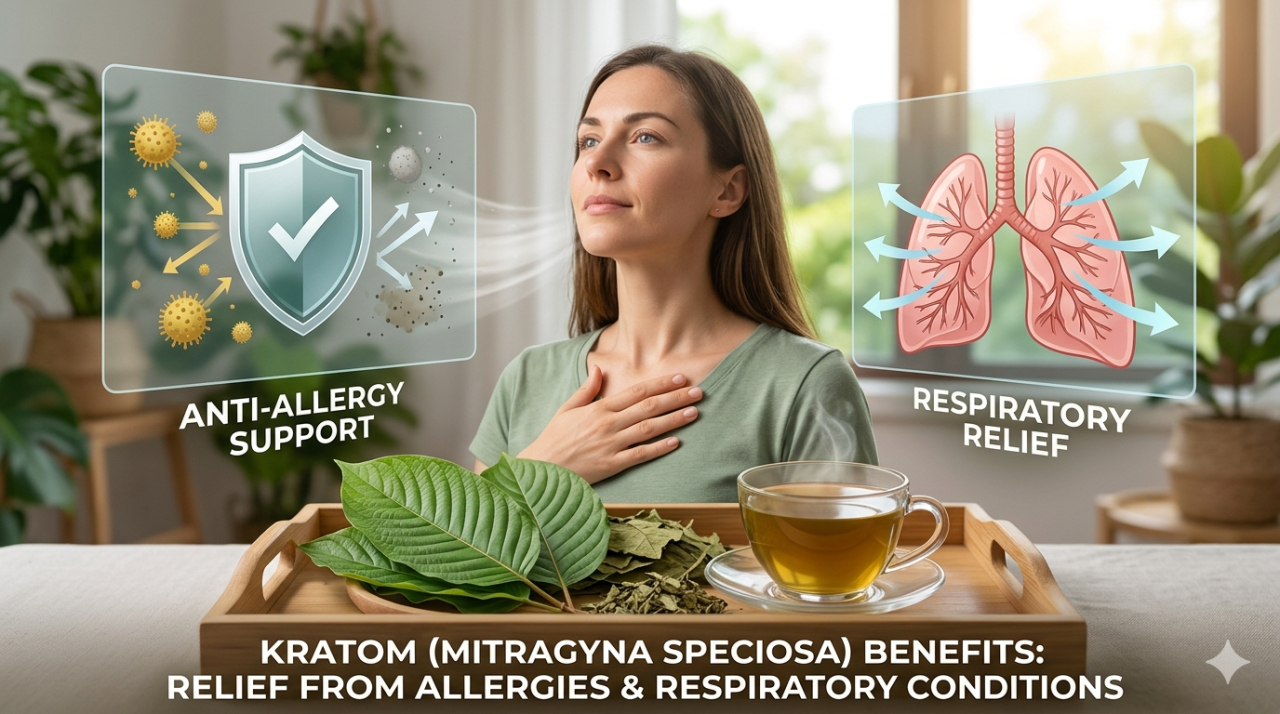
Opioid drugs were among the first pharmaceuticals used to manage coughs caused by the common cold, allergies, or even more serious respiratory issues. Because kratom interacts with the opioid receptors, it also can be used to manage coughs in a manner similar to the cough suppressant, codeine. In fact, animal studies have even shown that kratom – or more specifically, one of its main alkaloids, mitragynine – is as effective as codeine in relieving coughs. However, unlike codeine, kratom as a whole plant medicine, doesn’t cause shortness of breath or vomiting when administered at higher doses. As only a partial opioid receptor agonist that does not activate the beta-arrestin-2 pathway, mitragynine does not cause respiratory depression like codeine and other opioids, meaning that the risks of working with kratom for managing coughs and respiratory issues are minimal in comparison to working with OTC cough medication.The beta-arrestin-2 pathway effects of synthetic opioids is what makes these prescription drugs so dangerous in terms of respiratory depression in comparison with kratom, which is relatively safe as an opioidergic medicine. Studies have shown that the mitragynine in kratom has a “ceiling effect” whereby doses that are higher than 10 mg per kilogram body weight, produce the same level of respiratory depression. In other words, there’s a limit to how far respiratory depression goes when a person is working with the whole plant, kratom. Though there are mild respiratory depressant effects caused by kratom, and though these effects are dose dependent up to 10 mg per kilogram body weight, at higher doses, respiratory depression does not worsen or progress toward respiratory arrest in patients who are taking kratom.
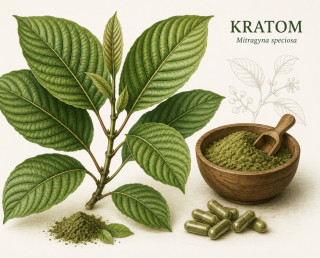
Click here to buy Kratom.
Mitragynine is converted into 7-OH mitragynine in the body. The 7-OH mitragynine is a more powerful mu-opioid agonist which means that it also has a stronger respiratory depression effect. Studies have shown that inhibition of cytochrome P3A by grapefruit juice consumption while taking kratom (or by taking any cytochrome P3A inhibitor), for example, actually reduces the mitragynine-induced respiratory depression and also its pain-relieving, cough suppressing effects without impacting the pain-relieving and cough suppressant effects of 7-OH mitragynine. The pain-relieving and cough suppressant effects of mitragynine are due partly to the conversion of mitragynine to 7-OH mitragynine in the human body. The limited rate of conversion of mitragynine into 7-OH mitragynine creates a built-in braking system on kratom-induced respiratory depression such that respiratory depression never proceeds to total respiratory arrest or death. This is why kratom is so much safer than synthetic opioids such as codeine as a cough suppressant or for fever reduction or pain relief.Note that low doses of kratom tend to produce a stimulant effect similar to coffee. Doses above 5 grams (in adults) produce a more sedative effect. Dose accordingly depending on the time of day and whether you’d like to be wakeful or restful. Red, green, and yellow or gold veins are the most pain-relieving types while white kratom has the most anti-histaminic effects which is relevant for those who suffer from allergies. White kratom is not an anti-histamine itself, but rather works at the TRPV1 receptors that act as critical downstream signaling regulators for histamine. As such, kratom often works better than many over-the-counter antihistamine drugs for respiratory issues such as allergies, runny nose, sneezing, itchy nose, chronic cough, watery eyes, etc.
Click here to buy The Textbook of Scientifically Proven Holistic Cures for Chronic and Infectious Respiratory Disease.
Resources:
• Hill, R. et al. (2022). The respiratory depressant effects of mitragynine are limited by its conversion to 7-OH mitragynine. Retrieved May 26, 2026 from https://pmc.ncbi.nlm.nih.gov/articles/PMC9314834/
• Xie, Z. Hu, H. (2018). TRP Channels as Drug Targets to Relieve Itch. Retrieved May 26, 2026 from https://pmc.ncbi.nlm.nih.gov/articles/PMC6316386/
• No Author (2017). Antihistamines. Retrieved May 26, 2026 from https://www.ncbi.nlm.nih.gov/books/NBK547896/
• Alford, A. S. et al. (2025). Exploring the Therapeutic Potential of Mitragynine and Corynoxeine: Kratom-Derived Indole and Oxindole Alkaloids for Pain Management. Retrieved May 26, 2026 from https://www.mdpi.com/1424-8247/18/2/222