Psychogenic Fever and Norepinephrine
But if your body is responding to emotional stress by producing a fever without your conscious control, this issue needs to be remedied. Stressing out about your fever because it is a “disease” per your doctor isn’t helpful. In fact, the story that you tell yourself about what’s causing these fevers is important because if that story contributes to your stress level rather than alleviating it, then it is part of the problem and not a part of the solution. With that in mind, let’s consider the role of norepinephrine in psychogenic fever.
In some people, psychogenic fever can go as high as 41°C / 105.8°F. Lower fevers are more commonly seen in situations involving chronic stress. Emotionally triggering events underlie this condition, but science isn’t ready to confront the mind-body connection yet. Luckily, we have Tibetan traditions and ancient systems of medicine that are not so averse to considering how psychogenic fever takes shape and not just how to treat it, but how to use the body’s ability to produce heat as a super-power.
Click here to schedule a health coaching session with us.
Antipyretic drugs don’t work to treat psychogenic fever because the underlying mechanism through which these fevers are produced is not entirely physical. Psychotropic drugs with sedative or anti-anxiety properties are more likely to reduce a psychogenic fever, but unfortunately, these drugs are like corralling wild horses – in order to treat the underlying cause, namely stress and trauma, you have to be able to release it. Taking anti-anxiety medications might ultimately lead to a more serious health condition. In order to effectively treat a psychogenic fever, you need to work with trauma-informed therapies like Eye Movement Desensitization and Reprocessing / EMDR, guided meditation or self-hypnosis, or better yet, sacred indigenous medicines like psilocybin or Ayahuasca. While anti-anxiety meds that you get from a doctor might reduce a fever, they are not designed to help you actually release the underlying causative agent for the anxiety or the fever. These drugs are designed to put a band-aid over the wound, but often, to do so can lead to the development of a much more serious “wound”.Click here to do a free trial of EMDR to Release Trauma.
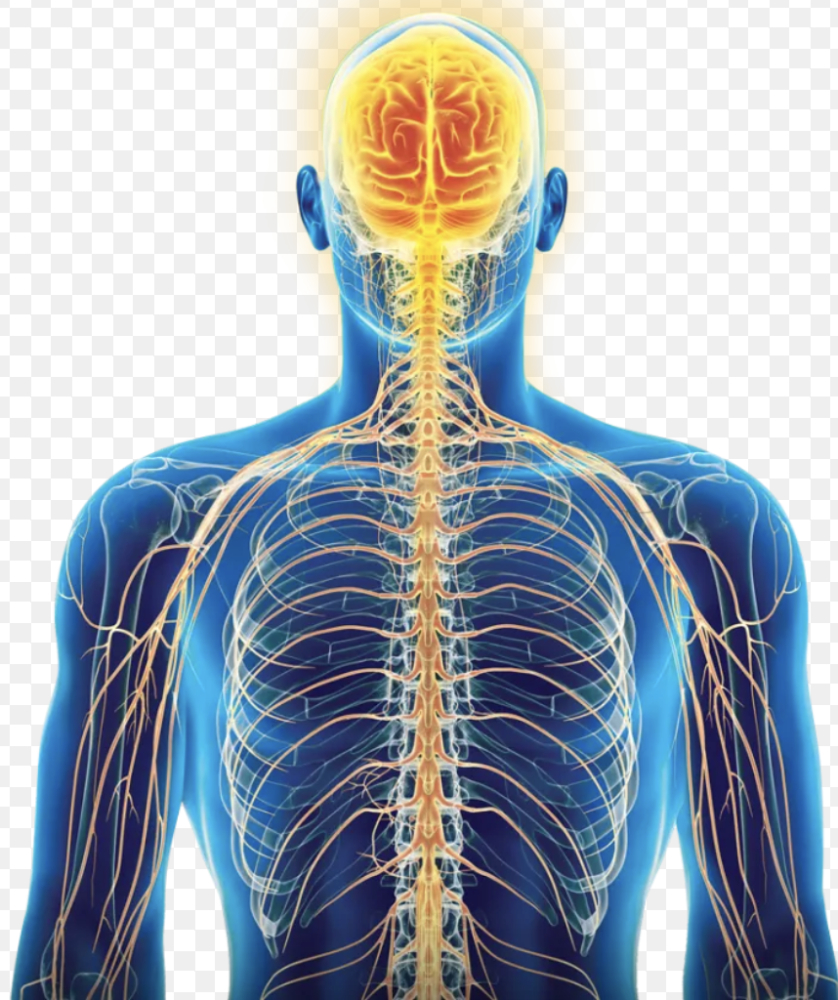
Norepinephrine is a neurotransmitter that derives from dopamine. It is essential for proper functioning of the autonomic nervous system. It is released during stress when the body senses that there will be a need for a fight-or-flight stress response. It raises heart rate and blood pressure as well as temperature to produce a state of vigilance.Norepinephrine acts on the adrenergic receptors to promote heat production in brown adipose tissue. Brown adipose tissue, after all, is directly connected into the sympathetic nervous system, as we’ve discussed elsewhere. As the temperature of the body rises as a result of brown fat thermogenesis, norepinephrine causes a narrowing of blood vessels in the skin to reduce heat loss, raising the core body temperature even more.
Scientists acknowledge that chronic emotional stress can cause a persistent, low-grade fever, but a hyper-responsive noradrenergic system is also associated with Post-Traumatic Stress Disorder / PTSD, highlighting the intimate connection between chronic stress, and the most common, mainstream perception of PTSD. For the most part, the words and phrases that doctors and scientists use in the modern world suggests that emotional content is irrelevant or that it should be irrelevant in any discussion about physical symptoms of disease. Though the relationship between emotional stress and trauma is well-established, we aren’t really given a forum within which to discuss these things. The science exists and the concepts are well-developed, but doctors and even psychologists and psychiatrists are not aware of this material as so-called “authorities” on these topics. Doctors and psychotherapists are supposed to act as a vanguard for the treatment of physical disease, so patients listen carefully when a doctor says that emotions are not really relevant or that they aren’t “real”, but that rather, physical disease always has an underlying physical cause. The basic rhetoric is that physical disease should be treated by hijacking some aspect of the underlying physical cause, not by addressing (or even acknowledging) the patient’s emotions.
Click here to learn more about the DreamLight.app, an online guided meditation and brain-entrainment tool.
If I say that “chronic norepinephrine activation of the sympathetic, fight-or-flight nervous system is an underlying factor in low-grade fever experienced by Chronic Fatigue Syndrome / CFS patients” this is true in that science has correlated norepinephrine activation with low-grade fever. It is also true that low-grade fever plays a huge role in the feeling of exhaustion experienced by CFS patients. But this statement does not acknowledge emotional content that might underlie the CFS symptoms. Rather, this statement glazes over the top of any content regarding emotions and it suggests that the underlying cause of low-grade fever is sympathetic nervous system activation. Patients typically know that their sympathetic nervous system is activated for a reason that has to do with emotional overwhelm of some kind, but the language of medicine presents itself as officially physical and biological and without emotional involvement. This is alienating to the body which is the part of us that experiences emotions and stress full-force. If the body feels alienated by the medicine or by the explanation of an underlying disease process, the medicine is the wrong medicine and the explanation is the wrong explanation for that patient.Wim Hof breathwork and cold shock therapy can be valuable for patients with psychogenic fever. Breathwork prepares the body for the cold shock therapy which can be administered as a cold shower or as a cold bath. Administration of cold water to the body cools the fever and it also helps the autonomic nervous system rebalance through the production of “beige” or “brite” brown adipose cells from white adipose cells. Brown adipose tissue may become depleted as a result of chronic exposure to warm or hot environments. Exposure to cold once daily can help the body rebuild brown fat stores which has a generally balancing effect on the autonomic nervous system and body heat production.
Resources:
• Benson, H. et al. (1982). Body temperature changes during the practice of g Tum-mo yoga. Retrieved February 20, 2026 from https://ui.adsabs.harvard.edu/abs/1982Natur.295..234B
• Zunin, I. D. et al. (2025). Effects of Tummo Meditation and Niguma Yoga on Brain Activity. Retrieved February 20, 2026 from https://pmc.ncbi.nlm.nih.gov/articles/PMC12679118/#:~:text=Following%20Tummo%20and%20Niguma%2C%20a,in%20alpha%20percent%20power%20reported.
• Levine, H. (2024). REM sleep: What is it, why is it important, and how you can get more of it? Retrieved February 20, 2026 from https://www.health.harvard.edu/staying-healthy/rem-sleep-what-is-it-why-is-it-important-and-how-can-you-get-more-of-it#:~:text=How%20to%20get%20a%20good,will%20sleep%20better%20that%20night.
• Krysa, S. J. and Brestoff, J. R. (2024). Brown fat fuels the fire in fever. Retrieved January 26, 2026 from https://www.sciencedirect.com/science/article/pii/S0022227524001639
• Nakamura, K. (2015). Neural circuit for psychological stress-induced hyperthermia. Retrieved February 17, 2026 from https://www.tandfonline.com/doi/full/10.1080/23328940.2015.1070944