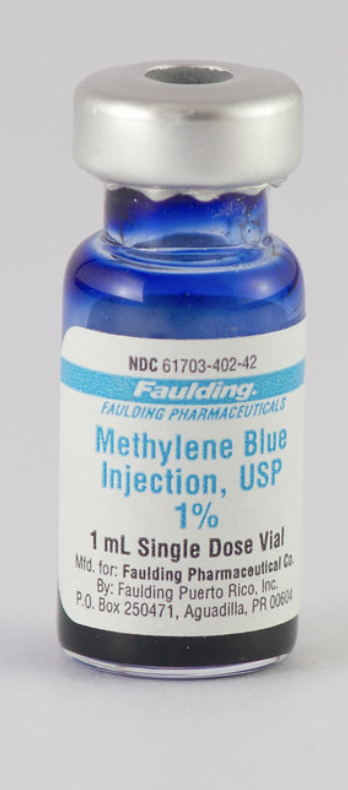
Cinchona officinalis and Methylene Blue Photodynamic Treatment
Methylene blue is a monoamine oxidase inhibitor (MAOI) and an antidepressant that was administered during World War I as an antimalarial drug. Methylene blue, like many other powerful and effective medicines, has been used as a fabric dye but in medicine, it is perhaps most well known for its use in histology to stain tissues and cells so that they’re easier to observe through a microscope. Essentially, when you take methylene blue, the bright blue color also alters the color of your own human cells and any pathogens that we harbor inside our bodies that are susceptible to it too to a greater or lesser extent. In histology, alteration of cell color can make seemingly invisible germs visible to the human eye under a microscope. In medicine, methylene blue changes the color of our human cells and pathogens we’re infected with to produce various medicinal effects.
Click here to schedule a health coaching session with us.
Methylene blue and a treatment known as “photodynamic therapy” can help us understand how brightly colored medicines might be altering cell color just slightly such that our bodies interact with light in healing ways. Photodynamic therapy uses red wavelengths of light that’s administered after methylene blue has been given to a patient to “stain” their living cells. The red light exposure to cells that have been slightly “blue-d” amps up the medicinal effects that methylene blue can have on the body. Essentially photodynamic therapy exploits the body’s ability to change color ever-so-slightly (at the cellular level) in response to taking certain medications and then use those color changes to capture certain wavelengths of light so that our own cells are energized to accomplish a specific health goal. For our human cells, methylene blue can capture photons (packages of light energy) that can be used for healing. Pathogenic cells, in contrast might be killed by methylene blue itself or by the interaction of methylene blue with red wavelengths of light. The word “photodynamic” suggests that this type of treatment is super high-tech, but in fact, photodynamic therapy is nothing more than the intelligent and beneficial use of a medicinal dye and its interaction with specific wavelengths of light as it pertains to the human body and health.Quinine, of course, is the medicinal substance that we’ve spoken about in depth in our discussion of Cinchona officinalis. Cinchona officinalis is the tree that contains quinine and quinine has been used for centuries as one of the most important antimalarial drugs on the planet. Quinine, in fact, does many things, but it has been retired from modern medicine because patentable drugs like chloroquine or hydroxychloroquine (and many others) are more profitable for Big Pharma. Nonetheless, quinine is readily available in low doses in tonic water (check the ingredients list) and it can be used intentionally with kratom / Mitragyna speciosa and other opioidergic plants to potentiate the pain-killing effects of Cinchona in order to promote better mental health in some cases.
Click here to buy Cinchona officinalis / Quina.
Methylene blue is an MAOI and an antidepressant in addition to its various other medicinal actions. When used in combination with Cinchona, usually for just a few doses of methylene blue (up to 3 days of treatment and no longer than that), methylene blue can help mitigate some of the effects of the Cinchona bark through its action on serotonin levels. MAOIs increase serotonin levels and activity through its action on monoamine oxidase while Cinchona can lower serotonin levels by inhibiting tryptophan. As such, we often recommend that patients swap Artemisia annua for methylene blue once every week to mitigate some of the side effects of Cinchona officinalis.That being said though, do NOT use methylene blue with Mitragyna speciosa. Rather, skip the Mitragyna speciosa for 2 days before and 2 days after while you are working with methylene blue to avoid inadvertently causing serotonin syndrome. Also, methylene blue will cancel out the effects of Artemisia annua and the Artemisia annua might also dull the medicinal effects of the methylene blue for the treatment of infection.
Click here to buy Cinchona officinalis.
Nonetheless, while Cinchona officinalis might improve mental health through its ability to kill pathogens that cause generally poor health, it can also contribute to mental health issues by causing tryptophan deficiency (and a corresponding niacin / vitamin B3 deficiency). But let’s say, for example, that you’re trying to help a loved one who has schizophrenia. This loved one has tested positive for Toxoplasma which can be remarkably hard to treat. You’ve decided to try working with Cinchona officinalis because toxoplasmosis is a disease that would respond to this treatment. But perhaps you also know that schizophrenia is a disease that can be cured using vitamin B3 / niacin treatments. This fact suggests, of course, that vitamin B3 deficiency is an underlying cause of schizophrenia. It would then be important to note that Cinchona officinalis is a plant medicine that could cure toxoplasmosis, but worsen vitamin B3 deficiency (vitamin B3 is derived from tryptophan and Cinchona can cause tryptophan deficiency). This issue of tryptophan and vitamin B3 deficiency is one of the things that makes Cinchona officinalis treatment tricky.
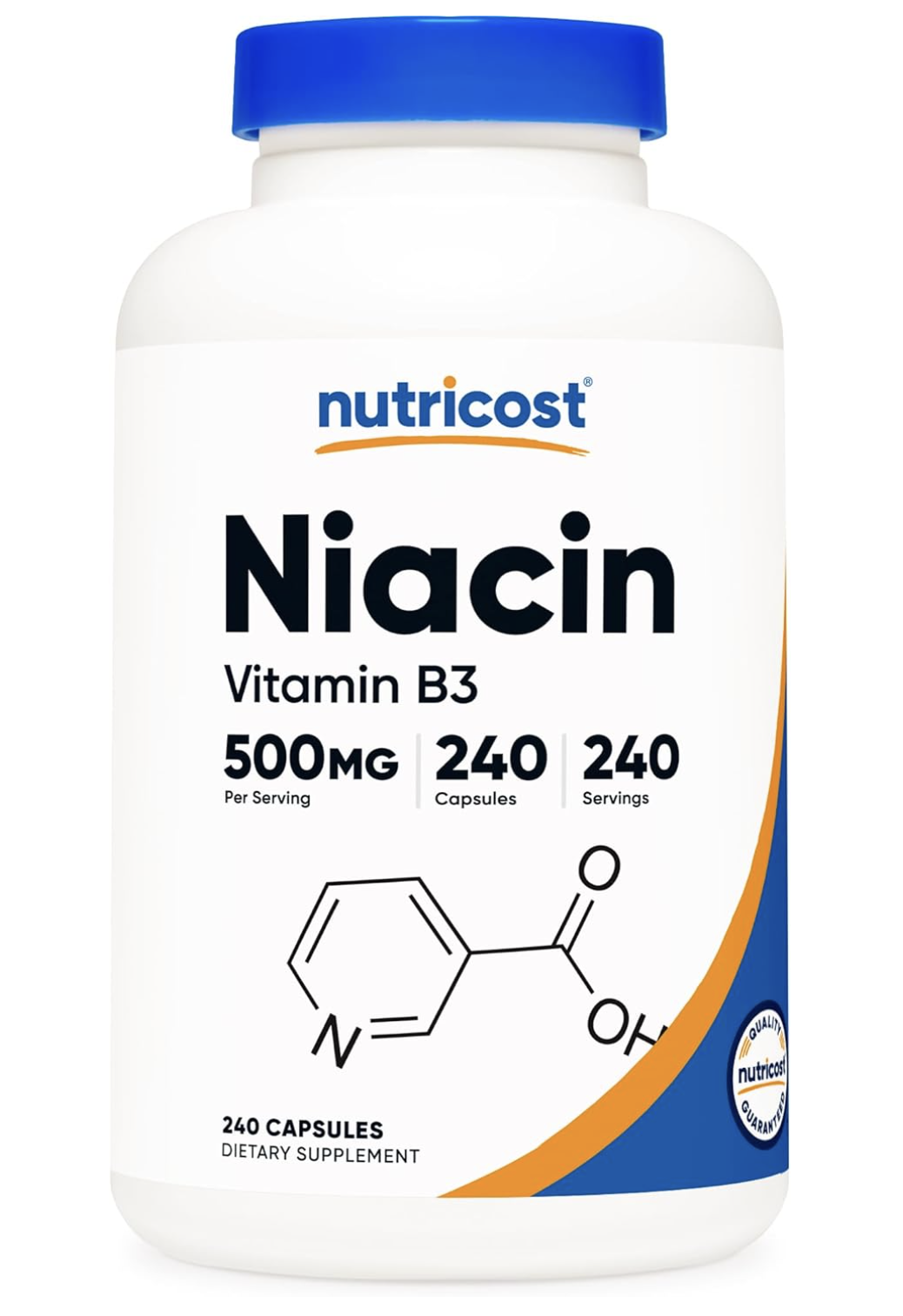 Buy 500mg Niacin /Vitamin B3 Capsules Here.
Methylene blue might help mitigate some of the negative effects of Cinchona treatment when the Cinchona is administered for a relatively short period of time (a few weeks). Indeed, methylene blue combined with infrared sauna treatments given 2 hours after administering the methylene blue can be incredibly beneficial in terms of overcoming infection. But heat can exacerbate symptoms of psychosis too (in early mental health asylums, cold packs were applied to reduce symptoms of psychosis). So you see that Cinchona has an impact on mental health that can be negative, but if the mental health problem is being caused by an infection of some kind, Cinchona can be the medicine that ultimately cures the problem. Yet those who would use Cinchona need to be aware of the caveats regarding its use. For the most part, if you wish to use Cinchona to overcome depression (or any type of mental health problem) that’s caused by a suspected infection in the body, administer Cinchona for just one day along with Artemisia annua and observe the results in terms of mental health. Administer tryptophan and vitamin B3 / niacin before and after treatment with Cinchona.
Resources:
• Freedman, J. E. and Weight, F. F. (1989). Quinine potently blocks single K+ channels activated by dopamine D-2 receptors in rat corpus striatum neurons. Retrieved May 2, 2026 from https://www.sciencedirect.com/science/article/abs/pii/0014299989904755
• Sydenham, T. (1676). Medical Observations Concerning the History and Cure of Acute Diseases. Retrieved May 3, 2026 from https://earlymoderneurope.hist.sites.carleton.edu/items/show/247
• Islahudin, F. et al. (2014). The antimalarial drug quinine interferes with serotonin biosynthesis and action. Retrieved May 1, 2026 from https://www.nature.com/articles/srep03618
• Santos, F. A. and Rao, V. S. (1999). Quinine-induced inhibition of gastrointestinal transit in mice: possible involvement of endogenous opioids. Retrieved May 1, 2026 from https://pubmed.ncbi.nlm.nih.gov/9932723/
• Science History Institute (2024). Dyes, Drugs, and Psychosis. Retrieved May 1, 2026 from https://www.sciencehistory.org/stories/distillations-pod/dyes-drugs-and-psychosis/
• Eyal, S. (2018). The Fever Tree: from Malaria to Neurological Diseases. Retrieved May 1, 2026 from https://pubmed.ncbi.nlm.nih.gov/30477182/
• Semedo, M. G. et al. (2025). Cinchona bark and quinine as psychiatric treatments in Portugal, 1700-1900. Retrieved May 1, 2026 from https://pubmed.ncbi.nlm.nih.gov/40814135/
• Semedo, M. G. et al. (2023). Cinchona bark and quinine in the Portuguese official pharmacopoeias (1794–2001). Retrieved May 1, 2026 from https://www.ingentaconnect.com/contentone/govi/pharmaz/2022/00000077/f0030007/art00010?crawler=true&mimetype=application/pdf
• Zou, L. et al. (2018). The Effects of Quinine on Neurophysiological Properties of Dopaminergic Neurons. Retrieved May 1, 2026 from https://pubmed.ncbi.nlm.nih.gov/29285614/
• Hoffer, Abram (n.d). Vitamin B-3: Niacin and Its Amide. Retrieved May 31, 2024 from: https://www.tpauk.com/main/article/vitamin-b3-niacin-therapy-as-used-by-abram-hoffer-m-d/