How to Get Rid of Hookworms (Necator americanus and Ancylostoma duodenale)
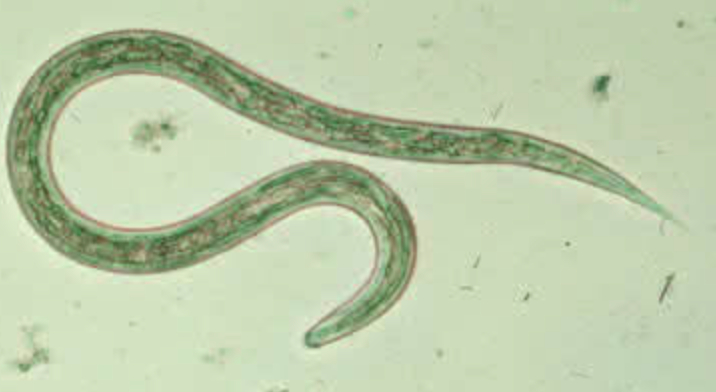
Symptom burden tracks with parasite load. Light infections are often asymptomatic and, as we’ve noted elsewhere, light worm loads can even be beneficial for human health. Heavy infections cause iron deficiency anemia, as adult worms feed on intestinal epithelial cells and blood. Chronic infection can produce fatigue, abdominal pain, weight loss, and diarrhea. In pregnant women, infection is associated with poor fetal outcomes, including increased mortality and low birthweight or miscarriage.
Click here to schedule a health coaching session with us.
Reinfection is common in endemic areas, but hookworms are everywhere. The key to preventing re-infection with a heavy worm load involves administration of Lugol’s iodine and other supportive nutrients that help the immune system function optimally among other things.
Click here to buy Lugol's iodine 2%.
Treatment in conventional medicine involves mebendazole at a dose of 500 mg for three days or a single dose of albendazole (400 mg). Do not administer these medicines daily as parasites can develop a tolerance and then these medicines stop working. This is true in regard to all of the parasite infections so take note. The conventional medicines are far less chemically complex than whole plant medicines so as a general rule, its best to avoid giving them often.Self-treatment at home for hookworm infection using pharmaceutical agents can be done monthly (every 28 days) with albendazole (1 dose at 400 mg) or mebendazole (250 mg given twice daily for 3 days) or pyrantel pamoate (dosing depends on body weight) for 3 consecutive days once every 28 days. Don’t administer these medicines more often than we recommend here or you risk developing resistant parasites that no longer respond to these medicines.
If you wish to work with a daily treatment for parasites, administer herbal remedies. You can work with herbal remedies in addition to administering conventional medicines but this might create daily achiness and general malaise that might make you feel like you’re not getting better even though you are. Taking at least 1 week away from antiparasitics monthly can be valuable to give you a sense of how much better you actually are getting day-by-day. By taking a week off from medications sometime during the parasite reproduction cycle, you allow your body’s organs of detoxification (the liver, kidneys, skin, and intestines) to catch up before you kill another batch of parasites. Parasites don’t become resistant to herbal treatments like Nicotiana rustica or Emblica ribes, for example.
One tried-and-true remedy for a number of intestinal parasites, not just hookworms, is the herbal combination treatment that includes Wormwood, Black Walnut, and Cloves. While the wormwood and black walnut kill larval stages of intestinal worms, cloves kill eggs inside the body. Start with a low dose of this herbal combination and increase the dose slowly over time. There are many different herbal combination formulas on the market that include these three herbs and most have a daily recommended dose that is extremely low. For example, wormwood / Artemisia annua (also known as Qing Hao in Traditional Chinese Medicine) should be given at a dose of 5 grams per day while black walnut can be administered at about 10 mg per kilogram of the patient’s body weight. Cloves can be given at a dose of up to 120 to 300 mg per day. Often, it would be best for patients to start with the recommended dose of supplement that contains all of three of these herbs, but then move on to the recommended dosing (which is much higher) for each herb individually within a month or two after beginning antiparasitic treatment.
Click here to buy Wormwood, Black Walnut, and Cloves.
Nicotiana rustica or wild Tobacco is another herb that paralyzes hookworms. It works through interactions with the nicotinic receptors in parasites. This mechanism of action is similar to ivermectin’s and pyrantel pamoate’s mechanism of action except that parasites will never be able to develop a resistance to Nicotiana rustica. This means that you could administer Nicotiana rustica daily as the Amazonian remedy known as Ambil, and it won’t cause the parasites to develop a resistance to it over time.Self-treatment with Ambil requires a little bit of coaching to master, but it is an important remedy for parasites that works very well both to get rid of a parasite infection and also to prevent re-infection.
Click here to buy Artemisia annua / Qing Hao tincture.
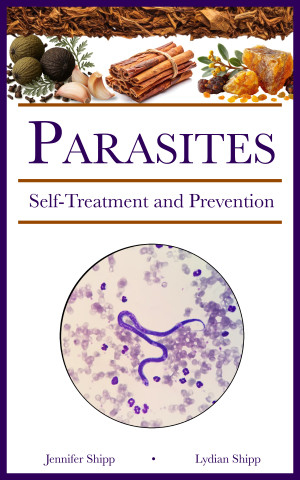
Parasites: Self-Treatment and Prevention - BUY THE eBOOK HERE!!!
Resources:
• Williamson, S. M. et al. (2009). The Nicotinic Acetylcholine Receptors of the Parasitic Nematode Ascaris suum: Formation of Two Distinct Drug Targets by Varying the Relative Expression Levels of Two Subunits. Retrieved March 18, 2026 from https://pmc.ncbi.nlm.nih.gov/articles/PMC2705655/
• Bondarenko, V. et al. (2023). Structural Elucidation of Ivermectin Binding to alpha-7nAChR and the Induced Channel Desensitization. Retrieved March 18, 2026 from https://pmc.ncbi.nlm.nih.gov/articles/PMC10020961/#:~:text=Ivermectin%20(IVM)%20is%20a%20positive%20allosteric%20modulator,NMR**%20*%20**Molecular%20dynamics%20simulations%20(MD%20simulations)**