Brown Adipose Tissue, Body Temperature, and Fever
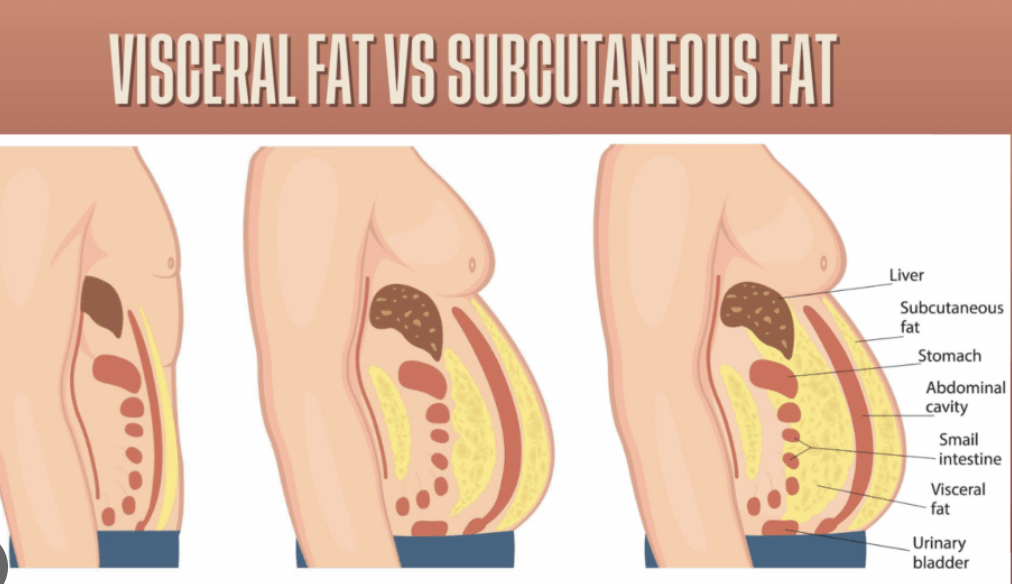
White fat cells can “brown” and turn into brown fat cells to release fat-soluble vitamins. You see, white fat cells store fat-soluble vitamins in the white fat but as a result of sequestration, these fat-soluble vitamins may not actually be available for use in the body. This might seem like a meaningless piece of information to the average reader, but don’t blow past it.
Click here to schedule a health coaching session with us.
The fat-soluble vitamins are essential for the body’s proper functioning and indeed, a vital nutrient like iodine, for example (upon which the body depends for proper functioning of the thyroid gland, reproductive organs, and the immune system as a whole) may be properly supplied, but be unusable at the receptor-level if vitamin A or vitamin D is not present or if it is not available for use in the body in adequate quantities.In other words, an adult or a child may be severely overweight, with more-than-adequate white fat cells storing an ample supply of fat-soluble vitamins, but these fat-soluble vitamins are locked away, creating a functional deficiency of one or all of these nutrients. This is an important point in our discussion of fat and fever because an inability to gain access to fat-soluble vitamins that are nonetheless present in the body in adequate quantities can make a child (or an adult) susceptible to vitamin or mineral deficiency-driven infections like measles or diphtheria.
Click here to do a free trial of EMDR to Release Trauma.
Indeed, iron is a part of the story that we’ll focus on intensively in this part of our discussion about fever as well. Iron is a type of currency in the human body. Iron is like gold in terms of its value and scarcity during pathogenic infection. Iron has scarcity in the body, like gold or silver, and the body needs it in an absolute sense in order to survive. It is so important that the body will, at times, sequester it, similar to the sequestration of fat-soluble vitamins, so that pathogens cannot gain access to those precious iron stores. At the same time though, it’s easy to overdose on iron because our body has created ways to recycle it again and again, like the way that money is recycled and distributed throughout the world. In the world of money and finances, inflation can be a positive sign of growth or a serious issue in the buildup to a major stock market crash. Iron is like that. Supplementing the body with extra iron can lead to serious health problems just as flippantly printing more paper money can be damaging to the economy.Most human pathogens require iron in order to survive and as a source of currency that they can use to increase their own virulence. So we’ll talk about iron supplementation and how the traditional use of iron supplements has actually been shown, in scientific studies, to be associated with negative health outcomes.
Brown adipose tissue, also known as brown fat, can play a role in the production of fever in certain situations. Brown fat is a specialized type of tissue that dissipates energy in the form of heat such that it plays a big role in weight loss and also, at times, fever. It is a major player in situations involving “unexplained weight loss” which can occur in a situation involving serious diseases like cancer or diabetes. But while “unexplained weight loss” as a symptom of disease is often associated with cachexia, a situation that often involves a seemingly rapid spiral downward in terms of health, cachexia can, in fact, be a sign of a potentially positive upward trajectory if the opportunity to heal is properly utilized at this stage in an illness.
Click here to subscribe to the Chlorine Dioxide Protocols Database.
Indeed, a patient who enters into a state of cachexia may, in fact, be changing from a state where they have a predominance of white fat cells that are storing fat-soluble vitamins (including vitamin K2 and vitamin A, both studied as nutrients that can, in some cases, cure certain types of cancer when the body is able to utilize them) to a state in which brown fat cells dominate and nutrients are available and not just being stored. The browning of white fat cells (wherein white fat cells change into beige or “brite” fat cells that have the quality and metabolic activity of brown fat cells) changes the body from a state of inertia in which nutrients are being stored, but not necessarily utilized to a state in which the body has the opportunity to actively use stored fat-soluble vitamins. The more brown fat on a person’s body, the less susceptible they are to weight gain and autonomic nervous system dysfunction. Indeed, higher levels of brown fat in proportion to white fat is also associated with better mental health too.But what about fever? Does brown adipose tissue play a role in fevers? Indeed, it does and in the scientific literature, brown fat tissue is most notably featured in the production of fever that has an emotion-based origin, the so-called “psychogenic fever”. Chronic emotional stress or trauma-overload can cause a fever, a little known fact that succinctly portrays the existence of a mind-body connection. We can understand the physical mind-body connection as something that’s “wired” into the anatomy of our bodies via connections that are featured most notably through the sympathetic innervation of brown fat. We regard the autonomic nervous system, the endocrine system (which deals in hormones rather than neurotransmitters), and the immune system as one, rather than as separate entities, that are connected to each other directly. While the autonomic nervous system and the endocrine system are essentially the same system, the immune system is like their obedient child that responds to these two complementary systems dynamically. The immune system doesn’t ever act independently of its own intelligence, but rather reacts to the autonomic-endocrine milieu that is dynamically checking it at all times with the environment surrounding the body.
Click here to learn more and subscribe to the Living Database now.
Psychogenic fever is a chicken-or-the-egg phenomenon that deserves attention, not just as evidence that the mind and the body are one thing and not separate, but also as a phenomenon that we can analyze not just as a “disease” itself, but in terms of its physical effect on the milieu in the body. The psychogenic fever is something that starts as an emotional “trigger” (to use the jargon of Post Traumatic Stress Disorder / PTSD) but it can quickly turn into a situation in which these negative emotions turn up the heat to make the body into an infection-incubator. To be fair, the extra heat can be good or it can be bad depending on a number of factors, but if we’re talking about fever in terms of pathogens and infections, a chronic, slight increase in body temperature could, in theory act to incubate infections.Nevermind the fact that the color-giving part of our skin, the melanocytes, are wired directly into the sympathetic nervous system too. While melanocytes produce coloring in our skin and act like tiny solar panels that pick up radiation that can be used to produce vitamin D or fumaric acid that plays a role in energy production in the body while simultaneously protecting us from negative forms of radiation, brown fat cells are wired into the exact same sympathetic nerves that ultimately talk directly to our pineal gland, the so-called seat of the soul (one of the “seats”, that is, the other being in the solar plexus). The skin picks up radiation, not just from the sun or from negative forms of electromagnetic frequencies / EMF, but also positive forms of EMF, as well as radiant energies that emanate from other human beings.
While the pineal gland sits on its throne in the posterior cranial fossa, it collects data from the melanocytes in the skin about radiant energies that our bodies are able to pick up and then decipher. It also collects information from the brown adipose tissue about heat and cold. Brown adipose tissue, in turn, becomes activated and white adipose tissue may respond by converting itself into beige / brite fat cells that are slowly browning in response to cold exposure or the administration of herbs that promote this effect.
The sympathetic nervous system is the branch of the autonomic nervous system that produces wakeful, alert states and the so-called fight-or-flight effect during times of high-stress or crisis. Certain pleomorphic (shape-changing) pathogens like Streptococcus pyogenes can encourage the body to produce a fever, the so-called psychogenic fever, which initially develops in response to an emotional trigger or triggers and over time, a chronic fever causes these pleomorphic pathogens to come out of hiding to wreak havoc on human health using strategies like molecular mimicry to hijack our iron-stores, slowly stealing our life-force and our health and general well-being.
This discussion is important for anyone who wishes to overcome a major chronic disease, or simply understand the production of heat in the body, sometimes as a fever, and how this relates to treatment, but in those with autoimmune disease diagnoses, cancer, diabetes, or an infectious illness that has seemed to drag on forever, treatment requires some focus and also the ability to shift treatment in response to a need for change. To overcome some of the more serious chronic disease states that take hold of modern man, several treatments are needed that address the body’s nutrition as well as the environmental milieu, including emotional needs in order to overcome the problem.
Click here to subscribe to the Chlorine Dioxide Protocols Database.
For a lot of readers, this sounds like an impossibly tall order. Emotional issues seem insurmountable. People have tried talking in psychology clinics and they’ve exhausted all of the drugs on the market to arrive at a place where mental health issues seem bleak and unsolvable. Of course, this is just how it seems and a short exploration of the sacred indigenous medicines can restore hope, albeit with some fear about what the patient might confront in taking them. Nonetheless, there’s hope and patients invariably find that the sacred medicines are not nearly as scary as they seem before they work with them. Emotional issues are surmountable, but you have to have access to the right medicines.Treatment for serious health problems that are deep-seated requires that the caregiver (often the patient is his or her own caregiver) use intuition and not just a factory-production-line approach to healing. We suggest a series of powerful medicinal treatments, but none of them are going to produce full healing within days or weeks for serious illness. They will, however, produce a noticeable healing response within months. In order for them to work, the left-brain, analytical part of the patient (or caregiver) must be on-boarded. So educating oneself is a requisite aspect of this treatment. Critical thinking is required.
Resources
Forrester, A. T. W: (1920). Malaria and Insanity. Retrieved March 20, 2026 from https://scholar.google.com/scholar_lookup?journal=Lancet&title=Malaria%20and%20insanity&author=ATM%20Forester&volume=1&publication_year=1920&pages=16-17&
Sarohan, A. R. et al. (2021). A novel hypothesis for COVID-19 pathogenesis: Retinol depletion and retinoid signaling disorder. Retinoic Acids (RA) / vitamin A https://www.ncbi.nlm.nih.gov/pmc/articles/PMC8380544/
Walker, N. F. and Chiodini, P. L. (2018). Liver lesions in the returning traveler. Retrieved February 20, 2026 from https://www.sciencedirect.com/science/article/abs/pii/S1357303917302785#:~:text=Symptoms%20suggestive%20of%20a%20liver,may%20be%20the%20only%20sign.
U.S. Department of Veteran Affairs (n.d.). Liver Disease.Retrieved February 20, 2026 from https://www.hepatitis.va.gov/basics/liver-disease-symptoms.asp
Benson, H. et al. (1982). Body temperature changes during the practice of g Tum-mo yoga. Retrieved February 20, 2026 from https://ui.adsabs.harvard.edu/abs/1982Natur.295..234B
Zunin, I. D. et al. (2025). Effects of Tummo Meditation and Niguma Yoga on Brain Activity. Retrieved February 20, 2026 from https://pmc.ncbi.nlm.nih.gov/articles/PMC12679118/#:~:text=Following%20Tummo%20and%20Niguma%2C%20a,in%20alpha%20percent%20power%20reported.
Edgerton, D. S. et al. (2006). Insulin’s direct effects on the liver dominate the control of hepatic glucose production. Retrieved February 20, 2026 from https://pmc.ncbi.nlm.nih.gov/articles/PMC1359060/
Levine, H. (2024). REM sleep: What is it, why is it important, and how you can get more of it?M Retrieved February 20, 2026 from https://www.health.harvard.edu/staying-healthy/rem-sleep-what-is-it-why-is-it-important-and-how-can-you-get-more-of-it#:~:text=How%20to%20get%20a%20good,will%20sleep%20better%20that%20night.
Hanssen, M. J. W. et al. (2015). Short-term cold acclimation improves insulin sensitivity in patients with type 2 diabetes mellitus. Retrieved February 20, 2026 from https://pubmed.ncbi.nlm.nih.gov/26147760/
Bo, T. et al. (2024). Hepatic selective insulin resistance at the intersection of insulin signaling and metabolic dysfunction-associated steatotic liver disease. Retrieved February 20, 2026 from https://www.sciencedirect.com/science/article/pii/S1550413124001268
Li, M. et al. (2024). Brown adipose tissue facilitates the fever response following infection with Salmonella enterica serovar Typhimurium in mice. Retrieved January 26, 2026 from https://pubmed.ncbi.nlm.nih.gov/39128824/
Krysa, S. J. and Brestoff, J. R. (2024). Brown fat fuels the fire in fever. Retrieved January 26, 2026 from https://www.sciencedirect.com/science/article/pii/S0022227524001639
Szentirmai, E. and Kapas, L. (2018). Brown adipose tissue plays a central role in systemic inflammation-induced sleep responses. Retrieved January 26, 2026 from https://journals.plos.org/plosone/article?id=10.1371/journal.pone.0197409
Xu, J. et al. (2023). The Chinese herbal medicine Dai-Zong-Fang promotes browning of white adipocytes in vivo and in vitro by activating PKA pathway to ameliorate obesity. Retrieved February 17, 2026 from https://pmc.ncbi.nlm.nih.gov/articles/PMC10211343/
.
Harris, T. A. et al. (2020). Resistin-like molecule alpha provides vitamin A-dependent antimicrobial protection in the skin. Retrieved February 19, 2026 from https://pmc.ncbi.nlm.nih.gov/articles/PMC6628910/#:~:text=We%20find%20that%20bacterial%20colonization,and%20protects%20against%20skin%20infection.
Andres, E. and Lorenzo-Villa, N. (2024). Fat-Soluble Vitamins A, D, E, and K: Review of the Literature and Points of Interest for the Clinician. Retrieved February 19, 2026 from https://pmc.ncbi.nlm.nih.gov/articles/PMC11242131/
Eskilsson, A. et al. (2020). The generation of immune-induced fever and emotional stress-induced hyperthermia in mice does not involve brown adipose tissue thermogenesis. Retrieved January 26, 2026 from https://faseb.onlinelibrary.wiley.com/doi/10.1096/fj.201902945R
Nakamura, K. (2015). Neural circuit for psychological stress-induced hyperthermia. Retrieved February 17, 2026 from https://www.tandfonline.com/doi/full/10.1080/23328940.2015.1070944
Christian, M. (2017). The browning of white fat. Retrieved February 18, 2026 from https://www.endocrinology.org/endocrinologist/126-winter17/features/the-browning-of-white-fat/
Gong, G. et al. (2019). An Ancient Chinese Herbal Decoction Containing Angelicae Sinensis Radix, Astragali Radix, Jujuba Fructus, and Zingiberis Rhizoma Recens Stimulates the Browning Conversion of White Adipocyte in Cultured 3T3-L1 Cells. Retrieved February 17, 2026 from https://onlinelibrary.wiley.com/doi/10.1155/2019/3648685
Max Planck Institute for Metabolism Research (2018). Brown fat cells to lose weight. Retrieved February 19, 2026 from https://www.sf.mpg.de/1878762/brown-fat-cells-to-lose-weight#:~:text=Brown%20fat%2C%20on%20the%20other,new%20way%20to%20lose%20weight.
Shen, H. et al. (2019). Brown fat activation mitigates alcohol-induced liver steatosis and injury in mice. Retrieved February 19, 2026 from https://pubmed.ncbi.nlm.nih.gov/30888335/ 1 3
Beijer, E. et al. (2012). A role of active brown adipose tissue in cancer cachexia? Retrieved February 19, 2026 from https://pmc.ncbi.nlm.nih.gov/articles/PMC4419634/
Yuko, O. O. and Saito, M. (2021). Brown Fat as a Regulator of Systemic Metabolism beyond Thermogenesis. Retrieved February 17, 2026 from https://pubmed.ncbi.nlm.nih.gov/34176254/
Zhang, L. W. et al. (2024). Traditional Chinese Medicine formula Dai-Zong-Fang alleviating hepatic steatosis in db/db mice via gut microbiota modulation. Retrieved February 18, 2026 from https://pubmed.ncbi.nlm.nih.gov/38327989/
Devlin, M. J. (2015). The “Skinny” on brown fat, obesity, and bone. Retrieved February 16, 2026 from https://onlinelibrary.wiley.com/doi/10.1002/ajpa.22661
Tabei, S. et al. (2024). Metabolic Effects of Brown Adipose Tissue Activity Due to Cold Exposure in Humans: A Systematic Review and Meta-Analysis of RCTs and Non-RCTs. Retrieved February 18, 2026 from https://www.mdpi.com/2227-9059/12/3/537
Sarlon, J. et al (2023). Potential links between brown adipose tissue, circadian dysregulation, and suicide risk. Retrieved February 18, 2026 from https://www.frontiersin.org/journals/neuroscience/articles/10.3389/fnins.2023.1196029/full
Vosselman, M. J. et al. (2012). Systemic beta-Adrenergic Stimulation of Thermogenesis is Not Accompanied by Brown Adipose Tissue Activity in Humans. Retrieved February 18, 2026 from https://pmc.ncbi.nlm.nih.gov/articles/PMC3501890/
Oka, T. (2015). Psychogenic Fever: how psychological stress affects body temperature in the clinical population. Retrieved February 18, 2026 from https://pmc.ncbi.nlm.nih.gov/articles/PMC4843908/#:~:text=Abstract,increases%20Tc%20throughout%20the%20day.
Ramirez, L. A. et al. (2021). The administration of an extract from Berberis microphyllla stimulates energy expenditure, thermogenesis, and mitochondrial dynamics in mice brown adipose tissue. Retrieved February 19, 2026 from https://researchers.unab.cl/es/publications/the-administration-of-an-extract-from-berberis-microphylla-stimul/#:~:text=Huella%20*%20Berberis%20microphylla%20Agricultura%20y%20biolog%C3%ADa,*%20heat%20production%20Agricultura%20y%20biolog%C3%ADa%2056%25
Suchacki, K. J. et al. (2023). The serotonin transporter sustains human brown adipose tissue thermogenesis. Retrieved February 18, 2026 from https://pmc.ncbi.nlm.nih.gov/articles/PMC10447248/
Szklarz, M. et al. (2022). “Ferrocrinology” – Iron Is an Important Factor Involved in Gluco- and Lipocrinology. Retrieved February 18, 2026 from https://pmc.ncbi.nlm.nih.gov/articles/PMC9654314/
Violet, P. C. et al. (2020). Vitamin E sequestration by liver fat in humans. Retrieved February 19, 2026 from https://pmc.ncbi.nlm.nih.gov/articles/PMC7030816/
Andres, E. et al. (2024). Fat-Soluble Vitamin A, D, E, and K: Review of the Literature and Points of Interest for the Clinician. Retrieved February 19, 2026 from https://pmc.ncbi.nlm.nih.gov/articles/PMC11242131/
Violet, P. C. et al. (2020). Vitamin E sequestration by liver fat in humans.Retrieved February 19, 2026 from https://pmc.ncbi.nlm.nih.gov/articles/PMC7030816/
Grassroots Health Nutrient Research Institue (2023). How Sunlight Exposure Affects Immune Health and Viral Spread. Retrieved March 26, 2026 from https://www.grassrootshealth.net/blog/sunlight-exposure-affects-immune-health-viral-spread/#:~:text=Sunshine%20Can%20Reduce%20Viral%20Transmission,for%20sunlight%20compared%20to%20darkness.
Bilbo, S. D. et al. (2002). Melatonin Regulates Energy Balance and Attenuates Fever in Siberian Hamsters. Retrieved March 26, 2026 from https://academic.oup.com/endo/article-abstract/143/7/2527/2989398?redirectedFrom=fulltext
Geromella, M. S. et al. (2022). Low dose lithium supplementation promotes adipose tissue browning and sarco(endo)plasmic retriculum Ca2+ ADPase uncoupling in muscle. Retrieved March 26, 2026 from https://pubmed.ncbi.nlm.nih.gov/36209826/#:~:text=The%20study%20also%20found%20that:%20*%20LiCl,GSK3%20and%20UCP1%20and%20beiging%20in%20iWAT
Urisarri, A. et al. (2021). BMP8 and activated brown adipose tissue in human newborns. Retrieved January 26, 2026 from https://www.nature.com/articles/s41467-021-25456-z