Trauma as a Cause of Dopamine Deficiency
Dopamine deficiency might occur as a result of a biological trauma such as low-level infection with an insidious pathogen that steals iron and that can, for example as in the case of Streptococcus pyogenes, cause damage to dopamine receptors. Strep bacteria can even mimic the function and appearance of dopamine receptors using molecular mimicry. A biological trauma like this can cause dopamine deficiency but emotional trauma can also hijack dopamine receptors.Click here to schedule a health coaching session with us.
Emotional trauma causes disruptions in neurotransmitter availability and function. When an emotional trauma can’t be properly processed and integrated, a trigger can cause the body to suddenly go into a neurohormonal state that is identical to the neurohormonal state at the time when the trauma occurred. In this way, the body can produce the exact feeling and emotional state of the moment when an emotional trauma occurred. Indeed, even time-of-day of the past trauma can be featured in this “emotional state” such that a person might feel the feelings of “morning” when it’s the middle of the afternoon via changes in cortisol levels that cause the body to be out-of-sync with the present moment. When the body feels a traumatic moment in the past in this way, we call this dissociation or depersonalization. It is very uncomfortable to feel the past and be out of sync with the present moment.Dopamine receptors might close up (the way flowers close up) to during a flashback, creating the physical experience of a moment-in-time when something traumatic occurred. This is a way for the body (the right hemisphere of the brain) to get the attention of the left-hemisphere of the brain and ask for help. While most people would prefer to ignore flashbacks when they happen, it’s important to address them. It’s vital to treat trauma while also working to heal dopamine receptors that may have died or gotten damaged over the course of time in order to overcome ADHD. Once an emotional trauma is properly processed and integrated, these flashbacks will stop happening and ADHD symptoms will go away.
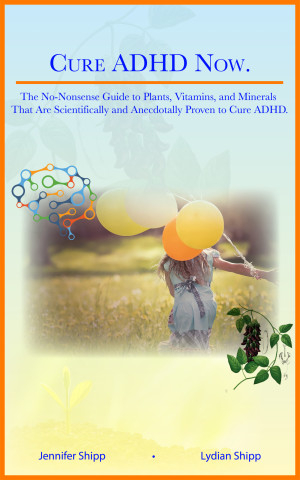
Click here to buy Cure ADHD Now: The No-Nonsense Guide to Plants, Vitamins, and Minerals That Are Scientifically and Anecdotally Proven to Cure ADHD.
Low-Level Infection as a Cause of Dopamine Deficiency
A low-level infection or colony of pathogens can cause ADHD. Streptococcus pyogenes is a type of pathogen that is often a root-cause of ADHD, though there are other pathogens that can cause ADHD as well. Indeed, the strep pathogen is known to cause hyperactivity and the uncontrollable need to move (St. Vitus dance and later Sydenham chorea, as it was known in the 1500s). Strep throat is a common infection that can set off ADHD symptoms through a longer-term sequelae of events that can occur if the Streptococcus pyogenes bacteria is not fully eradicated from the body during the acute phase of infection.Doctors and psychiatrists generally do not ascribe to a belief in colonization of pathogens that can cause chronic disease states like ADHD. Indeed, Streptococcus pyogenes has the ability to hide inside the human body by pretending to be muscle-myosin or dopamine neurons. It is one of a number of pathogens that can do “molecular mimicry” in order to maintain its presence in the body long after the initial symptoms of acute infection (fever, sore throat, etc.). So in order to solve the problem of pathogen-infection that might be causing ADHD, you’ll have to work with another system of medicine and powerful herbal remedies to get rid of the low-level infection that often causes ADHD symptoms.
Click here to learn more about the DreamLight.app, a guided meditation and brain-entrainment tool for natural trauma-release.
One herbal remedy for iron-loving pathogens that we recommend is Cinchona officinalis. Cinchona causes the body to become much less hospitable to a wide array of pathogens that might cause ADHD symptoms, but you should also work with other herbs too such as Artemisia annua, or Hemidesmus indicus. We also recommend that people do brief dosings with methylene blue during a 4-12 week treatment with high-dose Cinchona officinalis. Infrared sauna treatments and time in the sunlight during the methylene blue part of this protocol can really add power to these treatments. Often, people who work with the Cinchona protocol will go through a weekly or 3 to 4 day cycle of feeling better and more focused, followed by a few days of detox and ADHD symptoms that show up again. This cycle of feeling good and then feeling bad again can be rather confusing if you don’t keep a journal to note that you’ve had some good days within these cycles. In fact, if you have an underlying infection that’s causing ADHD symptoms, you will slowly spiral upward week-by-week, with several days of the week where you’ll continue having ADHD symptoms until you’ve consistently dosed yourself with Cinchona and a supporting medicinal agent for at least 6-12 weeks. If you pay attention, you’ll notice that on your good days, you feel better than on the good days the week prior. Slowly, you’ll have more and more good days instead of bad days.This cycle occurs because the body needs a few days to release the dead pathogens and the toxins that they give off as they’re on their way out of our bodies. During “detox days” symptoms might seem to return briefly, albeit in a less serious form.
But that being said, it’s likely that if you have Streptococcus pyogenes (or some other pathogen) hijacking your dopamine receptors to cause ADHD that you have underlying trauma that will inhibit your progress if you don’t also work contemporaneously with something like psilocybin and other trauma-informed therapies like Eye Movement Desensitization and Reprocessing / EMDR or craniosacral therapy to process that trauma. A low-level strep infection creates a situation where the body has trouble processing stress and trauma properly so you’ll have to work with your emotional stress and trauma overload using trauma-informed therapies to get yourself past the ADHD symptoms completely.
Click here to do a free trial of EMDR to Release Trauma.
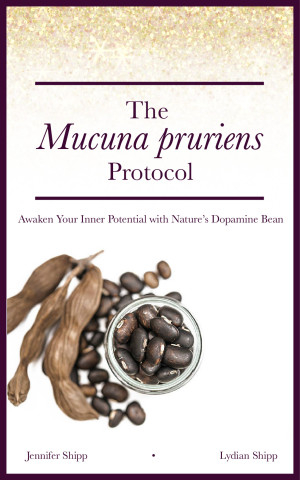
Mucuna pruriens Protocol for ADHD
Mucuna pruriens is a food. It’s also a sacred medicine that works fluently with trauma-informed therapies of all kinds. Mucuna is just a bean and you can eat it in a soup, but if you eat enough of it every day and often enough, it will heal your brain.Mucuna promotes the healthy, natural production of dopamine to regrow or heal damaged dopamine receptors. Mucuna supports a person’s ability to make healthy decisions on their own behalf. It is a foundational treatment to naturally overcome ADHD symptoms. Mucuna pruriens provides us with brain fuel to make healthy decisions on our behalf. It helps us connect what the body is telling us with our analytical or narrative thinking abilities.
In order for the Mucuna protocol to work properly, supportive nutrients must be combined with treatment. As with the Cinchona protocol, Mucuna works best when combined with certain other medicinal agents, mostly nutrients. Without those nutrients, it may not work as well as it could. In some cases, Mucuna may not work at all without those supportive nutrients.
Herbalism is a high-volume type of medicinal treatment in most cases. In other words, while you might be used to taking a very tiny pill once or twice a day for ADHD, in order for herbs to work properly, you have to use a high volume of them. Don’t underestimate these herbs! And also don’t think that herbs are supposed to be administered in similar doses or in a manner that resembles the way drugs are administered in conventional medicines. Herbalism is different and if you try to do herbalism as though it were conventional medicine, you might fail. Follow dosing instructions to make sure that you’re taking enough (but not too much) or else you won’t know how well these medicinal agents actually work. Follow preparation instructions as sometimes herbs work best in a particular format.
Click here to buy Hawaii Pharm's Mucuna pruriens tincture.
Final Notes
If you or your child has a low-level infection, it’s very likely that the pathogen is consuming your red blood cells in order to stay alive. Red blood cells carry oxygen to the brain and to the body. They also carry waste and carbon dioxide away from cells so that we can release these things. Cinchona interferes with iron-consumption by a wide variety of pathogens. Other herbs like Artemisia annua actually kill the pathogen so Cinchona and Artemisia work very well together when given at the right dose.But if you or your child has a pathogenic infection like this, you may be suffering from anemia or low red blood cell count. This may or may not show up in your lab results, by the way. If you or your child has a low red blood cell count or anemia, this problem will contribute to restlessness in the body and brain fog until it can be corrected. Your body’s tissues, including brain tissues will be low on oxygen and they will have higher-than-usual levels of toxins until you can rebuild the red blood cell supply to efficiently carry things to and from your cells.
As we’ve discussed earlier, correcting an anemic state is more about copper supplements rather than iron supplements (which should be avoided). Indeed, supplements often don’t work very well to overcome anemic states. Other options like red wine exist to make it easier for the body to absorb these vital nutrients. Note that it takes 7 days to make a new red blood cell. It takes about 4 to 6 weeks for the body to recover from an anemic or low-red-blood-cell state such that energy levels normalize and brain fog becomes less of an issue.
Dosing matters as much in herbalism as it does in regard to prescription drugs. The herbs that we recommend working with for ADHD are mostly high-volume which means there’s some room for error, which is a good thing. But just note that if you take too little of these herbs, the results won’t be the same as if you take the proper dose. And if you don’t follow the instructions in terms of how to prepare the herbs, your results will also be a bit different.
Parents of kids with ADHD need to treat themselves with Mucuna pruriens and trauma-informed therapies like psilocybin alongside their kids for best results. This includes parents who do not feel ADHD themselves. Parents inadvertently set off ADHD behaviors in their kids if they don’t work to release themselves from toxic patterns in the household. No one is to blame for these patterns, but there are some remarkably common ADHD-patterns that develop within families that have to cope with one family member’s poor focus and restlessness. This is much easier to say than it is to do! It can be hard to change patterns within a family without the help of something like psilocybin. But psilocybin microdosing is a parent’s best friend in terms of its ability to promote brain plasticity and emotional growth. If you’ve been living under a very painful ADHD regime, you also need to take care of your own emotional health on behalf of your child. Spouses of adults with ADHD can benefit from working with trauma-informed therapies too, especially psilocybin microdosing.
So that’s it! ADHD is a treatable issue, but it can take time to overcome the underlying problems that are causing the symptoms. You decide how quickly you’d like to address the symptoms and move on with your life. For now, it’s important to note that ADHD symptoms play a meaningful and important role until the underlying issues can be addressed. Once the underlying issues are addressed, ADHD symptoms are simply not necessary anymore. For some people, one psilocybin trip is enough. For other people a few doses of Mucuna is all they really need to turn a corner. But most people require more than that. Approach this problem with curiosity. Whatever it is that underlies your ADHD symptoms, have gratitude for your body’s ability to distract you from painful things and to be able to heal. Don’t set out to solve this problem as though you were going to declare war on your body or your mind. Rather, observe your body or your child’s body with curiosity and interest and note how it responds to each of these natural treatments. All of the treatments that we’ve discussed in this book are do-no-harm treatments. On the other hand though, they are likely to do good if you stick with them and administer the treatments consistently at the proper dose.
ADHD challenges us to understand and embrace the parts of ourselves (or others) that provide distraction from pain. As you begin to heal, have gratitude for this distraction that’s kept the rest of you safe and okay until the time when you would be able to rise above that way of doing things.
Now it’s time to heal.
Click here to subscribe to the Living Database!
Resources
Hedayat, K. M. and Lapraz, J. C. (2019). The Theory of Endobiogeny: Volume 1: Global Systems Thinking and Biological Modeling for Clinical Medicine (1st Ed.): Elsevier