 Tianeptine is an important medicine for chronic pain control. It is an antidepressant medicine that works through a unique mechanism of action via the mu opioid and delta opioid receptors. It doesn’t activate any of the other monoamine transporters that are the usual mechanism of action for prescription antidepressants. It does, however, increase serotonin uptake at serotonin receptors. Additionally, tianeptine works with the glutamate system to promote neuroplasticity and reduce “wind up” pain in those with chronic pain conditions like fibromyalgia. In those with diabetic neuropathy, tianeptine has powerful antidiabetic effects to help the body heal in a general way, not just in terms of neuropathy and nervous system damage.
Tianeptine Antidiabetic Effects
Tianeptine has a healing effect on the pancreas via its ability to increase the uptake of serotonin at the nerve synapses as well as at platelet levels. Scientists have shown, for example, that drugs that inhibit serotonin update such as doxepin, can improve low blood sugar levels caused by having too much insulin in the body. Tianeptine has the opposite function though. It increases serotonin uptake which in turn, increases the release of insulin.Tianeptine increases noradrenaline and adrenaline levels which supports the rise in insulin levels. Higher levels of insulin in turn, reduce blood sugar levels, but also, when insulin is present at high enough levels, it crosses the blood-brain barrier to excite the central nervous system. This ultimately leads to the stimulation of noradrenergic neurons that make up the peripheral sympathetic nervous system.

Become an Expert. Do an Online Video Course Series Now.
Tianeptine produces significant reductions in circulating serotonin (both plasma serotonin and platelet serotonin) and scientists believe that this shows that tianeptine is interfering with peripheral parasympathetic activity. Essentially, by reducing the parasympathetic effect in the periphery, tianeptine reduces secretion of serotonin from the enterochromaffin cells to further strengthen the insulin-releasing effects that happen when oral sugars are administered to a patient.Enterochromaffin cells are found throughout the digestive system, but they’re especially prolific in the small and large intestines. They are responsible for releasing most of the serotonin that our bodies produce. These cells play a major role in gut motility, immune system function, nutrient absorption, and the gut-brain axis that influences digestion, mood, and thought.

Click here to schedule a health coaching session with us.
Mu-Opioid Receptors and Tianeptine Abuse Potential
As a treatment that interacts with the mu-opioid receptors there is potential for abuse and addiction at high doses. For those with chronic pain, low doses are recommended with days off between treatments to prevent addiction from occurring. For example, while people who are using tianeptine recreationally may take 400 or more milligrams per day, those who are taking tianeptine therapeutically for chronic pain should take 12.5 mg three times per day or 25 mg twice daily (for a total of between 25-50 mg per day).Tianeptine has a relatively short half-life of 2.5 to 3 hours. This is similar to the half-life or kratom, a natural pain-killer that also has opioid-receptor interaction, though with little risk of addiction.
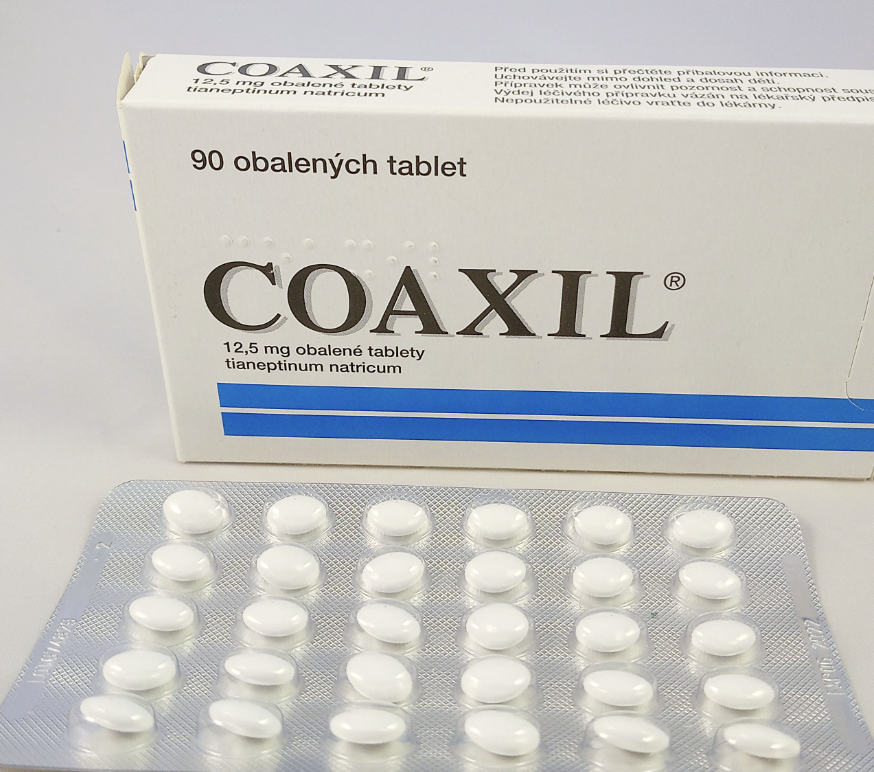
Over 60 countries in the world, excluding the United States, have approved tianeptine for use in the treatment of depression and chronic pain. Brand names of tianeptine include the following:
- Tatinol
- Stablon
- Coaxil
- Zaza
- Tia
- Tianna
- Zaza Red
- TD Red
- Pegasus

Click here to do a free trial of EMDR to Release Trauma.
Tianeptine for Diabetes, Diabetic Neuropathy, and Other Chronic Pain Conditions
Drugs that interfere with serotonin uptake can reduce insulin release from the beta-cells in the pancreas to counteract low blood sugar. Tianeptine is a drug that increases serotonin uptake to trigger significant and sustained insulin increases to oppose blood sugar increases. This makes tianeptine an excellent choice for diabetes patients who have chronic pain, but tianeptine’s effect on serotonin and insulin for pain relief may also be making a statement about one of the causes of pain in patients with a number of chronic pain conditions. Is it possible that low insulin levels or poor serotonin uptake plays a role in other types of chronic pain too?At the same time, when insulin levels increase in response to improved serotonin uptake, noradrenaline and adrenaline levels rise too, stimulating peripheral sympathetic nervous system activity. A reduction in parasympathetic dominance is one result and this is important for diabetes patients and for those with chronic pain conditions.
Patients with diabetes tend to be parasympathetic dominant as a result of a lack of glycemic control according to studies. What this means is that diabetic patients may often feel lethargic, depressed, achey, or even sometimes feverish vs. feeling calm and connected (the rest-and-digest branch of the parasympathetic system) or anxious, stressed, and overstimulated (sympathetic, fight-or-flight branch). There are three autonomic nervous system branches:
- Sympathetic Fight-or-Flight Branch
- Parasympathetic Rest-and-Digest (Ventral Branch)
- Parasympathetic “Freeze” (Dorsal Branch)
The dorsal parasympathetic dominance in diabetes patients makes it hard for them to experience alpha-brain wave states that allow for trauma-release, relaxation, dream recollection, and feelings of safety and connection. Tianeptine stimulates sympathetic nervous system activity to off-set the dorsal parasympathetic activity which can prevent a healing response in diabetes and chronic pain patients.
When the body is in a parasympathetic “freeze” response, patients can’t achieve healing brain wave states during their waking lives or while sleeping. Existing in a parasympathetic “freeze” response is a twilight, zombie-like existence that tends to involve a lot of pain in the body.
Tianeptine stimulates the alpha-cells in the pancreas while modulating beta cells to produce an insulin-producing effect in diabetic patients specifically to regulate blood sugar levels in a big way.
Click here to learn more about the DreamLight.app, an online guided meditation and brain-entrainment tool.
Tianeptine for Fibromyalgia
Fibromyalgia is a pain condition that is heavily correlated with stress and trauma. Many people who suffer from fibromyalgia also suffer from depression which inspired scientists to study tianeptine as an antidepressant for pain control. Tianeptine is special as an antidepressant because it prevents neurodegeneration caused by chronic stress. It prevents a decrease in hippocampus (a brain region) volume as well in those with fibromyalgia.People with fibromyalgia have a significantly lower pain threshold than in those without a chronic pain condition. These people also have lower levels of brain-derived neurotrophic factor (BDNF) and cAMP response element-binding protein (p-CREB), but tianeptine can restore both of these substances in the brain. Tianeptine also reduces stress-induced atrophy of neuronal dendrites. Restoration of BDNF levels would help the fibromyalgia patient be able to come up with new thinking patterns and pathways in the brain so as to emotionally overcome pain caused by trauma. Restoration of p-CREB would have a positive impact on gene activation and deactivation in cells to help the body get out of a negative cycle involving daily, chronic pain.
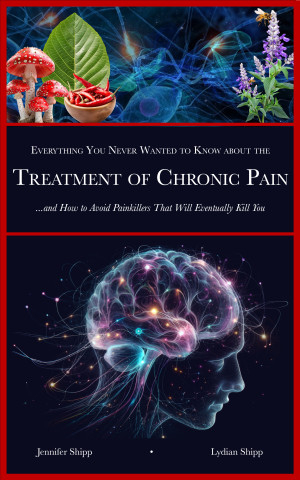
 Everything You Never Wanted to Know About the Treatment of Chronic Pain... and How to Avoid Painkillers That Will Eventually Kill You - BUY HERE!!!
Tianeptine Adverse Effects
Tianeptine usually doesn’t cause adverse effects or side effects when administered at the recommended dose. At higher doses though, people have reported the following effects:- Nausea
- Vomiting
- Abdominal pain
At very high doses, there is a risk of suicidal ideation.
Tianeptine Dose
Tianeptine should be administered at a dose of 12.5 mg up to 3 times daily or 25 mg up to twice daily. The elderly might need a higher dose than younger patients. At a dose of 50 mg or less there are few adverse effects.
Click here to subscribe to the Living Database now.
Resources:
Nishio, Y. et al. (2024). Classics in Chemical Neuroscience: Tianeptine. Retrieved September 28, 2025 from https://pubs.acs.org/doi/10.1021/acschemneuro.4c00519#:~:text=Tianeptine%20(1)%20is%20an%20unusual,its%20emerging%20potential%20for%20abuse.
Lechin, F. et al. (2009). Effect of Tianeptine Glucose Tolerance with Insulin Secretion in Human: Potential Anti-Diabetic Effect of the Drug. Retrieved September 28, 2025 from https://www.benthamopenarchives.com/abstract.php?ArticleCode=TONEUROEJ-2-10
Balcioglu, A. S. and Muderrisoglu, H. (2015). Diabetes and cardiac autonomic neuropathy: Clinical manifestations, cardiovascular consequences, diagnosis and treatment. Retrieved September 29, 2025 from https://pmc.ncbi.nlm.nih.gov/articles/PMC4317320/#:~:text=Because%20neuropathy%20first%20affects%20the,in%20those%20without%5B23%5D.
Hadad, R. et al. (2022). Parasympathetic tonus in type 2 diabetes and pre-diabetes and its clinical implications. Retrieved September 29, 2025 from https://www.nature.com/articles/s41598-022-22675-2
Jin, H. Y. et al. (2015). Morphologic Changes in Autonomic Nerves in Diabetic Autonomic Neuropathy. Retrieved September 29, 2025 from https://www.e-dmj.org/journal/view.php?number=372
Lechin, F. et al. (2009). Tianeptine enhances insulin secretion throughout the oral glucose tolerance test. Retrieved September 29, 2025 from https://go.gale.com/ps/i.do?id=GALE%7CA214999998&sid=googleScholar&v=2.1&it=r&linkaccess=abs&issn=1537064X&p=AONE&sw=w&userGroupName=anon%7E45c5c7d2&aty=open-web-entry
Um, J. et al. (2019). Substance P preserves pancreatic beta-cells in type 1 and type 2 diabetic mice. Retrieved September 29, 2025 from https://www.sciencedirect.com/science/article/abs/pii/S0006291X18307915
Lee, H. et al. (2017). Effects of tianeptine on symptoms of fibromyalgia via BDNF signaling in a fibromyalgia animal model. Retrieved September 29, 2025 from https://pmc.ncbi.nlm.nih.gov/articles/PMC5507774/
Garcia-Fructuoso, F. J. (2006). Tianeptine for the treatment of fibromyalgia: a prospective double-blind, randomised, singlecentre, placebo-controlled, parallel group study. Retrieved September 29, 2025 from https://www.isrctn.com/ISRCTN16400909