 Fly Agaric and Kambo: Potential Combination Treatment for Pain
One animal study done on rats found that a combination therapy of muscimol and endomorphin-1 (an endogenous opioid peptide naturally produced in the body – “endogenous morphine”) can be effective in relieving neuropathic pain caused by spinal cord injury. This particular study found that injecting a combination of muscimol and endomorphin-1 intrathecally into the spinal canal (so that the injection reaches the spinal fluids directly) was significantly more effective at reducing pain than either muscimol or endomorphin-1 injections alone. This therapy was also found to increase glutathione levels and reduce levels of superoxide dismutase (SOD) and malondialdehyde (MDA) in the spinal cord, which suggests that the combination of muscimol and endomorphin-1 may not only relieve pain, but also act to heal the root cause of neuropathic pain over time.
Given that endomorphin-1 isn’t something that’s readily available to humans, I want to write about a potential alternative combination treatment that may have similar effects.
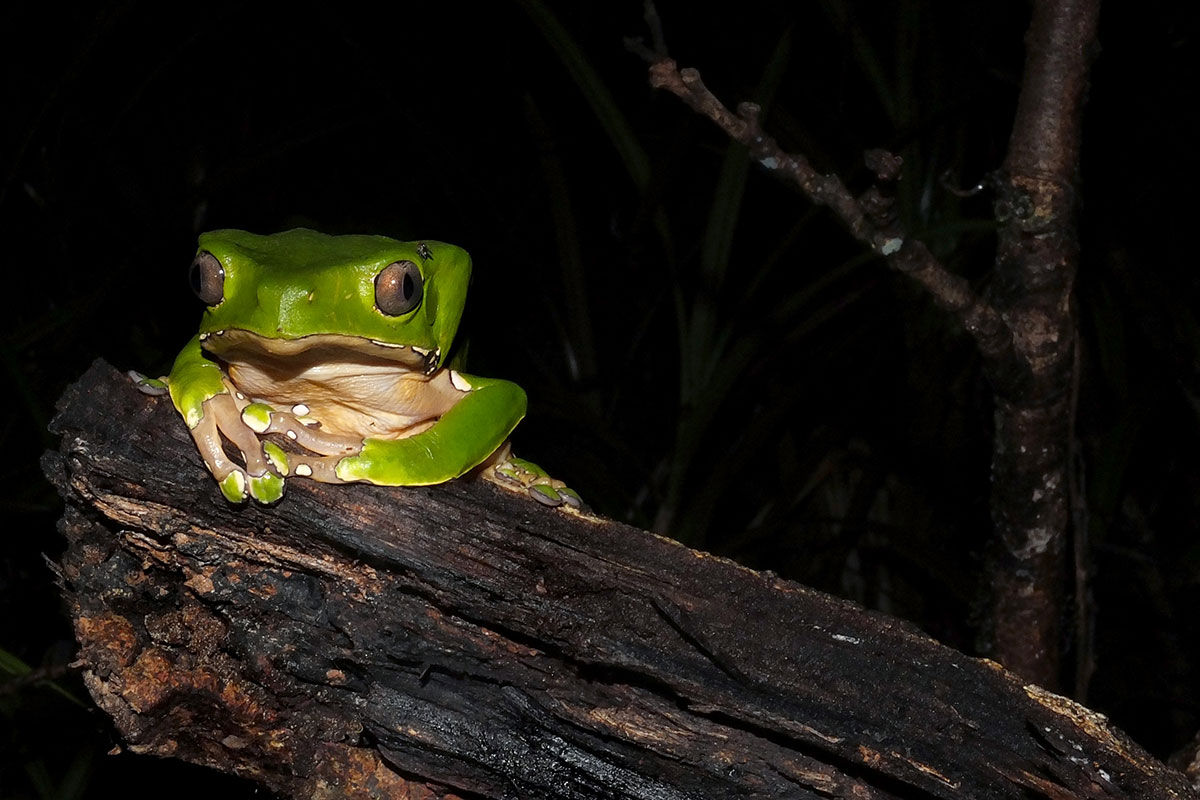
Kambo is another sacred indigenous medicine that is derived from the venom of the Phyllomedusa bicolor frog. This Amazonian medicine is also known as the “Jungle Vaccine”, and, for those unfamiliar with this medicine, has similar effects in the body to bee venom therapy. Kambo contains a variety of immune-stimulating peptides that produce different therapeutic effects in the body, but for the purposes of this discussion I’m going to focus on dermorphin, a pain-relieving peptide that may bind with opiate receptors in the body similarly to endomorphin-1.
Dermorphin is known to specifically bind with the mu opioid receptors in the body; unlike opiate drugs, however, dermorphin only stimulates these opioid receptors up to a certain point. The natural opioid compounds in Kambo, like dermorphin, don’t overstimulate the opioid receptors in the body like opiate drugs do, thus, Kambo can relieve pain and help relax the body without being addictive. This medicine can help “reset” the autonomic nervous system and restore balance to the entire body.
Endomorphin-1, in fact, also has a high affinity and selectivity for the mu opioid receptors in the body. This suggests that dermorphin likely would have a similar effect to endomorphin-1 if combined with muscimol or the whole Amanita muscaria mushroom. Dermorphin and endomorphin-1 are indeed similar in terms of how they interact with opioid receptors, but dermorphin is actually more powerful than the body’s own endomorphins. Some research has even found that dermorphin is more powerful than morphine! Yet, despite its strength, dermorphin has a uniquely modulating effect on the nervous system since it powerfully interacts with opiate receptors without overloading them.
Kambo isn’t a medicine that is usually administered on a day-to-day basis, unlike Amanita muscaria, which can and actually should be microdosed daily, especially in the beginning stages of healing. As such, Kambo and fly agaric can’t be administered together in the same way as endomorphin-1 and muscimol were administered together according to the study above. This treatment combination requires some open-mindedness and experimentation for people who choose to work with these two medicines together. I have personally worked with both of these medicines, together and separately, so I’ll share my own experience below so that other people can use my personal report to devise their own treatment protocol, should they choose to do so.
I have had chronic pain in my shoulders and, to a lesser extent, in my hips for a few years. Recently I got to a place in my life where I was able to really focus in and work on treating this pain, and Kambo is actually one of the first medicines that really worked to relieve pain without painkillers or pharmaceuticals. When I figured out that the Kambo relieved pain, I did a “course” of about 5-7 days with the Kambo, where I did 1 “dot” of the medicine each day. After that, I used it (and continue to use it) on a case-by-case basis. Some days I barely noticed the medicine, other days were more intense, in spite of administering essentially the same dose each time (this is a normal experience with the sacred medicines, though; they give you what you need, regardless of dose).
I prefer to administer Kambo to myself in the mornings, since this way I can do the medicine on an empty stomach. The medicine works with your entire body, and morning administration seems to work best for relieving digestive issues, although I’ve administered Kambo at other times of the day too. I would recommend that people start with an empty stomach at first (Kambo can cause a “purge” if you’re somewhat toxic), but ultimately, experiment to find the time of day that feels best to you. Be aware that Kambo often causes a detox reaction, especially if you do it more than one day in a row, and drink plenty of water and work with detoxifying medicines on the day when you take the Kambo to facilitate total healing.
Amanita muscaria was one of the next really effective medicines that I worked with for pain. At the time of this writing, I’ve been taking fly agaric microdoses daily for a little over 1 month, and my pain levels have diminished significantly.
Personally, when I work with these two medicines I’ll take the Kambo in the morning, shortly after waking, and then I take my Amanita muscaria microdose in the afternoon when my pain flares up, usually around 3-5pm. I prefer to separate the sacred medicines out like this, generally (especially if I have less experience with one of them), however I would consider taking these two particular medicines closer together now that I’ve worked with them both more intensively. The Amanita muscaria takes about 30 minutes to kick in, while Kambo’s effects happen immediately after the venom is applied and last for 10-20 minutes. Based on my experience and the information in the study above, I would take Kambo first, wait until the effects have subsided a bit, and then take a microdose of the Amanita muscaria. Studies have shown that dermorphin has long-lasting analgesic effects in the body, and administering fly agaric even up to 2.5 hours after taking Kambo will still allow the muscimol in the Amanita to have some interactions with the dermorphin from the Kambo.
As an ending note, every person has to make their own decision about how to administer medicines to themselves, especially when it comes to working with the sacred medicines. Trust your intuition. Again, though, I highly recommend working with the 2 medicines separately first before combining them so that you know what to expect with each in terms of the way that your body responds.
Other Potential Combination Treatments for Pain Relief
Below is a list of other safe, natural medicines that specifically interact with the mu opioid receptors similarly to dermorphin. These medicines could potentially be combined with Amanita muscaria to improve the pain-relieving effects of this mushroom:- Kava Kava (Piper methysticum) - Kava, like fly agaric, also interacts with the GABA-A receptors, in addition to binding with the mu and delta opioid receptors. This plant also has reversible MAO-B inhibition activity.
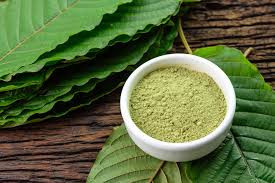
- Kratom (Mitragyna speciosa) - Kratom contains alkaloids that act as partial agonists of the mu opioid receptors. It is commonly used for pain relief (as a stand-along herbal treatment) as well as for the management of opioid withdrawal symptoms. At low doses it has stimulant effects on the body, while at higher doses it has sedative, opiate-like effects. Keep in mind that this medicine can be addictive for some people, so it should be used with care.
- Akuamma Seed (Picralima nitida) - Akuamma seed contains akuammine, an alkaloid with an selective affinity for mu opioid receptors; akuammine is also found in lesser quantities in Vinca major, blue periwinkle. Akuammine has a relatively low affinity for the mu opioid receptors, however, so it may not work as well as Kambo, Kava, or Kratom. Akuamma also contains pericine, a different alkaloid with anticonvulsant effects and an affinity for the mu opioid receptors.
- Sinomenium acutum - This is an herbal medicine that is used traditionally in Japanese and Chinese medicine as a treatment for rheumatism, arthritis, and related conditions. It contains sinomenine, a mu opioid receptor agonist, as well as other compounds that act to relieve pain by inhibiting prostaglandin, nitric oxide, and leukotriene synthesis.
- Psychotria spp. - Plants in the Psychotria genus, including the famous Psychotria viridis (one of the two plants that makes up the Ayahuasca brew, the other being Banisteriopsis caapi) contain an alkaloid called hodgkinsine, which is known to be both a mu opioid receptor agonist as well as an NMDA receptor antagonist. Hodgkinsine also has antibacterial, antiviral, and antifungal effects. Readers should note that the Psychotria viridis plant specifically contains DMT.
- Ku Shen (Sophora flavescens) - This is an herbal medicine used often in Traditional Chinese Medicine. It contains matrine, an alkaloid found in Fabaceae plants. Matrine is both a mu opioid receptor agonist and a kappa opioid receptor agonist, and has unique anticancer properties. Matrine also has neuroinflammatory and oxidative stress-relieving effects and may help reduce anxiety and depression.
- Velvet Bean (Mucuna pruriens) - The Mucuna bean is known for its dopamine boosting and regulating effects, but it also may interact with the mu opioid receptors via matrine (Mucuna is, after all, a Fabacaea plant) and other compounds, like the 1,2,3,4-tetrahydroisoquinoline-3-carboxylic acids.
Resources:
• N.A. (n.d). Endomorphin-1. Retrieved June 5, 2025 from: https://www.tocris.com/products/endomorphin-1_1055
• Broccardo, M., et. al. (1981). Pharmacological data on dermorphins, a new class of potent opioid peptides from amphibian skin. Retrieved June 5, 2025 from: https://pmc.ncbi.nlm.nih.gov/articles/PMC2071698/?page=4
• Feeney, Kevin (2013). The Significance of Pharmacological and Biological Indicators in Identifying Historical uses of Amanita muscaria. Retrieved June 5, 2025 from: https://www.researchgate.net/publication/280051645_The_Significance_of_Pharmacological_and_Biological_Indicators_in_Identifying_Historical_uses_of_Amanita_muscaria
• Wikipedia (2025). Mitragyna speciosa. Retrieved June 5, 2025 from: https://en.wikipedia.org/wiki/Mitragyna_speciosa
• Wikipedia (2024). Sinomenine. Retrieved June 5, 2025 from: https://en.wikipedia.org/wiki/Sinomenine
• Wikipedia (2024). Hodgkinsine. Retrieved June 5, 2025 from: https://en.wikipedia.org/wiki/Hodgkinsine
• Misra, Laxminarain, et. al. (2004). Alkaloidal constituents of Mucuna pruriens seeds. Retrieved June 5, 2025 from: https://www.sciencedirect.com/science/article/abs/pii/S0031942204004261?via%3Dihub