Child-Friendly Herbs: Althae officinalis / Althaea officinalis / Marshmallow Root / Khatmi
Althea officinalis, also spelled Althaea officinalis in some countries, and also known as Marshmallow Root, shemaitute, or Khatmi in Unani medicine, has not been extensively studied in children. This isn’t surprising or unusual as most herbs are only studied in terms of the medicinal substances they contain that might be able to be synthetically manipulated by Big Pharma to produce profitable drugs (that are first released into the general population of adults and then only later considered in terms of their usefulness in children). Herbs are usually not studied scientifically with the intent to understand their medicinal action. Rather, funding for scientific studies into herbs is usually geared at finding profitable medicinal agents that might be reconfigured chemically into something that can be patented by Big Pharma. Often, the use of herbs that can be given to children and that have been used for centuries to treat childhood diseases naturally, is discouraged by the simple propaganda that “it has not been studied scientifically”. In reality, most herbs are not studied scientifically in terms of their healing effects on humans period simply because Big Pharma funds most scientific studies into medicinal agents and the goal of Big Pharma is to discover exploitable substances found in plants, not plants themselves (as herbs cannot be patented and are therefore not profitable).Children, pregnant women, lactating women, and females in general are usually at the bottom of the list in terms of those who are studied scientifically in terms of herbal medicines that are currently known in the world. Adult males might be studied in terms of medicinal substances that are found in certain herbs, but only if the medicinal substance can be manipulated chemically or if it can be isolated from the plant and sold as a patented substance by combining it with something else that does not exist in nature. This is why most herbs, including marshmallow root have not been “studied scientifically” in terms of their effects on children. Nonetheless, in this article we talk about how and when it’s probably safe and useful to use this herb for babies and toddlers and some of the medicinal actions of this herb that might warrant caution.
Though Big Pharma has not allotted funding to marshmallow root so that it can be studied scientifically on kids, scientists have noted its ethnopharmacological use by parents in countries like Romania. And this herb is used in Unani medicine (as Khatmi) to treat children in doses that would be found in food. Althea officinalis has an extremely low toxicity in studies on lab rats, which makes it a good candidate for use in children. If, as a parent, you feel safer using natural herbal remedies for babies rather than trusting Big Pharma to produce a drug for children that’s safe, then Althea officinalis would be worth your consideration.
Marshmallow root is a nutritive herb which means that it contains a lot of nutrients and it can be eaten as a food. Indeed, Althea officinalis / Marshmallow Root was an herb that was once used to produce real marshmallows before Big Food and commercial marshmallows (which are decidedly NON-nutritive) became available in grocery stores. As such, this herb can be incorporated into meals to create food-medicines in certain cases for children who are resistant to being medicated.
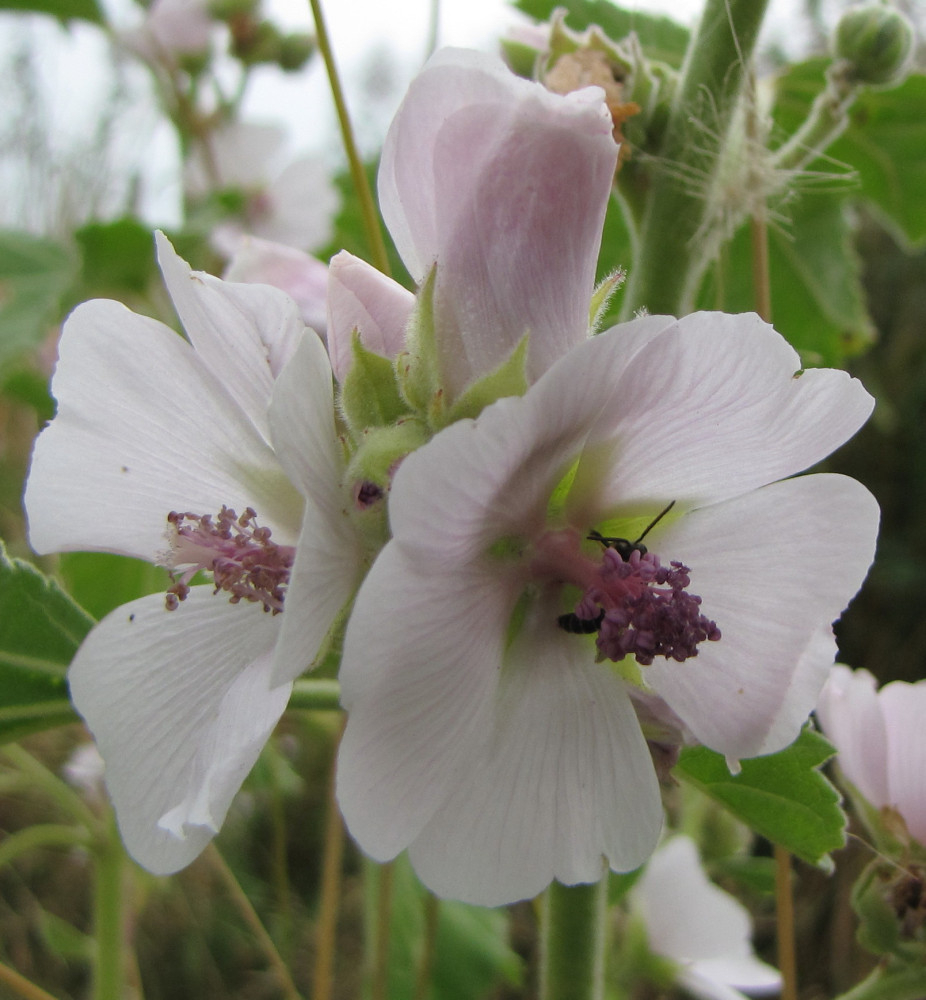
Althaea officinalis is a mucilaginous herb that belongs to the Malvaceae family. The leaves and roots of this plant differ slightly in terms of their medicinal action in the body so be sure to look closely at the marshmallow root that you intend to purchase to make sure it consists of the proper plant parts for best results. Note that the roots of the Althea officinalis plant is strongest medicinally as a demulcent.
How to Use Marshmallow Root for Children and Babies
Marshmallow root as an oral / internal medicine should generally be used for relatively short term treatments of 3-7 days at a time because it significantly lowers estrogen levels in the body. Typically, parents wouldn’t use marshmallow root for chronic, long-term treatments anyways. Give your child 30 days away from the herb and use a different herb for treatment before using Althea officinalis again for another 3 days.Note that it is okay to use the herbal mouthwash daily to heal cavities or to prevent cavities in children as long as they spit the mouthwash out after every dose. In a very young child with new baby teeth, a parent might put a bit of the cold infusion on a finger and spread it around inside the mouth to prevent fluorosis, for example, if dental fluorosis was a concern.
Consider administering an herb that’s safe for babies and children that contains a phytoestrogen to replace estrogens that are lost during treatment with marshmallow root if you wish to administer Althea officinalis as a tea or as a tincture for longer periods of time.
Note that external treatment with marshmallow root may not inhibit estrogen levels to the same degree as internal / oral treatment. Using marshmallow root for diaper rash, external application to a small area of the body (the buttocks and lower back) is probably okay for 10-14 days at a time. The use of Althae officinalis as a chest rub is also okay for longer periods of time.
The Kid-Friendly Medicines Living Database - NOW AVAILABLE! Click here to sign up...
Althae officinalis: Herbal Remedy for Asthma
In the modern world, iodine deficiency is a ubiquitous problem and it’s a particularly serious problem during pregnancy, lactation, and in childhood. Lugol’s iodine 2% (administered as 1 drop per year of a child’s age or 20 drops / 50 mg daily for adults) is the recommended dose to prevent iodine deficiency in areas of the world where bromine / bromide-containing insecticides are regularly administered (the U.S. is one of these places) or where fluoridated water is the norm. Althea officinalis contains iodine which is one of the reasons why it and other iodine-containing herbs like thyme work to treat asthma (Lugol’s iodine is THE cure for asthma). Click here to read more about the use of Lugol’s iodine to cure asthma naturally to better understand how marshmallow root works to treat this and other respiratory diseases.Click here to read more about bromide-containing insecticides and organophosphates and how to use Lugol’s iodine and the supportive nutrients like vitamin K2 to protect children from these chemicals.
Click here to read more about thyme as an herbal remedy for asthma.
Althea officinalis: Herbal Cough Treatment for Kids
Marshmallow root can be used to treat a dry, persistent cough in kids. It works by coating the throat to make it less easily irritated, but the presence of iodine and some of the supportive nutrients that promote the assimilation of iodine also play an important role in the medicinal action of this herb. As discussed above in the section titled, “herbal remedy for asthma”, the nutrient iodine is present in this herb which makes it into a powerful expectorant and general respiratory system tonic as well as an immune system balancing herb. The mucilage in Altheae officinalis protects the pharynx / throat so that it can heal and become less irritable while other medicinal substances in this herb kill pathogens.Note that marshmallow root is an herbal antibiotic that can be used to treat a long list of infectious pathogens (see list of pathogens it can treat in our “medicinal effects” section) which makes it an excellent choice for respiratory diseases. However, because Althea officinalis significantly lowers estrogen levels in the body, it should not be used long-term in children as an oral treatment at high doses. Rather, consider using potassium iodide as a powerful natural expectorant for severe respiratory disease. Administer Lugol’s iodine 2% as a daily nutrient supplement that can prevent asthma from ever developing in children while supporting nervous system development, intellectual development, and proper immune system function.
Note that bromine is a halogen element located in the same column of the periodic table as iodine. The human body mistakes bromine for iodine when the body is deficient in iodine. Non-organophosphate insecticides in developed countries typically contain bromide and bromide is also found in fire extinguishers, as a “water purification agent” in some municipal water supplies and in swimming pools, on clothing (as a fire retardant), in foods like commercial bread products, or soft drinks (listed as BVOs or bromated vegetable oils). It is also found in over-the counter cough syrups often as an unlisted ingredient. Bromide is bioaccumulative so if your child is deficient in iodine and then you give him/her a cough medicine that contains bromide, his/her body will absorb the bromide into the thyroid gland and into the reproductive organs in particular. Over time, this can cause asthma to develop among other health issues. Click here to read more about pharmaceuticals that contain bromide here.
Altheae officinalis: Herbal Diaper Rash Treatment for Babies
Althea officinalis can be used as a natural treatment for diaper rash in babies. It should be administered externally to the areas affected by diaper rash. Althea officinalis could be combined with Calendula officinalis and/ or cornstarch to create a powerful diaper rash remedy that can be used externally. Use a coffee grinder to create a fine powder and combine these herbs with cornstarch to treat diaper rash naturally.Note that Althaea officinalis is an herbal antibiotic. See the list of pathogens it can treat in our “medicinal effects” section below.
Click here to subscribe to the Living Database!
Althea officinalis: Herbal Urinary Tract Infection Treatment for Children
You’ll likely use other natural remedies for urinary tract infection in children. Natural UTI remedies like blueberry juice, cranberry juice, or D-mannose powder may be a better front-line choice for UTI treatment in children, but Althea officinalis can be administered on an as-needed basis if a child is in a lot of pain due to a urinary tract infection. In other words, though Althea officinalis can be used to treat and cure UTI in a child (wherein this medicine would be used for 3-5 days on a regular dosing schedule), it might also be used to treat UTI pain (wherein it might be used only once or twice during a UTI to treat peaks of pain or discomfort).Also, it’s vital to note here that because Althea officinalis contains a measurable amount of iodine, it can cause toxic bromine / bromide to be purged from the body. Iodine, in fact, when it is present in sufficient quantities and the body is not deficient, will protect the body from the ravages of bromide / bromine and fluoride / fluorine. When a child (or adult) is deficient in iodine, the body searches for substances that are similar to iodine and because bromine and fluorine have outer electron shells that are identical to iodine’s outer electron shell, the body can get confused and begin to absorb these toxins unless the iodine deficiency is correct.
One annoying symptom of bromine / bromide detoxification in particular is cystitis, or rather bladder inflammation. Sometimes inflammation leads to tissue vulnerability and infection. A child with chronic bladder irritation due to chronic iodine deficiency and regular bromide detoxification (bromine / bromide detox would occur whenever the child consumes a small amount of iodine) may also have chronic unexplainable UTIs. The cure for this problem is Lugol’s iodine 2% administered as 1 drop daily per year of the child’s age. Initially, the child may experience cystitis and an increase in UTIs and bladder irritation as bromine is removed from the body through the blood supply and via the bladder. Althea officinalis, with its mucilaginous qualities may mitigate some of these symptoms during the initial stages of Lugol’s iodine supplementation. Once the bromine has been totally removed from the body, the UTIs will likely end permanently along with cystitis and bladder irritation. Click here to read more about bromide-containing insecticides, organophosphates, and iodine deficiency and how to prevent and treat exposure to these chemicals.
Note that many children’s cough syrups and other over-the-counter and prescription drugs contain the toxin bromide. Read more about bromide in pharmaceuticals here.
Note that Althea officinalis is also an herbal antibiotic that’s safe for kids. As such, it can treat the symptoms of a UTI naturally, but it can also cure a UTI by killing the pathogens that are causing the infection. See the list of pathogens it can treat in our “medicinal effects” section below.
Althea officinalis: Herbal Remedy for Colic in Babies and Children
As an herbal treatment for colic in babies and young children, this herb works by coating the gastrointestinal system with a thin layer of mucilage.Althea officinalis: Herbal Remedy for Diarrhea in Babies and Young Children
In Romania, parents use Althea officinalis as an herbal diarrhea treatment for children. As a mucilaginous plant, marshmallow root coats the digestive system, allowing it to heal while also providing the body with nutrients to stop diarrhea naturally in kids.In addition to its ability to coat and protect the digestive system, this herb is an herbal antibiotic that has specifically been studied in terms of its ability to kill the microorganisms listed in our bullet point list of “Medicinal Effects” below. The list of bacteria that marshmallow root can treat is probably much longer than the list we’ve provided below. The list reflects only the bacteria that have been studied by scientists so far. So, even if your child has an infection with a pathogen that is not listed, this doesn’t mean that Althea officinalis won’t be able to kill that particular pathogen.
Altheae officinalis: Herbal Antibiotic for Babies and Children
One of the reasons why this herb is used by parents to treat babies for diarrhea, UTI, and cough is because it is a natural antibiotic medicine. Also, it contains iodine and iodine is the nutrient that ultimately balances the immune system response (which makes this nutrient very important as a cure for autoimmune disease – click here for more information about how to use Lugol’s iodine to cure autoimmune disease). So while this herb can treat the symptoms of a respiratory infection, a digestive system infection, or a urinary tract infection, it can also kill the pathogen that’s causing the infection too. And it can help the immune system function better. Indeed, Lugol’s iodine and iodine-containing herbs are extremely important as a cure for childhood cancer as well as all reproductive organ cancers and thyroid cancers. Click here to read more about how to use Lugol’s iodine to cure cancer in a baby, child, or an adult.Althea officinalis: Medicinal Effects
-
- Astringent
- Analgesic / Natural Pain Killer
- Demulcent
- Emollient
- Vulnerary
- Lumbago / Low Back Pain Treatment
- Treats Mastitis / Breast Inflammation
- Painful Breast Engorgement Treatment
- Natural Sunscreen
- Antimicrobial
- Antifungal
- Candida albicans
- Antibacterial
- Studies have shown that Althea officinalis water extracts have less antibacterial activity than alcohol-based extracts / tinctures. If you wish to use Althea officinalis as an antibacterial agent, it must be prepared as an alcohol-based tincture.
- Pseudomonas aeruginosa
- Escherichia coli
- Staphylococcus aureus
- Drug-Resistant Staphylococcus aureus
- Listeria monocytogenes
- Acidovorax facilis
- Bacillus sp.
- Enterobacter hormachei
- Proteus vulgaris
- Kocuria rosea
- Salmonella typhimurium
- Klebsiella pneumoniae
- Shigella dysenteriae
- Aspergillus niger
- Aspergillus fumigatus
- Aspergillus flavus
- Rhizoctonia solani
- Fusarium oxysporum
- Haemophilus influenza
- Streptococcus pyogenes
- Studies have shown that Althea officinalis water extracts have less antibacterial activity than alcohol-based extracts / tinctures. If you wish to use Althea officinalis as an antibacterial agent, it must be prepared as an alcohol-based tincture.
- Toothache
- Dental Cavity (see below and click here to read more about how to heal dental cavities naturally in children to avoid going to the dentist)
- Anti-microbial against periodontal pathogens
-
-
- Porphyromonas gingivalis
-
-
-
- Prevotella spp.
-
-
-
- Actinomyces odontolyticus
-
-
-
- Veilonella parvula
-
-
-
- Eikenella corrodens
-
-
-
- Fusobacterium nucleatum
-
-
-
- Peptostreptococcus
-
-
-
- Capnocytophaga gingivalis
-
- Anti-inflammatory
- Alterative
- Nutritive
- Wound Treatment (used as a compress or as a paste)
- Insect Stings / Insect Bite Treatment
- Pityriasis Lichenoides et Varioliformis Acuta / Mucha-Habermann Disease
- Pityriasis Rosea
- Juvenile Idiopathic Arthritis
- Reiter Syndrome / Reiter's Syndrome / Reactive Arthritis
- Osteoarthritis
- Rheumatoid Arthritis
- Tremors
- Whooping Cough / Pertussis
- Dysphagia Treatment / Treats Difficulty Swallowing
- Immunomodulating
- Polysaccharides stimulate phagocytosis
- Hypoglycemic
- This herb can be used to treat diabetes mellitus in children. It has an anti-diabetic effect on the body.
- Hypolipidemic
- Reduces cholesterol levels
- Marshmallow leaf is used to treat urinary tract diseases and disorders
- Diuretic
- Urinary Tract Infection
- Cystitis
- Urethritis / Inflammation of the urethra
- Anti-lithic / Herbal Remedy for Urinary gravel
- Kidney stones
- Bladder stones
- Marshmallow leaf is used to treat respiratory infection
- Herbal remedy for dry, irritating cough
- Herbal remedy for pharyngitis / Sore Throat
- Expectorant
- Anti-tussive / Natural Cough Remedy
- Natural Asthma Treatment
- Pleurisy Treatment
- Digestive System Treatment
- Natural Laxative
- Natural Treatment for diverticulitis
- The root is used to treat inflammatory disorders of the digestive system
- Herbal Remedy for Irritable Bowel Syndrome / IBS
- Herbal Remedy for Inflammatory Bowel Disease
- Treats inflammation in the mouth when used as a gargle
- Mouth Ulcers
- Throat Ulcers
- Treats Gastritis / Stomach Inflammation
- Treats Peptic Ulcers
- Herbal Treatment for Intestinal Obstruction
- Treats Colitis
- Herbal Remedy for Crohn’s Disease
- Herbal Remedy for Ulcerative Colitis
- Herbal Remedy for Ulcerative Proctitis
Althea officinalis: Contraindications
If a child is taking prescription medications or other herbal remedies Althea officinalis can delay the absorption of these agents if it is administered simultaneously with the other medicine. Althea officinalis creates a mucilaginous layer that coats the digestive system. In other words, if the child is taking other herbs or prescription medications, be sure to separate the Althea officinalis doses from the other medicines by at least one hour (before and after) to ensure that other medicines can be properly absorbed.
Althea officinalis: Dosing for Children and Babies
This herb can lower estrogen levels, which can have unpredictable effects in children and babies. However, this herb is used by parents in some areas of the world to treat diarrhea, UTI, diaper rash, and persistent, dry cough. We recommend that you limit the use of this herb to short-term treatment if you’re administering it to a child as a tea/infusion. Be aware that the cough reflex specifically is governed to some extent by reproductive hormone levels including estrogen levels. If your child is suffering from a chronic cough that won’t go away, it may be due to low levels of iodine / iodine deficiency. In this case, the treatment would be Lugol’s iodine 2% administered to the skin as 1 drop per year of the child’s age per day along with supportive nutrients. Administer the iodine while also administering Althea officinalis internally as a tea for up to 3-7 days in children. But while Althea officinalis is a short-term treatment for diseases and disorders in children, you can and should continue to administer Lugol’s iodine 2% every day throughout the lifespan (especially if the patient lives in a country that espouses the creation of government-sponsored nutrient deficiencies to ensure ongoing big profits for Big Pharma) to protect children from asthma, cough, and persistent infections as well as all reproductive system and thyroid issues. BULKSUPPLEMENTS.COM Marshmallow Root Extract Powder - Herbal Extract, Marshmallow Powder, Lung Support Supplement - 1200mg of Marshmallow Extract per Serving, Gluten Free (250 Grams - 8.8 oz)
Althea officinalis Dried Herb / Cold Infusion
Prepare Althea officinalis root, leaves, or flowers by putting 1-2 grams per 1 cup of cold water in a glass container. Make sure the herb is covered completely by the cold water. Allow the herb-water mixture to sit overnight in the refrigerator for 24 hours before using.
Administer a total of 1-2 grams daily in 3 divided doses. In other words, put 1-2 grams of Althea officinalis in 1 cup of cool water. Put the herb-water mixture in the refrigerator to soak overnight. Approximately 24 hours later, pour the water out of the container. Strain the herbal bits and pieces out of the water using a colander. Administer one-third of the total, or ⅓ of a cup throughout the day at 3 separate times.
Administer the smaller, 1 gram dose to children under 4 years of age. Administer the 2 gram dose for children ages 5-12 years.
Althea officinalis Hot Infusion / Tea
Note that hot infusion / herbal tea is more powerful medicinally than the cold infusion. Use caution and let the herbal tea cool completely and start with a very low dose in children to see how the child reacts to it.
In children and adults, Althea officinalis can be prepared as a hot infusion or herbal tea for asthma. Add a total of ½ to 2 grams daily to 1 cup of water that has been boiled. Allow it to steep for 10-15 minutes. Administer in 3 divided doses after it has cooled completely. Add ⅛ of a teaspoon of black pepper to enhance the effects. When marshmallow root is prepared in this way, it is an expectorant. Note that applying Althea officinalis externally as an herbal chest rub, in contrast, provides demulcent effects.
Administer ½ gram to infants over 6 months of age and 1 gram to smaller children under 4 years of age. Administer the 2 gram dose for children ages 5-12 years.
Note that a hot infusion / herbal tea can be cooled and then applied to the skin externally.
Althea officinalis: Decoction
A decoction is even more powerful than an herbal tea / hot infusion of Althea officinalis. To prepare a decoction, add ¼ teaspoon to 1 teaspoon to 1 cup of water. Bring the mixture to a boil and allow it to simmer lightly for up to 10 minutes. Let it cool completely before administering it to a child.Click here to buy Althaea officinalis / Marshmallow Root Non-Alcoholic extract here.
Althea officinalis Tincture
Some sources say that Althea officinalis is best as a glycerol-water extraction.Also note that if you’re hoping to use this herb as an antibiotic, the water extraction of marshmallow root may not have any antibacterial activity and glycerol extracts may not be as effective as alcohol extracts as antibiotic agents. Scientific studies have shown that methanol/alcohol extracts have significant antibacterial activity. For this reason, we link to both the vegetable glycerin HawaiiPharm product as well as the alcohol extract for Althea officinalis.
If you intend to administer this herb to a child, note that there is very little alcohol in alcohol extract doses and the alcohol is sometimes necessary in order to extract the medicinal agents from this herb. Alcohol in large doses may be toxic for children, but usually the alcohol in herbal tinctures is less toxic than the chemicals found in pharmaceuticals.
Buy Althaea officinalis / Marshmallow Root alcohol extract here.
Althea officinalis: Herbal Chest Rub for Children
Use an emulsifying ingredient such as carnauba wax to combine the cold infusion of Althea officinalis with a nutrient-rich, healing oil such as cold-pressed, organic grapeseed oil.Althea officinalis Syrup for Children
WARNING: Do not administer a honey-based syrup like the one we describe below to a child under the age of 1 year. Honey sometimes contains the Botulinum toxin which can be fatal for babies under 1 year of age. As a safer alternative to honey and as a less toxic alternative to corn syrups, consider using agave nectar to make a syrup.Note that in Unani medicine, honey is used as a “corrective” agent that prevents unwanted side effects associated with the use of Althea officinalis.
Prepare a syrup by making a cold infusion of Altheae officinalis as described above. Make 600 mL / 1 pint of the infusion. Add it to 500 grams / 1 lb. of honey and heat the mixture slowly, bringing it just to the simmering point. Turn off the heat and allow the syrup to cool. Store the syrup in sterilized bottles with screw-on lids that are slightly loosened.
Administer 1-2 mL of the syrup daily.
Althea officinalis: Herbal Mouthwash to Prevent Cavities in Children
Children who are old enough to understand how to swish and spit can use this herbal mouthwash to prevent cavities. This recipe also works to heal cavities in children and adults. In order for it to work, though, you must administer vitamin K2 / MK-7 and children / adults must use a homemade coconut oil recipe for their toothpaste and get rid of all toothpastes that contain vegetable glycerin. Also, fluoridated water must be filtered as fluoride disrupts the natural calcium-phosphorus bond to create a weaker type of enamel that makes the teeth vulnerable to cavities. So children must be protected from fluoride as well as from vegetable-glycerin a product that is practically ubiquitous, even in so-called “healthy” toothpaste products. Vegetable glycerin is also found in some processed snack foods. Note that one dose of vegetable glycerin clogs the pores in teeth for up to 30 days making it impossible for the teeth to remineralize during that time. Click here to read the additional guidelines for remineralizing teeth. Use the cold infusion recipe. Store it in the refrigerator for up to 4 days. Use 1 teaspoon of the cold infusion daily as an herbal mouth wash to remineralize teeth and heal a cavity in children.Resources:
• Guyett, C. (2022). The Herbalist’s Guide to Pregnancy, Childbirth, and Beyond. Aeon Books.
• The Naturopathic Herbalist (n.d.). Althea officinalis. Retrieved April 27, 2023 from https://thenaturopathicherbalist.com/herbs/a-2/althea-officinalis-marshmallow/
• Al Aswi, G. R. L. et al. (2013). The antibacterial activity of Althea officinalis L. methanolic extract against some nosocomial pathogens in vitro and in vivo. Retrieved April 27, 2023 from https://iopscience.iop.org/article/10.1088/1755-1315/790/1/012013
• Rezaei, M. et al. (2015). Evaluation of the antibacterial activity of the Althea officinalis L. leaf extract and its wound healing potency in the rat model of excision wound creation. Retrieved April 27, 2023 from https://www.ncbi.nlm.nih.gov/pmc/articles/PMC4418059/
• Ozturk, S. and Ercisli, S. (2008). Antibacterial Activity of Aqueous and Methanol Extracts of Althea officinalis and Althea cannabina from Turkey. Retrieved April 27, 2023 from https://www.tandfonline.com/doi/full/10.1080/13880200701213179
• Hoffman, D. (2003). Medical Herbalism: The Science and Practice of Herbal Medicine. Healing Arts Press: Vermont.
• Nazeem, F. et al. (2016). Unani perspective of Khatmi ( Althaea officinalis). Retrieved April 30, 2023 from https://www.researchgate.net/publication/328129868_Unani_perspective_of_Khatmi_Althaea_officinalis
• Changizi-Ashtiyani, S. (2015). The Effect of Althea officinalis L. Root Alcoholic Extract on Blood Sugar Level and Lipid Profiles of Streptozotocin Induced Diabetic Rats. Retrieved April 27, 2023 from https://www.researchgate.net/publication/281545119_The_Effect_of_Althaea_officinalisL_Root_Alcoholic_Extract_on_Blood_Sugar_Level_and_Lipid_Profiles_of_Streptozotocin_Induced-Diabetic_Rats
• TrustHerb (2021). 5 amazing health benefits of Khatmi. Retrieved April 27, 2023 from https://trustherb.com/5-health-benefits-of-althea-officinalis/
• Al-Snafi, A. E. (2013). The Pharmaceutical importance of Althea officinalis and Althea rosea. Retrieved April 30, 2023 from https://www.researchgate.net/publication/285919150_The_Pharmaceutical_importance_of_Althaea_officinalis_and_Althaea_rosea_A_review
• Husain, M. et al. (2021). A Review on the Pharmacologial and Phytochemical profile of Khatmi (Althaea officinalis Linn.): An Important Mucilaginous Plant and Its Utilization in Unani System of Medicine. Retrieved April 27, 2023 from https://www.researchgate.net/publication/353273841_A_REVIEW_ON_PHARMACOLOGICAL_AND_PHYTOCHEMICAL_PROFILE_OF_KHATMI_ALTHAEA_OFFICINALIS_LINN_AN_IMPORTANT_MUCILAGINOUS_PLANT_AND_ITS_UTILIZATION_IN_UNANI_SYSTEM_OF_MEDICINE
• European Medicines Agency (2016). Assessment Report on Althea officinalis L. radix. Retrieved April 27, 2023 from https://www.ema.europa.eu/en/documents/herbal-report/final-assessment-report-althaea-officinalis-l-radix_en.pdf