 Alternative Treatment for Lewy Body Dementia and Parkinson's Disease
WARNING: DO NOT USE METHYLENE BLUE IF YOU HAVE A G6PD DEFICIENCY, A LIVER, OR A KIDNEY DISORDER. DO NOT USE METHYLENE BLUE IF YOU ARE PREGNANT OR LACTATING. DO NOT COMBINE METHYLENE BLUE WITH DIMETHYLSULFOXIDE / DMSO.
If you or a loved one has recently been diagnosed with Lewy Body Dementia or Parkinson's Disease, you may be concerned about taking Levodopa--and with good reason. This drug offered benefits for only a limited period of time. So are there Levodopa alternatives for Parkinson's disease? Yes. Below are two substances that have a long history of use all over the world. And though they're both widely available over the counter, you've probably never heard of them.
Click here to schedule a health coaching session with us.
Methylene Blue for Lewy Body Dementia and Parkinson's Disease
Methylene Blue was the first synthetic drug to ever be used in conventional medicine. It is both a fluorescent dye that’s used in scientific laboratories as well as a valuable medication with a broad spectrum of action that’s still being used today in an ever-expanding repertoire of action. It was discovered in 1867 and has been used for nearly 150 years because it is widely available and it poses relatively low risks for patients. As a medication, it can be used to treat a variety of disorders including:- Mood Disorders (Depression, Anxiety, Bipolar Disorder)
- Certain types of dementia (Parkinson’s Disease, Lewy Body Dementia, Alzheimer’s)
- Certain types of psychosis
- Methemoglobinemia or low blood oxygen that persists despite oxygen therapy
- COVID-19
- Urinary Tract Infections (UTI)
- Chronic Interstitial Cystitis
- Cyanide poisoning
- Anaphylactic shock
- Plaque Psoriasis (Methylene Blue is combined with Photodynamic Light Therapy for treatment-resistant plaque psoriasis).
- Intraoperative fluorescent imaging
- Microscopic dye
- Malaria
Methylene Blue has neuroprotective effects which means that it has the ability to keep the brain healthy in the face of adversity. It is a reversible Monoamine Oxidase Inhibitor (MAOI) and it also increases the release of serotonin and norepinephrine in the brain. Methylene Blue is a phenothiazine drug that was used as a treatment for psychosis over 50 years ago. And it has shown promise in treating dementia and other neurodegenerative disorders such as Parkinson’s Disease, Lewy Body Disease, and Alzheimer’s.
This is a drug that’s got a long, proven track-record of safety and usefulness in the treatment of neurological disorders like Parkinson’s and Lewy Body Dementia.
Click here to buy Methylene Blue.
Mucuna pruriens and Methylene Blue for Parkinson’s Disease and Lewy Body Dementia
Research into the use of Methylene Blue for Alzheimer’s, Parkinson’s and other types of dementia has demonstrated that this medication can be used to prevent and slow the decline of mitochondrial function in brain cells. In particular, Methylene Blue preserves mitochondria and normalizes complex IV enzymes in the brain to prevent the development and progression of age-related diseases like Parkinson’s or Alzheimer’s. Some doctors have called Methylene Blue a “wonder drug” for Parkinson’s and Lewy Body Dementia because it’s both extremely common (it is sold over-the-counter) and affordable.Mitochondria are like the cell’s battery pack. Healthy mitochondria keep the overall functioning of brain cells intact. They orchestrate mealtimes for cells as well as potty breaks where cells purge toxins. Without healthy mitochondria, brain cells deteriorate more quickly than they should which can lead to cognitive problems like Lewy Body Dementia or Parkinson’s Disease (these two diseases are members of the same Disease Family Tree).
Methylene Blue can protect dopamine neurons while normalizing mitochondrial function and combating oxidative stress. It has the ability to substantially energize brain cells. Scientists have observed the Methylene Blue helps Parkinson’s and LBD patients improve attention and overall cognitive function. Many Parkinson’s and Lewy Body Dementia patients have difficulty switching attention between tasks or stimuli, ignoring irrelevant stimuli, and holding their attention on tasks and stimuli, but Methylene Blue can help reduce those problems.
Click here to buy Mucuna pruriens.
Mucuna pruriens for Parkinson’s Disease and Lewy Body Dementia
Mucuna pruriens: Not Just for Parkinson’s Disease and Lewy Body Dementia
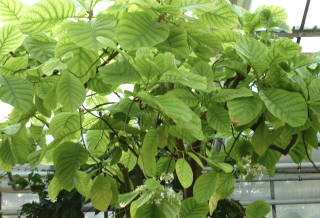
Mucuna pruriens is a bean that’s eaten in certain parts of Central America, India, the Philippines, Nigeria, Ghana, Brazil, and Malawi as part of the human diet. It has been in use as an important nitrogen-fixing agricultural product throughout the world including in the United States during the early part of the 1900’s through about 1965. Mucuna beans contain high levels of L-Dopa, a precursor that the brain uses to manufacture dopamine.In 1960, scientists discovered that dopamine deficiency was one of major contributing factors in the development of Parkinson’s disease symptoms. Levodopa or L-Dopa was first administered to patients in 1961 and doctors discovered that dramatic improvements occurred when patients were given increasing amounts of L-Dopa over long periods of time.
Click here to do a free trial of EMDR to Release Trauma.
Recently, scientists have discovered the dopamine dysfunction is a major underlying issue in Alzheimer’s disease, not just Parkinson’s or Lewy body dementia. This makes sense if we think about dementia as a type of psychosis that’s diagnosed in older patients because dopamine is the main neurotransmitter that antipsychotic drugs attempt to target in order to bring patients back down to earth. But dopaminergic antipsychotics also have a reputation for producing undesirable side effects. In contrast, Mucuna pruriens produces few, if any, minor side effects like flatulence when the bean is given in high doses.Unfortunately, beginning in 1975, carbidopa was added to the synthetic L-Dopa that’s prescribed by doctors to “reduce nausea”. Thereafter Levodopa, which is still referred to as “L-Dopa” by doctors, was no longer a medication made of L-Dopa, the dopamine precursor molecule, but rather, it was a medication that consisted of synthetic L-Dopa and Carbidopa.
Click here to buy NAC.
The tragedy is that the L-Dopa found naturally in Mucuna pruriens and in fava beans was beneficial to Parkinson’s disease patients. Levodopa-the-drug is chemically different than natural Levodopa / L-Dopa but in 1975, with the addition of Carbidopa to Levodopa, L-Dopa/Levodopa (the branded synthetically produced pharmaceutical that you buy at the pharmacy and NOT the pure L-Dopa found in Mucuna pruriens beans) became famous for the fact that it created irreversible dyskinesias (involuntary movements) with long-term use. In other words, the drug that doctors prescribe that’s known Levodopa irreversibly damages the body.
All the hope around L-Dopa (the pure molecule found in the Mucuna bean) was lost in the past as a result of the fact that this toxic drug was labeled Levodopa / L-Dopa. The L-Dopa/Carbidopa combo (which was also known as Levodopa) made the news as a drug that would eventually cause patients to freeze like statues as in the Robin Williams 1990 movie Awakenings. Today, it’s remarkably difficult to find the story of L-Dopa and to tease Carbidopa out of the synthetic-Levodopa problem. Doctors refer to Levodopa casually as the only type of L-Dopa that exists and patients who are determined enough to do their own research at home are scared off by Mucuna pruriens thinking that the Levodopa / L-Dopa in Mucuna will eventually cause them the same grief as the unfortunate patients in Awakenings.
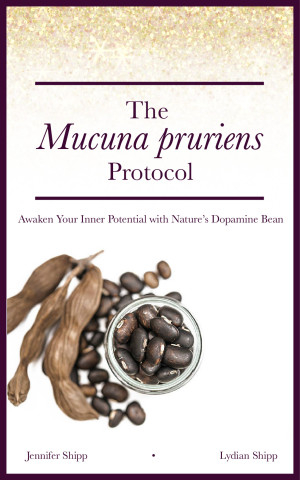
Click here to buy The Mucuna pruriens Protocol: Overcome Dementia, Addiction, ADHD, Mood and Mental Health Disorders
Despite the confusion, some scientists are making an effort to point out the fact that irreversible dyskinesias are caused by the carbidopa that is added to synthetic Levodopa rather than by the L-Dopa itself. Carbidopa and Benserazide causes an irreversible binding and inactivation of vitamin B6 throughout the body which has an enormously negative impact on general health. In a 2014, article by Hinz, Stein, and Cole called “Parkinson’s disease: carbidopa, nausea, and dyskinesia”, scientists point out this important fact.
Again though, all of this negative talk about the famous, mainstream Levodopa / L-Dopa pertains only to the drug that you would get from your doctor’s office. The natural L-Dopa / Levodopa found in fava beans and Mucuna pruriens protects the dopamine receptors and it heals them. Natural Levodopa / L-Dopa is chemically very different from the pill that patients are prescribed by doctors.
Click here to buy The Mucuna pruriens Protocol: Overcome Dementia, Addiction, ADHD, Mood and Mental Health Disorders
Patients who would like to make use of Mucuna pruriens for Alzheimer’s disease, frontotemporal dementia, Lewy body dementia or Parkinson’s disease (diseases that belong to the same Disease Family Tree) can use the Mucuna bean in combination with 5-HTP to offset nausea, if nausea is present when the bean is administered in massive doses.
The Mucuna bean looks and tastes like black beans, but in addition to other nutritional elements, Mucuna beans contain a higher-than-usual amount of L-Dopa, a dopamine precursor that the human brain can easily make into dopamine, the neurotransmitter that plays a role in many Alzheimer’s disease, frontotemporal dementia, Parkinson’s, and Lewy body dementia symptoms. It has a nutritional profile similar to soy beans. In the Guatemalan lowlands, Mucuna pruriens is marketed to healthy people as a coffee substitute that spurs wakefulness and enhances concentration without causing the jitteriness of caffeine use. People all over the world eat Mucuna beans daily as part of their diet. It does not cause health problems, even with long-term use.
Individuals with dementia can take Mucuna pruriens as a natural source of L-Dopa that the brain can easily convert into dopamine. It should be taken in higher doses (6000 mg to 15,000 mg per day--take it in 4 divided doses) with at least 100 mg of vitamin B6 and a B100 Complex vitamin and 600-1200 mg of Magnesium Glycinate daily. Consider getting injections of vitamin B12 bi-annually as well. Often vitamin B12 deficiency dementia is misdiagnosed by doctors as Parkinson's or Alzheimer's disease. Read this article about vitamin B12 so that you understand the dynamics you'll face when asking for a vitamin B12 injection at your doctor's office.
Click here to learn more about the CDS / MMS Protocols Database.
Combining Methylene Blue with Mucuna pruriens
In addition to its ability to protect dopamine neurons and energize brain cells, methylene blue also induces Brain Derived Neurotrophic Factor (BDNF) to modulate the severity of dementia symptoms. Methylene Blue can be used in combination with Mucuna pruriens. When combined with methylene blue (at 1 mg per kilogram of body weight in divided doses throughout the day), Mucuna pruriens (administered in daily divided doses of dementia treatment that you can administer at home. Start with lower doses at first and work up to higher doses. At first, patients may experience diarrhea and stomach upsets. These problems often subside with time. While Mucuna pruriens provides the brain with the food it needs to build natural dopamine, methylene blue protects the dopamine receptors and helps them regrow in some cases. The methylene blue energizes brain cells and helps them function better overall. The cumulative effect of Mucuna and methylene blue is worth considering if you’re looking for a natural alternative treatment for dementia.As an added perk, Methylene Blue can also help prevent and treat COVID-19.
Click here to learn more and download the Living Database now.
Resources:
Kamkaen, N. et al. (2022). Mucuna pruriens Seed Aqueous Extract Improved Neuroprotective and Acetylcholinesterase Inhibitory Effects Compared with Synthetic L-Dopa. Retrieved September 22, 2022 from https://pubmed.ncbi.nlm.nih.gov/35630617/
• Cwalinski, T. et al. (2020). Methylene Blue - Current Knowledge, Fluorescent Properties, and Its Future Use. Retrieved February 14, 2021 from https://pubmed.ncbi.nlm.nih.gov/33147796/
• Alda, M. et al. (2018). Methylene blue treatment for residual symptoms of bipolar disorder: Randomized crossover study. Retrieved February 13, 2021 from https://www.cambridge.org/core/journals/the-british-journal-of-psychiatry/article/methylene-blue-treatment-for-residual-symptoms-of-bipolar-disorder-randomised-crossover-study/D3ACE2C595AADA7AF7410A8EF7BAF6D5
• Howland, R. H. (2016). Methylene Blue: The Long and Winding Road from Stain to Brain: Part 2. Retrieved February 14, 2021 from https://pubmed.ncbi.nlm.nih.gov/27699422/
• Children’s Hospital & Research Center at Oakland (2008). Potential Alzheimer’s, Parkinson’s Cure Found in Century-Old Drug. Retrieved February 14, 2021 from https://www.sciencedaily.com/releases/2008/08/080818101335.htm#:~:text=A%20new%20study%20conducted%20by,cure%20Alzheimer's%20and%20Parkinson's%20disease.
• Smith, E. S. et al. (2017). Daily consumption of methylene blue reduces attentional deficits and dopamine reduction in a 6-OHDA model of Parkinson’s disease. Retrieved February 14, 2021 from https://pubmed.ncbi.nlm.nih.gov/28694175/
• Sunil Bhurtel, Dong-Young Choi, Nikita Katila (2018). Methylene Blue Protects The Dopaminergic Neurons through Upregulation of BDNF. Retrieved February 14, 2021 from https://faseb.onlinelibrary.wiley.com/doi/abs/10.1096/fasebj.2018.32.1_supplement.553.8
• Biju, K .C. et al. (2018). Methylene Blue Ameliorates Olfactory Dysfunction and Motor Deficits in a Chronic MPTP / Probenecid Mouse Model of Parkinson’s Disease. Retrieved February 14, 2021 from https://pubmed.ncbi.nlm.nih.gov/29684508/
• Smith, E. S. (2015). Attentional dysfunction in Parkinson’s disease: the role of central amygdala dopamine and possible treatment options. Retrieved February 14, 2021 from https://repositories.lib.utexas.edu/handle/2152/46744
• Shrestha, K. (2018). Methylene Blue: A Novel Disease-Modifying Drug for Neuroinflammation in Parkinson’s Disease. Retrieved February 14, 2021 from https://search.proquest.com/openview/8e906bb7bfa4cfbfd63df4ec0e4a8c40/1?pq-origsite=gscholar&cbl=18750&diss=y
• Pugalenthi, M. Vadivel, V., Siddhuraju, P. (2005). Alternative Food/Feed Perspectives of an Underutilized Legume Mucuna pruriens var. Utilis--A Review. Plant Foods for Human Nutrition. Retrieved February 14, 2021 from https://link.springer.com/article/10.1007/s11130-005-8620-4
• Siddhuraju, P., Becker, K. Maccker, H. S. (2000). Studies on the nutritional composition and antinutritional factors of three different germplasm seed materials of an under-utilized tropical legume, Mucuna pruriens var. Utilis. Retrieved February 14, 2020 from https://pubs.acs.org/doi/10.1021/jf0006630
• Buckles, D. (1995). Velvetbean: A New Plant with a History. Retrieved February 14, 2021 from https://www.jstor.org/stable/4255685?read-now=1&seq=9#page_scan_tab_contents
• Hinz, M., Stein, A., Cole, T. (2014). Parkinson’s Disease: Carbidopa, Nausea, and Dyskinesia. Retrieved February 14, 2021 from https://www.dovepress.com/parkinson39s-disease-carbidopa-nausea-and-dyskinesia-peer-reviewed-fulltext-article-CPAA
• Tolosa, E., Marti, M. J., Valldeoriola, F., Molinuevo, J. L. (1998). History of levodopa and dopamine agonists in Parkinson’s disease treatment. Retrieved February 14, 2021 from https://pubmed.ncbi.nlm.nih.gov/9633679/#:~:text=Abstract,1960s%20the%20results%20were%20inconsistent.
• UC Irvine News (2026). Dopamine Deficiency Found to Drive Memory Impairment in Alzheimer’s Disease. Retrieved June 11, 2026 from https://news.uci.edu/2026/04/23/dopamine-deficiency-found-to-drive-memory-impairment-in-alzheimers-disease/